32 Amp RCCB Price for Home: MCB vs RCCB Buying Guide
32 Amp RCCB price for home: Compare RCCB types, MCB vs RCCB differences, ratings and brands. Explore electrical protection products at SpareVillage.
Article Content
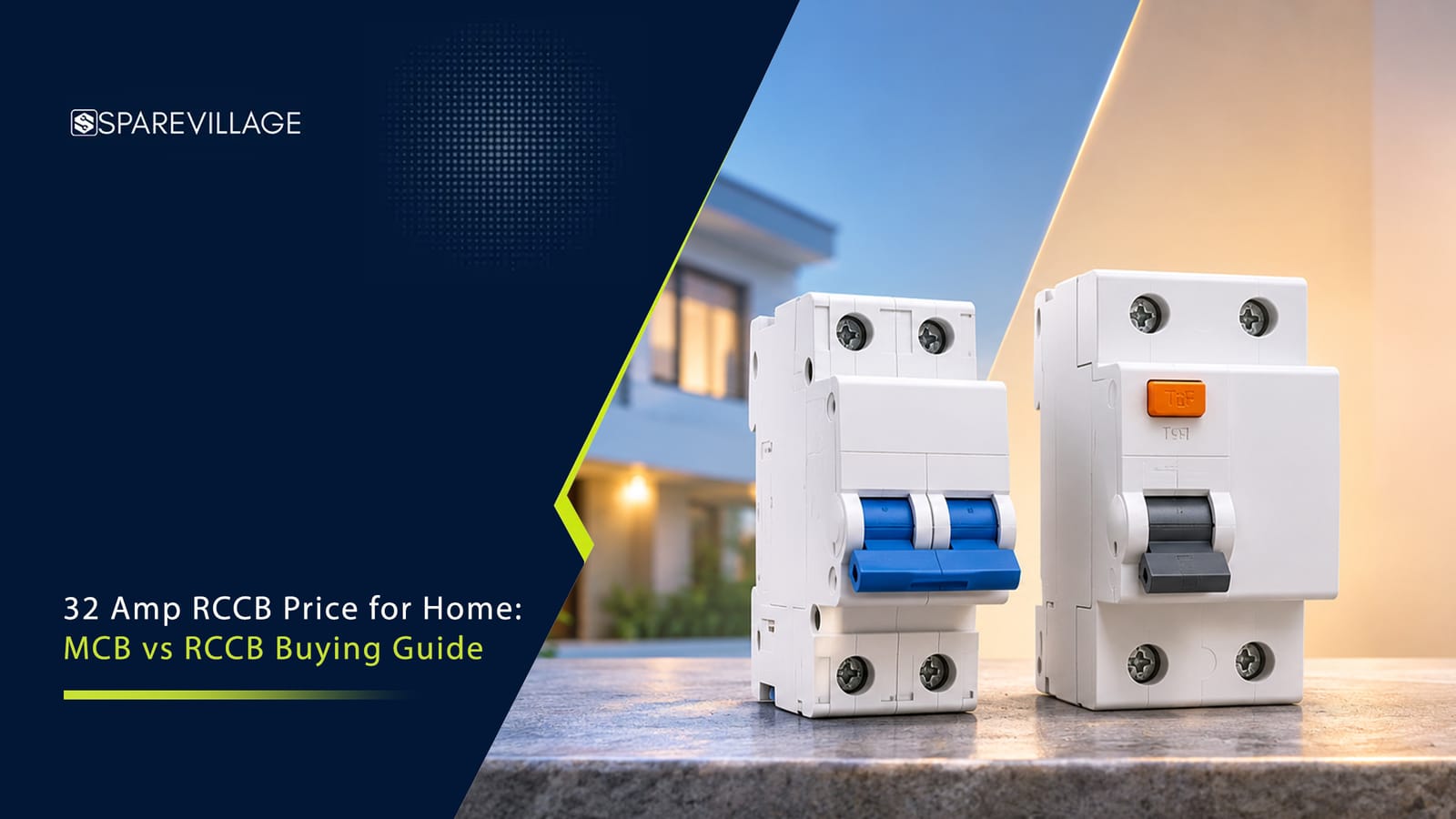
Intro: Electrical safety is an important part of every home. Appliances, lighting, sockets, air conditioners and other electrical equipment all depend on a properly designed wiring system. However, even a good wiring installation needs suitable protection devices to help manage electrical faults. Two devices commonly found in home distribution boards are MCBs and RCCBs. They may look similar, but they perform different functions. An MCB protects a circuit against overload and short circuits, while an RCCB detects leakage current and helps reduce the risk of electric shock. If you are checking the 32 amp RCCB price for home, it is important to understand more than the price. You should also check the current rating, number of poles, leakage sensitivity, RCCB type and compatibility with your electrical installation. At SpareVillage, buyers can explore electrical protection products from brands such as Havells, SELVO and Anchor. This guide explains how RCCBs and MCBs work, the available types, approximate price factors and what to check before buying. RCCB stands for Residual Current Circuit Breaker. It is an electrical protection device that detects an imbalance between the current flowing through the phase conductor and the current returning through the neutral conductor. Under normal conditions, these currents should remain balanced. If some current starts leaking through an unintended path, such as damaged insulation, faulty equipment or a person in contact with an exposed live part, the RCCB detects the difference and disconnects the supply when the leakage reaches its specified operating threshold. A 32A RCCB has a rated current of 32 amperes. This rating indicates the current the device is designed to carry under its specified operating conditions. It does not mean that the RCCB will trip at 32A due to an overload. This is an important difference between an RCCB and an MCB. An RCCB without integral overcurrent protection does not provide overload or short-circuit protection. It must be used with a suitable MCB, fuse or other overcurrent protection device. For example, SpareVillage lists the Havells 32A 30mA DP RCCB. Its listed specifications identify it as a 32A, 30mA, double-pole RCCB. Buyers should check the complete product specifications and installation compatibility before ordering. The 32 amp RCCB price for home depends on the brand, RCCB type, number of poles, leakage sensitivity, rated voltage and short-circuit coordination requirements. As an approximate buying reference, a listed 32A double-pole RCCB from a recognised brand may fall around the ₹3,000–₹4,000 range. This is an indicative range based on the product and manufacturer pricing information checked for this guide. It is not a fixed market price or a guarantee for every 32A RCCB. The price can change when you compare different configurations. For example, a 32A DP RCCB and a 32A four-pole RCCB are not the same product. Similarly, a 30mA model and a 100mA model have different leakage sensitivity. Before comparing prices, check these details: Rated current: Confirm whether the product is 32A, 40A or 63A. Number of poles: Check whether it is DP or FP. Leakage sensitivity: Common ratings include 30mA, 100mA and 300mA. RCCB type: Check whether the device is Type AC, Type A, Type F or Type B. Standards and markings: Verify the applicable BIS marking and product standard. Brand and model: Compare the exact model number rather than only the brand name. At SpareVillage, you can review the Havells 32A 30mA DP RCCB and compare it with other electrical protection products before making a purchase. MCB and RCCB are both used in electrical distribution systems, but their functions are different. Choosing one instead of the other can leave an electrical installation without an important type of protection. What Is an MCB? MCB stands for Miniature Circuit Breaker. It protects an electrical circuit against excessive current caused by overloads and short circuits. An overload may occur when too many appliances draw current from the same circuit. A short circuit can occur when conductors come into unintended contact and cause a sudden rise in current. The MCB detects these conditions and disconnects the circuit to help protect wiring and connected equipment. What Is an RCCB? An RCCB detects residual or leakage current. It compares the current flowing through the phase and neutral conductors. If the difference reaches its specified sensitivity, it trips and disconnects the supply. Its main purpose is to provide protection against earth-leakage faults and reduce the risk of electric shock. It can also help reduce certain fire risks associated with persistent earth faults. However, a standard RCCB does not replace an MCB. The two devices are designed to work together. An MCB protects against overcurrent faults, while an RCCB provides residual-current protection. For a home installation, a qualified electrician should select the correct combination according to the wiring design, connected load and applicable electrical requirements. RCCB Types: AC, A, F and B Not every RCCB detects the same type of leakage current. Different electrical appliances and electronic equipment can produce different current waveforms. This is why RCCBs are available in different types. Understanding these types can help you select a device that matches the electrical installation. 1. Type AC RCCB A Type AC RCCB detects sinusoidal alternating residual current. It is designed for circuits where the expected leakage current is of the AC waveform covered by the device's specifications. However, modern electronic equipment can produce other forms of residual current. For this reason, Type AC should not be selected automatically for every modern home circuit. The electrician should check the connected equipment and manufacturer recommendations. 2. Type A RCCB A Type A RCCB detects sinusoidal AC residual current and pulsating DC residual current. It is relevant for certain electronic loads that may produce pulsating DC components. The selection should be based on the equipment and the applicable installation requirements. 3. Type F RCCB A Type F RCCB is designed to detect additional residual-current waveforms, including certain mixed-frequency currents associated with some electronic equipment. It is used in applications where the connected equipment and its electrical characteristics require this type of protection. 4. Type B RCCB A Type B RCCB can detect a wider range of residual currents, including smooth DC residual current and certain higher-frequency components. It may be required for specific applications such as certain variable-speed drives, inverters and other equipment that can produce smooth DC leakage. The equipment manufacturer's instructions should guide the selection. Important: Type A, F and B RCCBs are not simply better or worse versions of Type AC. Each type is designed to detect particular residual-current waveforms. The right choice depends on the connected equipment and the installation design. DP vs FP RCCB: Which One Do You Need? The number of poles is another important factor when comparing RCCB products. Double Pole (DP) RCCB A double-pole RCCB is commonly used in compatible single-phase installations. It switches the phase and neutral conductors together. A 32A DP RCCB may be considered for a suitable single-phase distribution arrangement, provided its current rating and other specifications match the installation. SpareVillage lists the Havells 32A 30mA DP RCCB for buyers comparing this configuration. Four Pole (FP) RCCB A four-pole RCCB is generally used in compatible three-phase installations where the three phases and neutral need to be switched together. It is not a direct replacement for a double-pole RCCB. The number of poles must match the supply system and distribution board. For example, a three-phase installation may require a four-pole device, but the electrician must confirm the correct current rating, sensitivity and coordination with the upstream and downstream protection devices. What Does 30mA, 100mA and 300mA Mean? The mA rating on an RCCB indicates its rated residual operating current, also called leakage sensitivity. It is different from the ampere rating printed on the device. For example, a 32A 30mA RCCB has two separate ratings: 32A: Rated current the device is designed to carry. 30mA: Rated residual current at which the device is designed to operate under the specified test conditions. 30mA RCCB A 30mA RCCB is commonly used where additional protection against electric shock is required. It is an important consideration for suitable residential circuits. However, it should be selected and installed according to the applicable wiring rules and circuit design. 100mA RCCB A 100mA RCCB has a higher residual operating-current rating than a 30mA device. It may be used in particular distribution arrangements where the design calls for that sensitivity. It should not be treated as an automatic substitute for a 30mA device where additional personal protection is required. 300mA RCCB A 300mA RCCB is used in certain installations where protection against earth-leakage-related fire risks is part of the protection strategy. Its use depends on the installation design and applicable standards. It is not a general replacement for a 30mA RCCB used for additional protection against electric shock. The sensitivity rating should never be selected only because one option is cheaper. It must match the intended protection requirement. Which RCCB Is Best for Home? There is no single RCCB that is best for every home. The right product depends on the supply type, wiring arrangement, connected appliances, expected residual-current waveform and required protection level. For a suitable single-phase home distribution board, a DP RCCB may be considered. A 30mA sensitivity is commonly relevant where additional protection against electric shock is required. The RCCB type, such as AC or A, should be selected after considering the connected equipment and applicable standards. Before buying, check the following: Supply type: Confirm whether your home has a single-phase or three-phase supply. Current rating: The RCCB rating must be coordinated with the installation and overcurrent protection. Leakage sensitivity: Confirm the required residual operating-current rating. RCCB type: Select the waveform detection type suitable for the connected loads. Pole configuration: Check whether the installation requires DP or FP. Product standard: Verify the relevant standard and BIS marking. Installation space: Confirm that the device fits the distribution board and is compatible with the wiring arrangement. A 32A RCCB should not be selected simply because the home's main supply is rated at 32A. The electrician must check the complete protection arrangement, including the upstream MCB or fuse, cable rating and expected load. RCCB, ELCB and RCBO: What Is the Difference? These terms are often used together when people search for electrical safety devices. However, they do not all describe the same type of product. RCCB An RCCB detects residual current caused by an imbalance between phase and neutral. It provides leakage protection but does not normally provide overload or short-circuit protection. ELCB ELCB stands for Earth Leakage Circuit Breaker. The term is commonly used in the market for earth-leakage protection devices. Older voltage-operated ELCBs work differently from modern current-operated RCCBs. When purchasing, check the actual product specifications instead of relying only on the ELCB or RCCB label. RCBO RCBO stands for Residual Current Circuit Breaker with Overcurrent Protection. It combines residual-current protection with overload and short-circuit protection in one device. This can be useful where an installation requires both functions in a single protective device. However, the correct rating and configuration still need to be selected for the circuit. SpareVillage also lists Anchor UNO RCBO products, including the Anchor UNO 6A 30mA SPN RCBO and Anchor UNO 16A 30mA SPN RCBO. These are examples of combined protection devices, not direct 32A RCCB replacements. Other RCCB and MCB Brands Available on SpareVillage Havells is one option when comparing electrical protection devices, but buyers may also consider products from other brands available on SpareVillage. The important point is to compare products by their specifications and intended application, not only by brand name. 1. Havells Havells offers MCB and RCCB products in different ratings and configurations. Buyers can compare the current rating, pole arrangement and residual-current sensitivity before selecting a suitable model. You can explore the Havells 32A 30mA DP RCCB and the Havells 63A TP 10kA MCB Euro II on SpareVillage. The 63A TP MCB is a different type of protection device and should not be compared as a direct substitute for a 32A DP RCCB. 2. SELVO SELVO is another brand available on SpareVillage for electrical products. Its listed range includes a SELVO 63A four-pole 100mA RCCB. This product has a different current rating, pole configuration and leakage sensitivity from a 32A DP RCCB. It is useful as an example of another RCCB configuration available on the marketplace, but it should only be selected for an installation that requires those specifications. 3. Anchor Anchor products are also available on SpareVillage. The range includes MCB and RCBO products. For example, Anchor UNO RCBO models combine residual-current and overcurrent protection in one device. Buyers can compare the available rating and configuration with the requirements of their electrical circuit. Before ordering any Anchor product, check whether you need an MCB, RCCB or RCBO. These devices perform different functions. You can browse more options through SpareVillage's Electrical Tools & Equipment section. What Is the Difference Between a 32A RCCB and a 63A MCB? A 32A RCCB and a 63A MCB have different ratings and protection functions. They should not be compared as if they perform the same job. A 32A RCCB is rated to carry 32 amperes and detects residual current according to its sensitivity rating. A 63A MCB is designed to provide overcurrent protection for a circuit with a correctly selected rating and breaking capacity. It responds to overload and short-circuit conditions. For example, SpareVillage lists a Havells 63A TP 10kA MCB Euro II. Its three-pole configuration and 10kA breaking-capacity specification are important details to check when comparing it with other MCBs. A higher ampere rating does not automatically mean better protection. The device must be matched to the conductor size, expected load, fault level and installation design. Havells 16 Amp MCB 2 Pole Price: What Affects the Cost? People searching for the Havells 16 amp MCB 2 pole price should compare the complete model specifications before making a purchase. The price of a 16A DP MCB can vary according to: Breaking capacity, such as 6kA or 10kA. Tripping curve, such as B, C or D. Product series and model. Pole configuration. Manufacturer and seller. Availability and applicable taxes. A 16A DP MCB is not the same as a 16A RCCB. The MCB provides overload and short-circuit protection, while the RCCB detects residual current. If you are comparing products for a home distribution board, make sure you are looking at the correct device category. You can browse circuit protection products through the Circuit Breakers & Fuses category on SpareVillage. What Should You Check Before Buying an RCCB Online? Buying an RCCB online is easier when you know the technical details required for your installation. A product may look similar to another model but have a different pole arrangement, sensitivity or current rating. Use this checklist before placing an order. 1. Check the Current Rating Confirm whether you need a 32A, 40A or 63A RCCB. The correct rating depends on the electrical installation and coordination with other protective devices. 2. Confirm the Pole Configuration Check whether your installation requires a DP or four-pole RCCB. A single-phase and three-phase distribution system may need different configurations. 3. Verify the Leakage Sensitivity Compare 30mA, 100mA and 300mA options according to the required protection. Do not select a higher sensitivity value just to reduce the product cost. 4. Check the RCCB Type Check the residual-current waveform detection type required by your connected appliances. Type AC, A, F and B devices are designed for different conditions. 5. Review the Product Standard For RCCBs, check compliance with the applicable BIS standard, including IS 12640 (Part 1), and verify the required Standard Mark and product details. 6. Check the Seller and Product Details Review the product model number, manufacturer information, seller details, tax information and return or replacement terms. Keep the purchase invoice for future reference. 7. Confirm Compatibility Before Installation The RCCB must be compatible with the distribution board and the overall protection arrangement. Installation and testing should be handled by a qualified electrician. At SpareVillage, buyers can explore Electricals and the wider Circuit Breakers & Fuses range to review available electrical protection products. Why Should You Compare RCCB and MCB Products on SpareVillage? Selecting electrical protection products requires attention to ratings, product specifications and compatibility. Choosing a device only because it has a familiar brand name or a lower price may not meet the actual installation requirement. SpareVillage is a B2B marketplace where buyers can explore electrical products and compare available options from different suppliers. You can use the platform to: Explore RCCB, MCB and related electrical protection products. Compare available brands and product configurations. Review product ratings and specifications. Check current product availability and listed prices. Explore other electrical supplies for procurement requirements. Whether you are sourcing a 32A RCCB, a 63A MCB or an RCBO, review the exact model and technical details before placing an order. Conclusion The right RCCB for a home depends on the electrical supply, connected equipment, leakage protection requirement and distribution board design. A 32A RCCB is not automatically suitable for every home simply because its current rating appears appropriate. When comparing the 32 amp RCCB price for home, look beyond the price and check the pole configuration, leakage sensitivity, RCCB type, product standard and compatibility with the existing protection system. Also remember that an RCCB and an MCB perform different functions. An RCCB detects leakage current, while an MCB protects against overloads and short circuits. Both functions are important in a properly designed electrical installation. At SpareVillage, you can explore Havells, SELVO and Anchor electrical protection products, compare their specifications and review available options for your procurement needs. For safe selection and installation, always consult a qualified electrician. FAQs: 1. Is a 32A RCCB suitable for a home? A 32A RCCB may be suitable for a home installation if its current rating, pole configuration and leakage sensitivity match the electrical system. The correct rating should be selected by an electrician after checking the connected load and overcurrent protection. 2. What is the difference between a 32A RCCB and a 32A MCB? A 32A MCB protects a circuit against overload and short circuits. A 32A RCCB detects earth leakage and helps protect against leakage-related electric shock. They perform different functions, so an RCCB alone cannot replace an MCB. 3. Should I buy a 30mA or 100mA RCCB for my home? A 30mA RCCB is commonly used where additional protection against electric shock is required in residential installations. A 100mA RCCB serves different protection requirements and should not automatically replace a 30mA device. Check the applicable electrical requirements and consult a qualified electrician before buying. 4. Can I use a 32A DP RCCB in a single-phase home? A 32A double-pole RCCB can be used in a compatible single-phase installation. It switches the phase and neutral conductors together. Before purchasing, confirm the current rating, leakage sensitivity and RCCB type required for your distribution board. 5. Why does my RCCB keep tripping even when the MCB is ON? An RCCB may trip because of current leakage from an appliance, damaged insulation, moisture in wiring, incorrect neutral connections or accumulated leakage from multiple appliances. A qualified electrician should identify the fault instead of bypassing the RCCB or repeatedly resetting it. 6. Why does the RCCB trip when I switch on my geyser or washing machine? A faulty heating element, damaged cable, moisture or internal electrical leakage in an appliance can cause the RCCB to trip. Stop using the suspected appliance and ask an electrician to check it. Do not replace the RCCB with a higher-sensitivity rating just to stop unwanted tripping. 7. How do I know if my RCCB is working properly? Most RCCBs have a TEST button on the front. When the device is energised under the conditions specified by its manufacturer, pressing this button should make the RCCB trip. Follow the manufacturer's testing instructions. If it does not trip, have the device checked by a qualified electrician. 8. Can an RCCB work without an MCB? A standard RCCB does not provide overload and short-circuit protection. It must be coordinated with a suitable MCB or fuse. An RCBO is another option because it combines residual-current and overcurrent protection in one device. 9. What is the difference between a 32A DP RCCB and a 63A four-pole RCCB? A 32A DP RCCB is generally used in compatible single-phase installations, while a 63A four-pole RCCB is generally used in compatible three-phase installations. They differ in current rating and pole configuration, so one should not be substituted for the other without checking the electrical system. 10. Which RCCB type is better for home, Type AC or Type A? Type AC detects sinusoidal AC residual current, while Type A also detects pulsating DC residual current. The suitable type depends on the appliances connected to the circuit and their leakage-current characteristics. Check the appliance manufacturer's recommendations and consult an electrician before selecting one. 11. Can one RCCB protect the entire house? Yes, a suitably selected RCCB can protect multiple downstream circuits in a home distribution board. However, leakage in any one of those circuits may trip the common RCCB and disconnect all the protected circuits. Dividing circuits across suitable RCCBs or using individual RCBOs can help limit this inconvenience. 12. What should I check before buying a 32A RCCB online? Check the rated current, 30mA or other leakage sensitivity, DP or four-pole configuration, RCCB type, manufacturer, model number and applicable product standards. At SpareVillage, you can compare available electrical protection products from brands such as Havells, SELVO and Anchor and review their specifications before ordering.What Is a 32 Amp RCCB?
32 Amp RCCB Price for Home: What Should You Expect?
MCB vs RCCB Difference: How Do They Work?
MCB vs RCCB: Key Differences