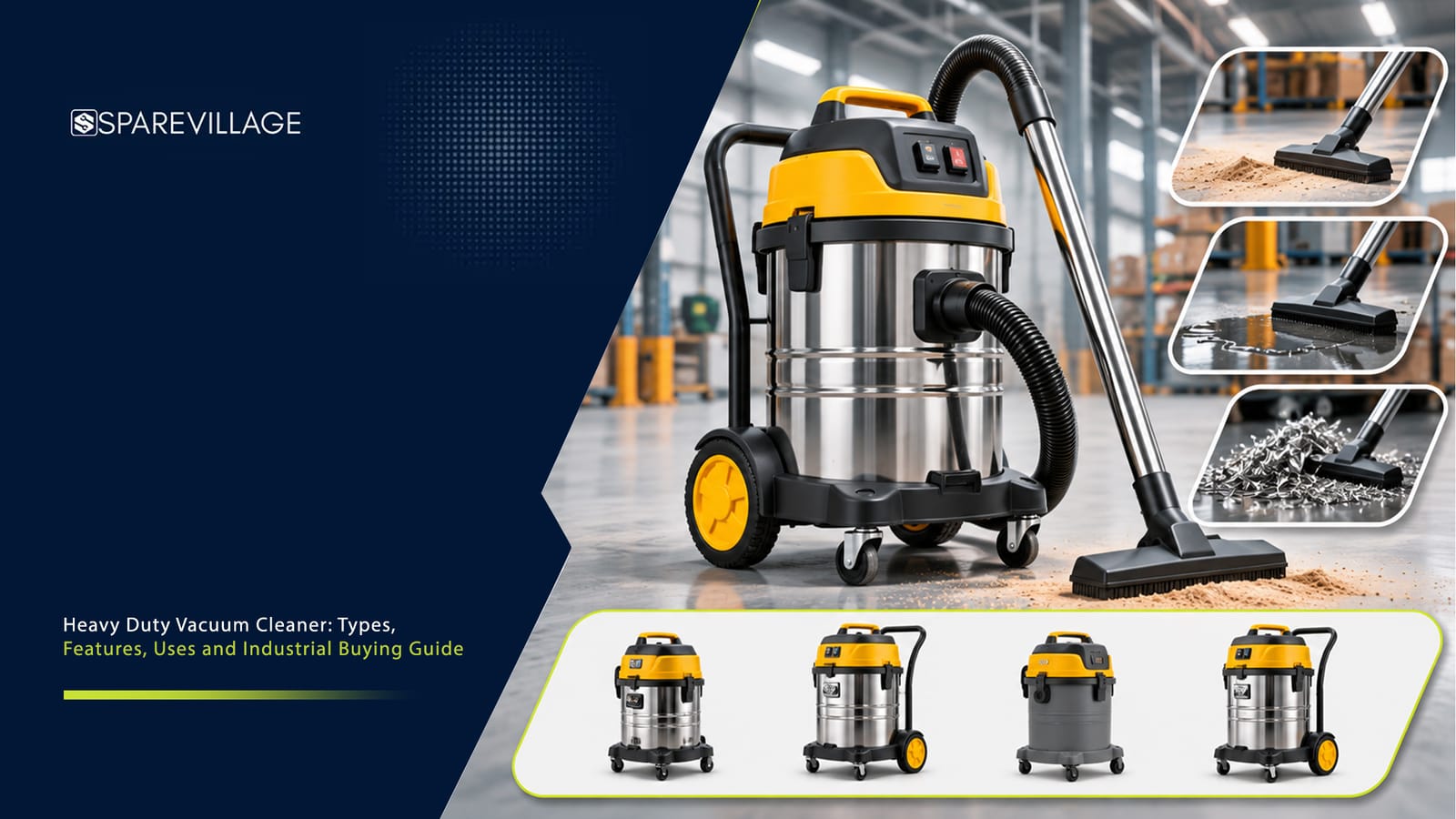
Heavy Duty Vacuum Cleaner: Types, Features, Uses and Industrial Buying Guide
Vacuum Cleaner Heavy Duty guide covering types, suction power, filtration, uses and buying tips. Compare features and choose the right industrial model.
Article Content
Introduction Cleaning in a factory, workshop or warehouse is different from cleaning a home. Industrial spaces produce dust, metal particles, sawdust, liquid spills and production waste. These materials need suitable cleaning equipment. A heavy duty vacuum cleaner is designed to handle demanding cleaning tasks. Depending on its design, it can collect dry dust, coarse debris and liquids. Some specialised models are also made for fine or hazardous dust. However, every machine is not suitable for every material. A vacuum cleaner used for general floor cleaning may not be suitable for fine industrial powder, metal shavings or combustible dust. Buyers need to check the machine's suction performance, airflow, filtration, collection capacity and intended application. This guide explains how a heavy duty vacuum cleaner works, the different types available, its main features and how to select the right model for industrial or commercial use. A heavy duty vacuum cleaner is a cleaning machine designed for frequent and demanding cleaning work in commercial and industrial environments. It uses a motor and vacuum system to draw dust, dirt and other compatible materials through a suction hose. The collected material is stored in a tank or dust collection bag. Unlike regular household vacuum cleaners, industrial models are generally built for tougher working conditions. Depending on the model, they may have: Stronger machine construction. Larger dust or waste collection tanks. Industrial-grade hoses and attachments. Specialised filters for different types of dust. Wet and dry cleaning capability. Motors designed for frequent or extended operation. These machines are commonly used in factories, engineering workshops, warehouses, construction sites and commercial facilities. The right model depends on the material being collected. For example, a wet and dry vacuum cleaner may be suitable for compatible liquid spills and dry debris. Fine or hazardous dust may require a specially classified industrial vacuum system. You can explore vacuum cleaners available on SpareVillage to compare options for different cleaning requirements. A heavy duty industrial vacuum cleaner works by creating negative pressure inside its collection system. This draws air and material through the suction hose. The machine then separates the collected waste from the air using its collection container and filtration system. The working process has four main stages. 1. Motor and Vacuum Generation The electric motor powers the vacuum turbine or blower. This creates a pressure difference between the inside of the machine and the surrounding air. As a result, air moves through the suction inlet towards the collection tank. The motor design and vacuum system affect the machine's operating performance. 2. Airflow and Suction Mechanism The suction hose draws air, dust and debris into the machine. Two important factors affect this process: Airflow: The volume of air the machine can move in a given time. Suction pressure: The pressure difference that helps pull material into the machine. Airflow helps transport dust and debris through the hose. Suction pressure is important when collecting heavier material or drawing waste from difficult areas. Both matter when selecting an industrial vacuum cleaner. A high motor wattage alone does not guarantee better cleaning performance. 3. Dust and Debris Collection After entering the machine, the collected material moves into the tank or collection bag. Larger particles may settle in the container, while the filtration system captures finer dust from the moving air. The collection capacity determines how much material the machine can hold before it needs to be emptied. 4. Filtration and Exhaust Air Before air leaves the machine, it passes through one or more filters. These filters capture dust particles and help prevent them from returning to the working area. The filter type must match the material being collected. Fine and hazardous dust may require a specialised filtration system and a suitably certified machine. Regular filter inspection is also important. A blocked or damaged filter can reduce airflow and affect cleaning performance. Industrial vacuum cleaners are available in different designs. Each type serves a particular cleaning requirement. Understanding these differences helps buyers select a machine that matches their workplace. 1. Industrial Dry Vacuum Cleaner An industrial dry vacuum cleaner is designed to collect dry dust, dirt and debris. It is commonly used in manufacturing facilities, warehouses and workshops. Depending on its filter and collection system, it can handle materials such as general floor dust, sawdust and suitable production residues. Common applications: Cleaning factory floors. Collecting dry production waste. Removing dust from workstations. Cleaning warehouse storage areas. Always check the filter specification before collecting fine or potentially harmful dust. 2. Wet and Dry Vacuum Cleaner A wet and dry vacuum cleaner can collect compatible dry debris as well as liquids. It is useful in places where both types of cleaning are required. These machines usually have a collection tank and liquid protection features. Suitable models may use a float valve or another protection system to prevent collected liquid from reaching components that must remain dry. Common applications: Workshop floor cleaning. Collecting water spills. Cleaning commercial facilities. Maintenance and service areas. Not every wet and dry vacuum cleaner is suitable for oil, coolant, chemicals or hazardous liquids. Check the manufacturer's instructions and material compatibility before use. 3. Heavy Duty Industrial Vacuum Cleaner A heavy duty industrial vacuum cleaner is built for demanding cleaning conditions. Depending on the model, it may have a robust body, larger collection capacity and a motor system designed for frequent use. Some industrial models are suitable for extended operation, while others are designed for shorter cleaning cycles. Buyers should check the manufacturer's specified duty cycle before selecting a machine for continuous work. Common applications: Manufacturing plants. Engineering facilities. Production areas. Large industrial workshops. 4. Heavy Duty Commercial Vacuum Cleaner A commercial vacuum cleaner is designed for frequent cleaning in business and public facilities. It is commonly used in hotels, offices, shopping centres and large buildings. Commercial models generally focus on cleaning coverage, ease of handling and regular use. They may not have the specialised filtration or construction needed for demanding industrial waste. Choose a commercial model for facility cleaning, not automatically for hazardous or heavy industrial dust. 5. Industrial Dust Extractor An industrial dust extractor is designed to capture dust produced during a work process. It can often be connected to compatible machinery or power tools. For example, dust extractors may be used with sanding, grinding, drilling and cutting equipment. Capturing dust close to its source can help reduce the amount that spreads into the workplace. A general-purpose vacuum cleaner and a dust extractor are not always interchangeable. Check the machine's airflow, connection size, filter system and compatibility with the tool. 6. Three-Phase Industrial Vacuum Cleaner A three-phase industrial vacuum cleaner uses a three-phase electrical supply. These machines are used in facilities where the electrical infrastructure and cleaning requirements support this type of equipment. Some three-phase models are designed for extended or continuous operation. However, this depends on the specific motor and machine design. Before buying, check the available electrical supply, voltage, phase requirements and manufacturer's operating instructions. 7. Portable Industrial Vacuum Cleaner A portable industrial vacuum cleaner is designed to move between different work areas. It is useful for maintenance teams and facilities where cleaning is required at multiple locations. Its practical features may include: Wheels for movement. A handle for easier handling. A flexible suction hose. Removable attachments. A compact or mobile design. Check the machine's weight, wheel quality, hose length and tank capacity before choosing a portable model. 8. Specialised Industrial Vacuum Cleaner Some cleaning tasks need machines designed for specific materials or working conditions. Examples include systems for collecting metal chips, cutting oils, industrial fluids, fine powders and combustible dust. These applications may require special tank construction, filtration, grounding, static control or hazardous-area certification. Do not use a standard vacuum cleaner for specialised or hazardous materials unless the manufacturer confirms that it is suitable. Knowing the main parts helps buyers understand machine performance and maintenance requirements. Electric Motor The motor powers the vacuum system. Its design and rating affect the machine's operating requirements and performance. Vacuum Turbine or Blower The turbine or blower creates the airflow and suction pressure needed to draw material into the machine. Suction Hose The hose carries dust, debris or compatible liquids from the cleaning area to the collection container. Its diameter, length and condition can affect airflow. Collection Tank or Container The tank stores the collected material. Its capacity determines how frequently the machine needs to be emptied. Filter System The filter system separates dust particles from the air. Different materials require different filter types and filtration levels. HEPA Filter A HEPA filter is designed to capture very fine airborne particles when used in a suitable filtration system. The filter must match the machine and its intended application. A HEPA filter alone does not make a vacuum cleaner suitable for every hazardous dust application. Dust Collection Bag Some machines use a collection bag to hold dust and make waste handling easier. The bag must be compatible with the machine and the material being collected. Inlet and Suction Nozzle The inlet connects the hose to the machine. Different nozzles and attachments help clean floors, corners, machinery and other surfaces. Wheels and Handle Wheels and handles make it easier to move the machine around the workplace. Their quality matters when the vacuum cleaner is used across large areas. Power Switch and Electrical Cable These components control the machine's operation and connect it to the electrical supply. Inspect them regularly for damage. Float Valve and Liquid Protection System Wet vacuum cleaners may include a float valve or another liquid protection system. It helps stop liquid from entering parts of the machine that must remain dry. Before buying an industrial vacuum cleaner, compare its technical specifications. These details help you understand whether the machine can handle your cleaning requirements. 1. Motor Power (Watt or HP) Motor power is generally listed in watts (W) or horsepower (HP). It indicates the motor's rated power. A higher wattage does not always mean stronger suction. The vacuum system, airflow, suction pressure and filter design also affect performance. Compare the complete specifications instead of selecting a machine based only on motor power. 2. Suction Pressure (kPa or mbar) Suction pressure measures the vacuum pressure generated by the machine. It is commonly shown in kilopascals (kPa) or millibars (mbar). It is important when collecting heavier particles or drawing material through a longer hose. However, suction pressure should be considered along with airflow. 3. Airflow Capacity (CFM or m³/h) Airflow measures the volume of air the machine can move over a period of time. It may be shown in cubic feet per minute (CFM), litres per second (L/s) or cubic metres per hour (m³/h). Airflow helps transport dust and debris through the hose. It is particularly important for larger cleaning areas and dust extraction from machinery. 4. Tank Capacity (Litres) Tank capacity indicates how much material the machine can collect before it needs to be emptied. A larger tank may be useful for high-volume cleaning. However, a larger container can also increase the machine's size and weight. Select the capacity according to the amount of waste produced and the cleaning frequency. 5. Filtration Efficiency Filtration efficiency indicates how effectively a filter captures particles from the air. Standard filters may be suitable for general cleaning. Fine or hazardous dust may require high-efficiency filtration and a complete vacuum system designed for that dust class. Always check the filter's compatibility and the machine's certification. 6. Dust Class: L, M and H Some industrial vacuum systems are classified as L, M or H under applicable standards. These classes relate to the hazard level of the dust the complete system is designed to handle. L Class: For lower-risk dust applications. M Class: For medium-risk dust applications. H Class: For high-risk dust applications, including certain carcinogenic or hazardous dusts. These classifications apply to the complete vacuum system, not just the filter. Requirements and certification should be checked against the applicable standard, local regulations and workplace risk assessment. 7. Power Supply and Motor Configuration Industrial vacuum cleaners may use single-phase or three-phase electrical supplies. Some specialised machines may also use pneumatic systems. Check the available power supply at your workplace before selecting a machine. The voltage, frequency and phase must match the manufacturer's requirements. 8. Noise Level Noise level is generally measured in decibels (dB). A machine's noise rating matters when it is used for long periods or in an occupied workplace. Compare the manufacturer's stated noise level and follow workplace hearing protection requirements where necessary. 9. Hose Diameter and Length The hose diameter and length affect how air and collected material move through the system. A hose that is too long or not suitable for the machine may affect performance. Check the recommended hose size and compatible attachments before buying. Different industries produce different types of dust and waste. The vacuum cleaner should match the material and cleaning conditions. Manufacturing Industry Manufacturing facilities produce dust, packaging waste and other production debris. Industrial vacuum cleaners help clean workstations, machine surroundings and production floors. Engineering and Metalworking Workshops Engineering workshops may produce metal shavings, machining debris and compatible cutting-fluid residues. The machine must have a suitable collection system for the material being handled. Construction Industry Construction work can generate cement dust, drilling dust and other debris. Fine construction dust needs suitable filtration and dust-control equipment. A standard vacuum cleaner should not be assumed to provide adequate protection. Warehouses and Logistics Facilities Warehouses need regular floor cleaning to remove dust, packaging waste and accumulated dirt. The required tank capacity, hose length and mobility depend on the size and layout of the facility. Automotive Industry Automotive workshops and production areas may need to collect dust, debris and compatible liquid spills. Oil, fuel, coolant and other liquids require equipment specifically designed for those materials. Food Processing Industry Food processing facilities may need to collect suitable dry residues and powder deposits. Cleaning equipment should meet the facility's hygiene and contamination-control requirements. Pharmaceutical Industry Pharmaceutical production can involve fine powders and controlled working environments. These applications may require specialised filtration, sealed collection systems and equipment suitable for the required cleanroom conditions. Textile Industry Textile facilities generate lint, fibres and dust. A suitable industrial vacuum cleaner can help clean production floors and machinery surroundings. Filter selection is important to prevent collected material from escaping back into the workplace. The actual features and performance vary by model. Not every industrial vacuum cleaner is suitable for every type of industrial waste. What Is the Difference Between an Industrial Vacuum Cleaner and a Dust Collector? An industrial vacuum cleaner and a dust collector both help control dust, but they are designed for different tasks. An industrial vacuum cleaner is generally used to collect settled dust, debris and compatible waste from floors, machinery and work areas. It draws material through a hose and stores it in a collection tank or bag. A dust collector is generally designed to capture airborne dust produced by a machine or industrial process. It may be connected to equipment such as grinders, woodworking machines or production systems. The right choice depends on where dust is generated and how it needs to be captured. What Materials Can a Heavy Duty Vacuum Cleaner Collect? The material being collected is one of the most important factors when choosing a vacuum cleaner. Do not assume that one vacuum cleaner can safely collect all these materials. Check the material's properties, machine specifications and manufacturer's instructions before use. How to Choose the Right Heavy Duty Vacuum Cleaner? Selecting the right machine starts with understanding your cleaning requirements. Use the following points to compare different models. 1. Identify the Material You Need to Collect First, identify the type of waste produced at your workplace. Is it general floor dust, fine powder, sawdust, metal shavings, construction debris or liquid waste? If the material is hazardous or combustible, consult a competent safety professional and select equipment designed and certified for that application. 2. Decide Between Wet, Dry and Wet-Dry Models Choose a dry vacuum cleaner if your work mainly involves compatible dry dust and debris. Choose a wet and dry model if you need to collect both compatible dry material and liquids. For oil, coolant, chemicals or hazardous liquids, check whether the machine is specifically designed to handle them. 3. Compare Suction Pressure and Airflow Do not compare machines only by their wattage. Check both suction pressure and airflow. Suction pressure is important for drawing material into the machine. Airflow helps carry it through the hose. The right balance depends on the material and cleaning task. 4. Select the Appropriate Tank Capacity Estimate how much waste your workplace produces during a normal cleaning cycle. A smaller tank may be suitable for light or occasional cleaning. A larger tank may reduce emptying frequency in high-volume applications. Also consider the weight of the machine when its tank is full. 5. Choose the Correct Filtration System The filter must match the material being collected. Standard filtration may work for general cleaning. Fine or hazardous dust may require a specialised filter and a vacuum system with the correct dust classification. Do not assume that fitting a HEPA filter automatically makes an ordinary vacuum cleaner suitable for hazardous dust. 6. Consider Operating Hours Think about how frequently the machine will operate. For occasional cleaning, a suitable portable model may be enough. For frequent or continuous industrial operation, check whether the motor and complete machine are rated for the required duty cycle. 7. Check Power Supply Requirements Confirm whether your workplace has a single-phase or three-phase electrical supply. Match the machine's voltage, frequency and phase requirements with the available connection. 8. Evaluate Construction and Mobility Check the tank material, wheels, handle, hose quality and overall machine design. If the machine needs to move between different departments, portability becomes important. For fixed cleaning operations, capacity and connection requirements may matter more. 9. Check Accessories and Replacement Parts Look for compatible hoses, floor nozzles, crevice tools, filter bags and replacement filters. Availability of suitable accessories can make daily cleaning and maintenance easier. 10. Consider Maintenance and Service Support Before purchasing, check the availability of filters, collection bags, replacement hoses and servicing support. A machine may meet your initial requirements but become difficult to maintain if compatible spare parts are unavailable. Heavy Duty Vacuum Cleaner Maintenance and Care Regular maintenance helps keep an industrial vacuum cleaner in suitable working condition. Follow the manufacturer's maintenance schedule for your specific model. Clean and Inspect the Filters Check filters for dust buildup, blockages or damage. Clean or replace them according to the manufacturer's instructions. A clogged filter can reduce airflow and affect cleaning performance. Empty the Collection Tank Regularly Do not allow the tank to become overloaded. Empty it using the recommended waste-handling procedure. Hazardous dust and contaminated waste may require controlled disposal. Inspect the Suction Hose Check the hose for cracks, blockages and loose connections. A damaged or blocked hose can reduce airflow and affect material collection. Check the Motor and Electrical Components Inspect the cable, plug, switch and visible electrical connections for damage. Arrange servicing according to the manufacturer's instructions. Disconnect the machine from the power supply before carrying out permitted maintenance. Maintain the Wet Collection System For wet vacuum cleaners, clean the tank after use and inspect the float valve or liquid protection system. Follow the manufacturer's instructions before switching between wet and dry operation. Check Wheels, Seals and Attachments Inspect wheels, seals, connectors and nozzles for wear. Replace damaged parts with compatible components. Follow the Recommended Service Schedule Follow the manufacturer's recommended service intervals. Use compatible replacement filters and parts to maintain the machine's intended performance. Safety Precautions When Using Heavy Duty Vacuum Cleaners Industrial vacuum cleaners must be used according to the material being collected and the conditions of the workplace. Follow these precautions: Identify the material before vacuuming it. Use a machine with filtration suitable for the collected dust. Inspect the cable, plug, hose and machine connections before use. Do not collect hot materials unless the machine is specifically designed for them. Use suitable personal protective equipment (PPE) based on the workplace risk assessment. Follow the manufacturer's instructions for wet and dry operation. Empty and dispose of collected waste safely. Do not use an ordinary vacuum cleaner for hazardous or combustible dust. Use appropriately certified equipment in hazardous locations. Follow grounding and static-control requirements where applicable. Why Is Industrial Dust Filtration Important? Fine dust can remain in the air and may be breathed in by workers. If the vacuum cleaner has an unsuitable filter or a poorly sealed collection system, collected particles may escape back into the workplace. The correct filtration system helps capture and contain dust. This is important for worker safety, equipment protection and workplace cleanliness. For hazardous dust, machine selection should be based on the actual material and workplace risk assessment. A standard commercial vacuum cleaner should not be treated as a substitute for a suitable industrial dust-control system. What Is the Difference Between HEPA Filters and L, M and H Dust Classes? HEPA and L, M and H describe different things. HEPA refers to a high-efficiency air filtration standard. It describes the performance of a filter under specified test conditions. L, M and H refer to dust classes for complete vacuum systems under applicable standards. These classes relate to the type and hazard level of dust the machine is designed to collect. A HEPA filter alone does not make a vacuum cleaner an H-class machine. The complete system, including its construction, filtration, dust containment and required safety features, must meet the relevant classification. For hazardous dust, check the machine's certification and the applicable workplace requirements before use. Common Mistakes to Avoid When Buying a Heavy Duty Vacuum Cleaner Buyers sometimes focus on one specification and overlook other important requirements. Avoid these common mistakes: Choosing a Machine Only Based on Motor Power Higher wattage does not automatically mean better suction. Compare airflow, suction pressure and filtration as well. Ignoring Airflow and Suction Pressure Both specifications affect how the machine collects and transports material. Select them according to the cleaning task. Selecting an Incorrect Tank Capacity A tank that is too small may need frequent emptying. An unnecessarily large machine may be difficult to move and handle. Using Standard Filters for Fine or Hazardous Dust Standard filters may not provide the required protection. Check the dust class and complete machine certification where hazardous dust is involved. Ignoring Wet and Dry Compatibility Not every vacuum cleaner can collect liquids. Check whether the model is designed for wet operation and whether it is compatible with the liquid being collected. Overlooking Continuous-Duty Requirements A machine designed for occasional cleaning may not be suitable for continuous industrial operation. Check the manufacturer's specified duty cycle. Not Checking Spare Parts and Service Availability Filters, hoses, bags and other parts may need replacement during regular use. Check their availability before purchasing. Conclusion: A heavy duty vacuum cleaner helps maintain cleaner factories, workshops, warehouses and commercial facilities. However, the right machine depends on the type of material being collected and the working conditions. Before buying, compare the machine's motor power, airflow, suction pressure, tank capacity, filtration system and operating duty. Also check its wet or dry compatibility, power supply, accessories and maintenance requirements. For fine, hazardous or combustible dust, filtration and machine certification are especially important. Never assume that a general-purpose industrial vacuum cleaner is suitable for every material. If you are comparing cleaning equipment for your workplace, explore the vacuum cleaner range on SpareVillage. You can review available models and their specifications to find equipment that matches your cleaning requirements. Asked Buying Considerations When comparing two or more machines, start with three questions: What material will the machine collect? How often will it operate? What filtration and collection system does the application require? These answers will help narrow down the suitable machine type before you compare price, capacity and additional features. FAQs : 1. What is a heavy duty vacuum cleaner? A heavy duty vacuum cleaner is a cleaning machine designed for demanding cleaning tasks in factories, workshops, warehouses and commercial facilities. Depending on its design, it can collect industrial dust, dirt, debris and compatible liquids. It generally has stronger construction and a larger collection capacity than a regular household vacuum cleaner. 2. What is the difference between a heavy duty vacuum cleaner and a normal vacuum cleaner? A normal vacuum cleaner is mainly designed for household cleaning. A heavy duty vacuum cleaner is designed for frequent cleaning in demanding workplaces. Industrial models may offer larger tanks, specialised filtration, stronger construction and features for collecting specific types of industrial waste. 3. Which type of vacuum cleaner is best for industrial use? The best type depends on the material and cleaning conditions. A dry industrial vacuum cleaner is suitable for compatible dry dust and debris. A wet and dry model can handle compatible liquids and dry waste. Fine or hazardous dust may require a specially classified industrial vacuum system. 4. What is the difference between a wet and dry vacuum cleaner? A dry vacuum cleaner is designed to collect dry dust, dirt and debris. A wet and dry vacuum cleaner can collect compatible dry materials as well as liquids. Wet and dry models usually include a collection tank and liquid protection system. Always check the manufacturer's instructions before collecting liquids. 5. What is an industrial vacuum cleaner used for? An industrial vacuum cleaner is used to clean factories, workshops, warehouses, construction sites and production facilities. It can collect suitable industrial dust, metal shavings, sawdust, packaging waste and other debris. Specialised models are available for particular materials and cleaning conditions. 6. How much does a heavy duty vacuum cleaner cost in India? The price of a heavy duty vacuum cleaner in India depends on its motor power, tank capacity, suction performance, filtration system, construction and application. Wet and dry models, commercial machines and specialised industrial systems can have different price ranges. Compare specifications and features before making a purchase. 7. What motor power is suitable for an industrial vacuum cleaner? The required motor power depends on the cleaning task, vacuum system and material being collected. A higher wattage does not always mean stronger suction. Buyers should compare motor power with airflow, suction pressure, filtration and the manufacturer's performance specifications. 8. What is the difference between suction power and airflow in a vacuum cleaner? Suction pressure measures the vacuum pressure generated by the machine. Airflow measures the volume of air moved through the system over a given time. Suction pressure helps draw material into the machine, while airflow carries dust and debris through the hose. Both are important when comparing industrial vacuum cleaners. 9. What is the ideal tank capacity for a heavy duty vacuum cleaner? The ideal tank capacity depends on the amount of waste produced and how frequently the machine is used. A smaller tank may be sufficient for occasional cleaning, while larger tanks can reduce emptying frequency in high-volume applications. Consider the machine's weight and handling requirements as well. 10. Can an industrial vacuum cleaner collect metal shavings? Some industrial vacuum cleaners are designed to collect metal shavings and machining debris. However, buyers should check the tank construction, filtration and collection system. Sharp metal particles, hot chips and metal-containing liquids may require specialised equipment. 11. Can a heavy duty vacuum cleaner be used for cement dust? A heavy duty vacuum cleaner can collect cement dust only if its filtration and collection system are suitable for fine construction dust. Ordinary vacuum cleaners may not provide adequate filtration or dust containment. Check the machine's dust classification and manufacturer specifications before use. 12. What is an industrial dust extractor? An industrial dust extractor is a machine designed to capture dust generated during processes such as sanding, grinding, drilling and cutting. It may connect directly to compatible machinery or power tools. Unlike a general-purpose vacuum cleaner, it is designed around dust collection at or near the source. 13. What is the difference between an industrial vacuum cleaner and a dust collector? An industrial vacuum cleaner is generally used to collect settled dust and debris from floors, workstations and machinery surroundings. A dust collector is generally designed to capture airborne dust generated by industrial processes. The right system depends on the dust source and the required collection method. 14. What is a HEPA filter in an industrial vacuum cleaner? A HEPA filter is a high-efficiency filter designed to capture very fine airborne particles under specified test conditions. It can be used in suitable industrial vacuum systems where fine-particle filtration is required. The complete machine must also be designed to prevent dust leakage. 15. What are L, M and H dust classes in industrial vacuum cleaners? L, M and H are dust classifications used for applicable industrial vacuum systems under relevant standards. They indicate the type and hazard level of dust the complete system is designed to handle. These classifications are not the same as individual filter ratings. Buyers should check the machine's certification and suitability for the material. 16. Can one industrial vacuum cleaner collect both dust and liquid? Yes, a wet and dry vacuum cleaner is designed to collect compatible dry debris and liquids. However, not every model can handle oil, coolant, chemicals or hazardous liquids. Check the machine's liquid-handling specifications and manufacturer's instructions before use. 17. Which vacuum cleaner is suitable for a factory? A suitable factory vacuum cleaner depends on the factory's cleaning requirements. Buyers should consider the type of dust or waste, operating hours, airflow, suction pressure, tank capacity and filtration system. Factories handling fine, hazardous or combustible dust may need specialised and certified equipment. 18. How do you maintain a heavy duty vacuum cleaner? Regular maintenance includes cleaning or replacing filters, emptying the collection tank, checking the suction hose and inspecting electrical components. Wet vacuum cleaners also need proper tank cleaning and inspection of their liquid protection system. Follow the manufacturer's maintenance schedule. 19. Can a normal industrial vacuum cleaner collect hazardous or combustible dust? No. A standard industrial vacuum cleaner should not automatically be used for hazardous or combustible dust. These materials may require specialised filtration, sealed collection, grounding, static control and suitable hazardous-area certification. Always assess the material and workplace risks before selecting equipment. 20. Where can I buy a heavy duty vacuum cleaner online in India? You can explore industrial cleaning equipment on SpareVillage. Compare available models, specifications and features to find a vacuum cleaner that matches your workplace requirements. Check the product details before purchasing.What Is a Heavy Duty Vacuum Cleaner?
How Does a Heavy Duty Vacuum Cleaner Work?
What Are the Different Types of Heavy Duty Vacuum Cleaners?
Main Parts of a Heavy Duty Vacuum Cleaner and Their Functions
Important Technical Specifications of a Heavy Duty Vacuum Cleaner
Industrial Applications of Heavy Duty Vacuum Cleaners
Difference Between Household, Commercial and Industrial Vacuum Cleaners