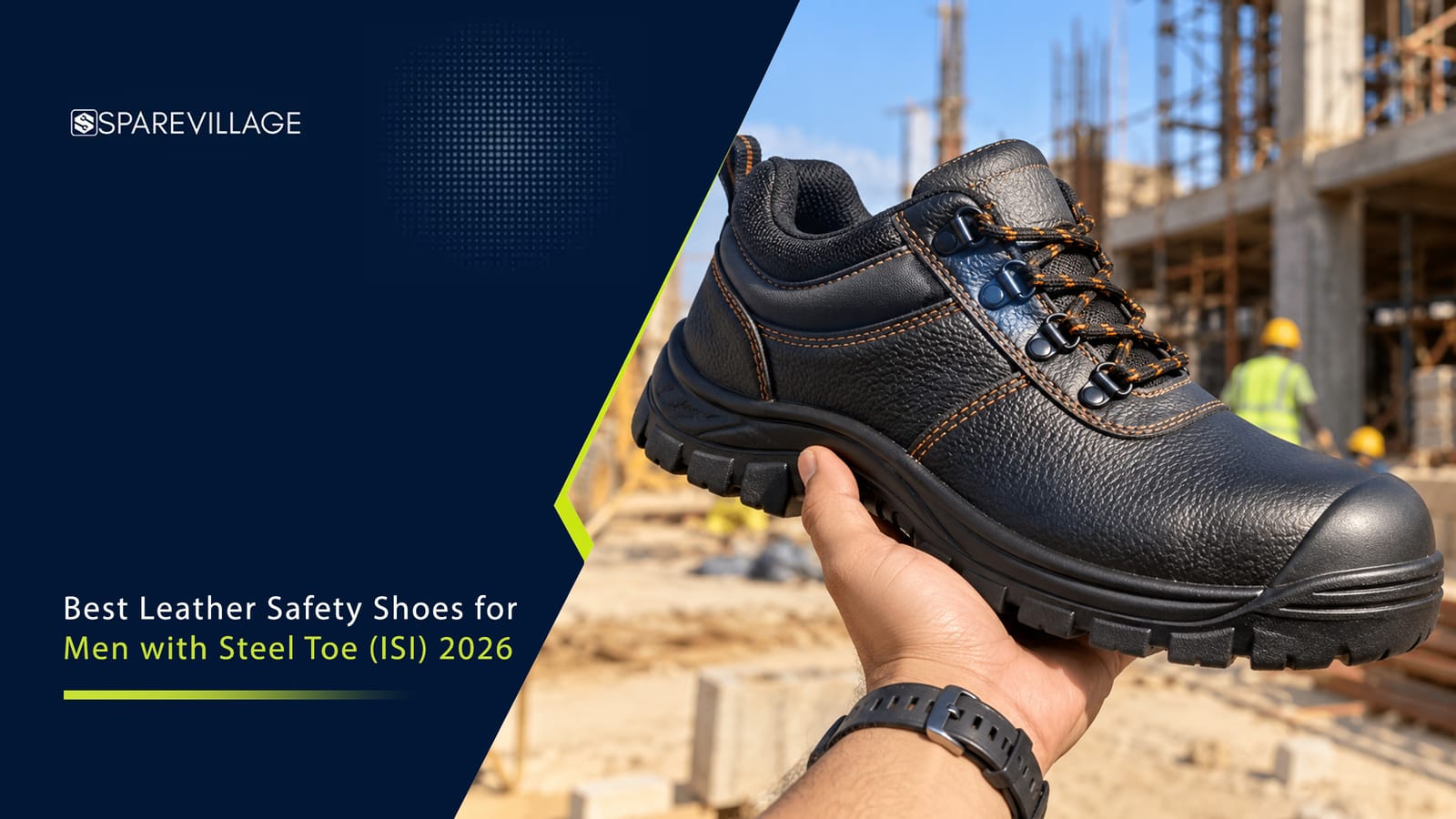
Best Leather Safety Shoes for Men with Steel Toe (ISI) 2026
Best leather safety shoes for men with steel toe (ISI) 2026. Compare key features, comfort, sole grip, and workplace uses to choose the right pair.
Article Content
Intro : Choosing the best leather safety shoes for men with steel toe depends on the work you do, the risks around you and the number of hours you wear them. A shoe that works well in a warehouse may not offer the right grip or comfort for a construction site. When comparing the best leather safety shoes for men with steel toe, buyers should check the toe protection, sole material, fit and required safety standards, not just the price. The best leather safety shoes for men with steel toe should match your workplace hazards and remain comfortable throughout your shift. For factory workers, maintenance teams, warehouse staff and machine operators, the wrong footwear can cause problems during long shifts. Heavy shoes may feel tiring. A slippery sole can make movement difficult. A tight toe area can cause discomfort after several hours. Leather safety shoes are worth considering when you need a durable upper and workplace protection. However, leather alone does not make a shoe safe. The toe cap, sole construction, fit and relevant safety certification matter just as much. This guide explains what to check before buying, which features matter for different jobs, how to compare popular brands and what you can expect to spend on selected models available through SpareVillage. What Makes Leather Safety Shoes a Good Choice? Leather safety shoes are designed for workplaces where ordinary footwear may not provide enough protection. Depending on their construction, they can combine a leather upper with a protective toe cap, a work-suitable outsole and cushioning for daily use. But not every leather safety shoe offers the same protection. Leather upper: Check the material and construction The upper covers the top and sides of your foot. Leather is used in many work shoes because it can provide structure, support and resistance to everyday wear. There are differences between leather types. Full-grain or other specified leather constructions may behave differently from suede or nubuck. Their care requirements and resistance to dirt or moisture can also differ. Before buying, check the listed upper material rather than relying on a product photograph. If your workplace involves oil, water or chemical exposure, confirm that the shoe is suitable for those conditions. A leather upper does not automatically make footwear waterproof or chemical-resistant. Steel toe cap: Protection for the front of the foot A steel toe cap is intended to protect the toe area against specified impact and compression hazards. It can be useful around materials handling, industrial equipment and heavy objects. However, a steel toe cap does not protect every part of the foot. It does not automatically provide puncture resistance against sharp objects entering through the sole. Check the protection stated for the exact model and make sure it matches your workplace risk assessment. Outsole: Match the sole to the floor The outsole affects grip, wear and how the shoe performs on different surfaces. Common materials include PU, rubber and TPR, but the material alone does not establish how well a shoe will perform in your workplace. For example, a factory floor with oil contamination creates different demands from a dry warehouse floor. Check the manufacturer's specifications for slip resistance and any required resistance to oil, heat or chemicals. Cushioning and fit: Important for long shifts Safety shoes that fit poorly can become uncomfortable during extended standing and walking. Check the size chart, toe-room, heel hold and internal cushioning before ordering. A padded footbed may improve comfort, but it does not guarantee that a shoe will suit every foot shape. If possible, try the shoes with your usual work socks before using them for a full shift. The right shoe depends on what can happen in your work area. Use your job role as a starting point, then confirm the required protection with your safety team. For factory workers and machine operators Factory workers may move between machines, storage areas and production lines. Their footwear may need toe protection, a stable fit and suitable outsole grip. When comparing safety shoes for factory workers, check: The specified toe protection and applicable safety standard. The outsole's suitability for the factory floor. The fit for regular walking and standing. Any additional protection required by the machinery or process. A steel toe model may be appropriate where impact or compression hazards exist. If the job also involves sharp metal pieces, electrical risks or hot surfaces, additional footwear requirements may apply. For warehouse and logistics staff Warehouse employees often spend long periods walking, picking products and moving between storage racks. Comfort and traction become important alongside toe protection. Look for a secure heel fit, enough room for your toes and an outsole suitable for the actual floor. Consider the total shoe weight if your role involves frequent walking. Do not choose a shoe only because it looks lightweight. First check whether it provides the protection required for pallet handling, loading and other workplace hazards. For construction and outdoor work Construction sites can involve uneven ground, loose materials, sharp objects and changing weather. A suitable model may need more than a steel toe cap. Check whether the footwear provides the required sole penetration resistance, grip and other site-specific features. If the work involves rain or standing water, verify the stated water resistance instead of assuming that leather prevents water from entering. An ankle-height design may be useful for certain tasks, but height alone does not establish ankle protection. For maintenance and repair work Maintenance teams may work near machines, tools, metal components and stored materials. Their requirements can change from one site to another. For regular workshop work, toe protection and appropriate grip may be essential. If sharp objects can penetrate the sole, check for a certified penetration-resistant design. Where electrical hazards are present, follow the workplace's electrical safety requirements and verify the exact footwear rating. No single pair of safety shoes is automatically suitable for every maintenance task. For supervisors and purchase teams Supervisors and procurement teams should compare shoes against the same checklist rather than choosing solely by price or brand. Consider the required protection, daily wearing time, size availability, expected usage and replacement needs. If you are purchasing for a team, confirm the sizes and workplace requirements before placing a bulk order. You can compare available options under safety shoes for men on SpareVillage. A product labelled as a safety shoe may not include every protective feature your workplace needs. Read the specifications before comparing prices. Check the toe-cap material Steel toe caps are commonly selected for workplaces that require impact and compression protection. Some models use composite toe caps instead. Steel is a metal and may add weight compared with some alternative designs. Composite toe caps may be useful where a non-metallic design is required. Neither material should be treated as universally better. The protection rating and workplace requirements should guide your choice. Verify the ISI mark and applicable standard If you are searching for an ISI mark safety shoes price, check the certification before looking at the discount. The Bureau of Indian Standards (BIS) publishes requirements for safety footwear under the relevant Indian Standards. Its official product-certification information identifies IS 15298 (Part 2) for safety footwear. The applicable standard and version should be checked against current requirements. See the BIS product-certification information. Do not assume that every steel toe shoe or every leather safety shoe is ISI-marked. Look for the applicable Standard Mark and verify the manufacturer's certification details for the exact product. A seller's description or the presence of a steel toe cap is not, by itself, proof of certification. Check sole protection and grip Different workplaces need different outsole features. Check the product specifications for slip resistance, penetration resistance, oil resistance or other required properties. A thick sole is not automatically safer than a thin one. Likewise, a shoe described as having a non-slip sole should be assessed against the relevant test or specification rather than treated as suitable for every slippery surface. Check sizing and daily comfort Use the listed size chart and product details. Make sure the shoe does not press against your toes when standing or walking. If your work involves long shifts, consider cushioning, shoe weight and how easily you can move in the footwear. Do not rely on a general claim such as “all-day comfort” without considering your own fit and working conditions. Check the product details before ordering Before placing an order, confirm the model name, available size, toe-cap material, upper material, outsole and any required certification. For bulk purchases, verify that the specifications apply to every model being ordered. The best option is the model that meets your safety requirements and fits your budget. Brand names can help narrow your search, but they should not replace a review of the actual product specifications. Kavacha Kavacha offers several steel toe safety shoe options on SpareVillage, including leather and suede leather models. The Kavacha S68 is listed as a pure leather steel toe safety shoe with a TPR sole. The Kavacha Hertz 03 is listed with a suede leather upper and an air-mix sole. These are different constructions, so compare their specifications rather than assuming that both models perform identically. You can review the available listings here: Watch these product reviews before making a decision: Use the videos to understand the product's appearance and construction. Confirm technical specifications on the product listing before purchasing. HILLSON HILLSON is another brand to consider when comparing men's safety shoes. Focus on the exact model's toe protection, upper material, outsole and sizing. If you need leather footwear, confirm that the selected model has the required leather upper. Do not assume that every shoe from a brand uses the same material or offers the same protection. Compare available models on SpareVillage against the conditions in your workplace. ARMADURO When evaluating ARMADURO safety shoes, begin with your workplace requirements. Check the listed protective features, construction and fit for the model you are considering. If your job involves heavy materials or machinery, verify the specified toe protection and applicable certification. If you work on slippery floors, check the outsole's suitability for those conditions. Choose the model based on its documented features rather than brand name alone. 11caps For 11caps, compare the specifications of the individual safety shoe before ordering. Check the upper material, toe-cap type, sole construction and available sizes. If you need leather safety shoes for daily factory or workshop use, confirm that the selected product meets those requirements. A product that looks suitable in a photograph may have different specifications from what your workplace requires. LIBERTY LIBERTY is another name buyers may consider when comparing men's safety footwear. The important step is to identify the exact model and review its stated protective features. Compare fit, sole requirements and toe protection with the other options on your shortlist. If an ISI-marked model is required, verify its certification rather than assuming that the brand or product category establishes compliance. J K STEEL For J K STEEL safety footwear, check the product details against the risks in your workplace. Confirm the toe-cap material, sole features and required safety standard before buying. The right choice should meet your job's protection requirements without creating unnecessary discomfort during daily use. LEATHER CRAFT LEATHER CRAFT is worth comparing if you are specifically looking for leather safety footwear. However, the exact model's specifications remain the deciding factor. You can watch the following reviews for a closer look at the products: A review can help you assess the shoe's appearance and reported wearing experience. It should not replace verification of the product's protective rating or certification. The price of leather safety shoes varies with the model, material, protective features, brand and seller. A lower price may suit a basic requirement, while a more specialised shoe may cost more because of its construction or certified features. For reference, the following approximate prices are based on selected SpareVillage listings checked for this guide. Prices, sizes, availability and offers can change. Sources: Kavacha S68 listing, Kavacha Hertz 03 listing and Kavacha S67 listing. These are rounded reference prices, not guaranteed checkout prices. Check the current listing for the selected size, taxes and availability before ordering. Is the cheapest safety shoe the right choice? Not always. A cheaper shoe may be suitable if it meets your workplace's requirements and fits properly. But saving money is not useful if the shoe lacks a required protective feature. Compare the total requirements first. Check certification, toe protection, outsole suitability and fit. Then compare prices among products that meet those requirements. How should businesses compare bulk purchases? For a factory, warehouse or maintenance team, compare the specifications of every shortlisted model. Confirm the number of pairs, size distribution, delivery requirements and applicable safety standards. If several workers need footwear, a size-wise list can help reduce ordering errors. Ask for clarification if the product listing does not clearly state a feature that your workplace requires. When buying online, the product listing should help you make a clear comparison. Check the model name, upper material, toe-cap type, sole material, sizes, price and delivery details before placing an order. SpareVillage provides a marketplace where buyers can explore safety footwear options for business and workplace requirements. You can compare listed models and select products based on your team's needs. Start with the best leather safety shoes available in the safety shoes category. Review each product's specifications before deciding which one is suitable for your work. If you need other workplace protection products, explore safety & PPE supplies on SpareVillage. Final Buying Recommendation Before choosing leather safety shoes for men, answer three questions: What hazards do you face? Identify whether you need toe protection, penetration resistance, slip resistance or other specific features. Which features are verified? Check the exact model's specifications and verify any required ISI marking or certification. Will the shoe fit your workday? Consider size, comfort, shoe weight and the surface on which you work. For buyers comparing Kavacha S68, Kavacha Hertz 03 and other leather safety shoes, the better option depends on the job rather than the brand name or discount alone. Choose footwear that meets your workplace's safety requirements, fits correctly and stays within your budget. That approach helps you make a more informed purchase for yourself or your team. Conclusion At SpareVillage, we understand that choosing the right safety shoes is about more than price. It is about finding footwear that meets your workplace safety requirements, fits comfortably and supports your daily work. Whether you need leather safety shoes for factory work, warehouse operations, construction or maintenance, compare the toe protection, sole material, fit and applicable safety standards before making a decision. Explore our range of safety shoes for men to compare available models from brands such as Kavacha and others. Check the product specifications, available sizes and latest prices to find an option that suits your requirements. At SpareVillage, we help businesses explore safety footwear and other workplace essentials in one place. Visit our safety & PPE supplies category to find products for your workplace needs. FAQs: 1. Which are the best leather safety shoes for men with steel toe? The best leather safety shoes are those that match your workplace hazards, fit properly and provide the required toe protection. Check the leather type, outsole material, grip, cushioning and applicable safety certification. For factory and warehouse work, compare these features with your daily tasks before choosing a model from brands available on SpareVillage. 2. What is the price of leather safety shoes for men in India? The price depends on the brand, upper material, toe cap, sole construction and protective features. Selected Kavacha models on SpareVillage have been listed at approximately ₹1,000 to ₹1,100. Prices may change with availability, size and offers. Check the current product listing before placing your order. 3. Are steel toe safety shoes better than normal shoes? Steel toe safety shoes provide specified impact and compression protection that ordinary shoes generally do not offer. They are useful in workplaces where heavy objects may fall on the feet or compress the toes. However, they do not protect against every hazard. Select footwear according to your workplace risk assessment. 4. How can I check whether safety shoes are ISI-marked? Check the product description and the shoe's marking for the applicable Indian Standard and BIS certification details. You can verify certification information through the official Bureau of Indian Standards website. Do not assume that a steel toe cap or a seller's claim alone proves that the footwear is ISI-marked. 5. Are leather safety shoes comfortable for 8 to 10 hours? Leather safety shoes can be suitable for long shifts if their fit, cushioning and weight work for your feet. Check toe-room, heel support and the insole before buying. If you stand or walk on concrete for hours, comfort becomes especially important. The right fit varies by person, so try the shoes before a full shift whenever possible. 6. Which safety shoes are best for factory workers? Factory workers should select safety shoes according to the risks around machines, materials and production lines. Steel toe protection may be necessary where falling objects or compression hazards exist. Also check the outsole's grip, penetration resistance if required, and any additional protection specified by the workplace. No single model suits every factory environment. 7. Are leather safety shoes waterproof? No. A leather upper does not automatically make safety shoes waterproof. Water resistance depends on the leather treatment, construction, seams and product specifications. If your work involves rain or wet floors, check the stated water resistance. For regular water exposure or standing water, choose footwear specifically designed for those conditions. 8. Which sole material is best for leather safety shoes? There is no single best sole material for every workplace. PU can offer cushioning and relatively low weight, while rubber may be suitable for applications requiring particular grip, abrasion or heat-related properties. The exact formulation and tested performance matter more than the material name alone. Check the product specifications against your working conditions. 9. What is the difference between steel toe and composite toe safety shoes? Steel toe shoes use a metal protective cap, while composite toe shoes use non-metallic materials. Both can provide specified impact and compression protection when designed and tested to the relevant standard. Composite designs may suit workplaces with metal-detection requirements. Compare certified protection, shoe weight and workplace needs before choosing either type. 10. Can I wear leather safety shoes on construction sites? Yes, provided the footwear meets the construction site's safety requirements. Steel toe protection may help with impact hazards, but construction work can also involve sharp objects, uneven surfaces and slippery floors. Check whether the shoes offer the required sole penetration resistance, grip and other protective features before using them on site. 11. How do I choose the correct size of safety shoes? Start with the brand's size chart and measure your feet if needed. The shoes should hold your heels securely without squeezing your toes or pressing against the sides of your feet. Try them with your usual work socks when possible. Do not assume your regular casual shoe size will fit every safety shoe brand. 12. Are heavy steel toe safety shoes suitable for daily use? They can be suitable if their protection and fit meet your work requirements, but excessive weight may feel tiring during long shifts. Compare the weight of available models, along with cushioning and flexibility. Do not sacrifice required protection just to choose a lighter shoe. Comfort and safety should be considered together. 13. How long do leather safety shoes last? Their lifespan depends on daily use, workplace conditions, maintenance and material quality. Shoes exposed to rough surfaces, moisture, oil or heavy abrasion may wear differently from those used on clean warehouse floors. Inspect the outsole, stitching, upper and toe area regularly. Replace footwear when its protective features are damaged or no longer reliable. 14. Are leather safety shoes suitable for oily factory floors? Only if the shoe's outsole is specifically suitable for the oil and floor conditions involved. Leather uppers and thick soles do not automatically provide slip resistance or oil resistance. Check the manufacturer's specifications and your workplace requirements. If oil regularly reaches the upper, verify that the complete footwear construction is appropriate for that exposure. 15. Do steel toe safety shoes protect against nails and sharp objects? A steel toe cap protects the toe area against specified impact and compression hazards. It does not automatically prevent nails or sharp objects from penetrating the sole. If your work involves metal scraps, nails or construction debris, check for a suitable penetration-resistant midsole or other specified sole protection. 16. Which safety shoes are best for warehouse workers? Warehouse workers should look for suitable toe protection, secure fit, cushioning and outsole grip. If the job involves moving heavy cartons or handling pallets, steel toe protection may be required. Workers who walk for long periods should also consider shoe weight and comfort. The final choice should match the actual warehouse hazards. 17. Can leather safety shoes be used during the monsoon? They can be used in some wet conditions if their construction and specifications are suitable, but ordinary leather safety shoes may allow water to enter. Check water resistance, outsole grip and drying instructions before buying. If your work involves standing water or frequent heavy rain, choose footwear designed for that level of exposure. 18. Which brands of leather safety shoes can I compare on SpareVillage? You can explore available safety footwear from brands such as Kavacha, HILLSON, ARMADURO, 11caps, LIBERTY, J K STEEL and LEATHER CRAFT. Availability and model specifications may vary. Compare the exact product's upper material, toe protection, sole construction, sizes and certification before selecting a pair for your workplace. 19. Are leather safety shoes worth buying for daily industrial work? They can be a practical choice when the upper, protective features and outsole suit your working conditions. However, leather alone does not guarantee durability, comfort or safety. Compare the complete construction, certification, fit and price. A suitable pair should meet your workplace requirements without creating unnecessary discomfort during daily use. 20. Where can I buy leather safety shoes for men online in India? You can compare available options in SpareVillage's safety shoes for men category. Review each listing for its specifications, sizes, approximate price and availability before ordering. For gloves, helmets and other workplace protection products, explore the safety & PPE supplies category as well.How to Choose Safety Shoes for Your Type of Work
What to Check Before Buying Steel Toe Safety Shoes
Best Leather Safety Shoes for Men: Brands to Compare
Leather Safety Shoes Price: What Should You Budget?
Where to Buy Leather Safety Shoes for Men Online