Workplace Safety Signage & Emergency Response Equipment Guide
Workplace safety signage & emergency response equipment guide covering safety signs, emergency exits, fire equipment, first aid and workplace preparedness.
Article Content
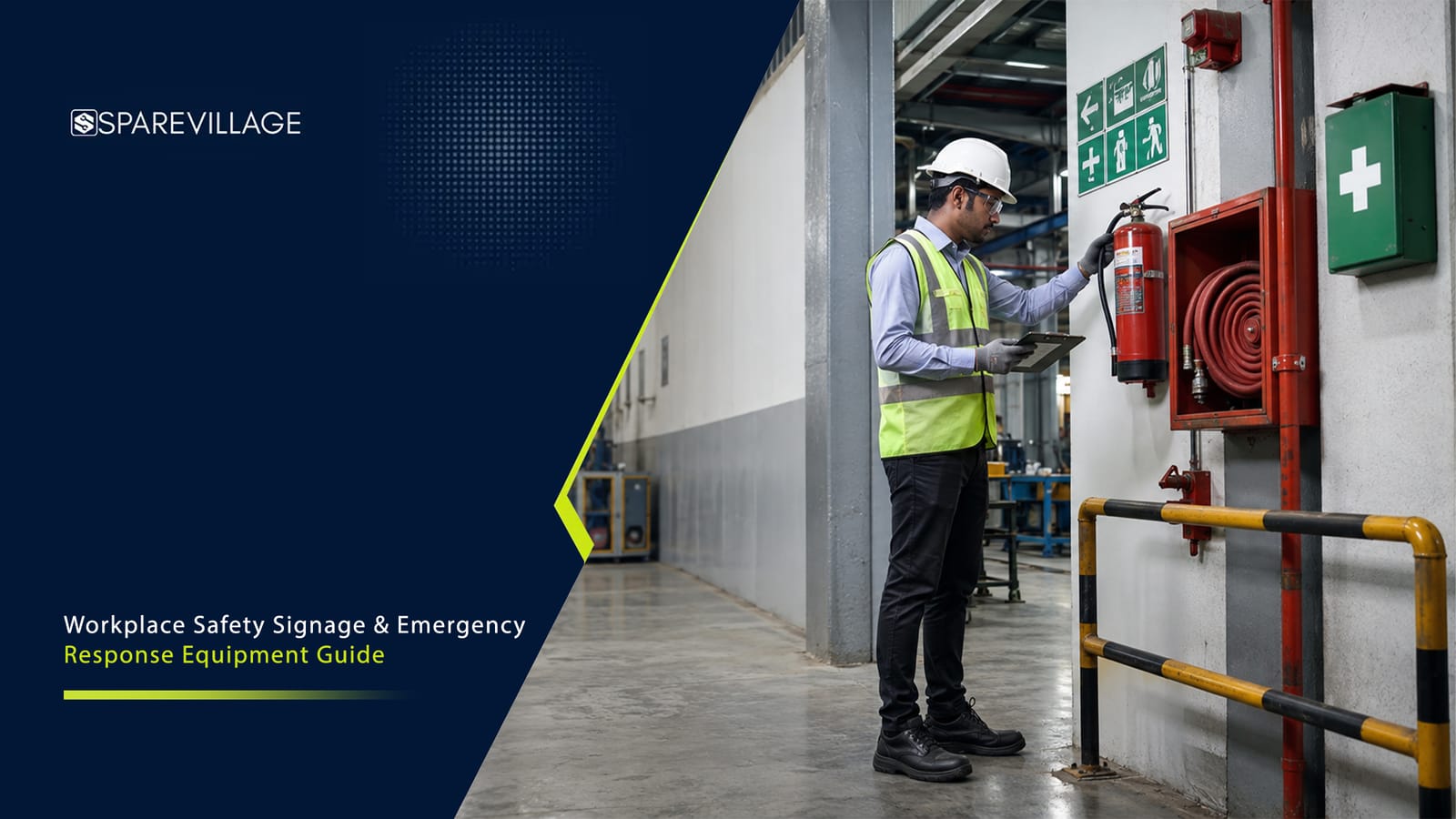
Introduction Workplace safety does not begin when an accident happens. It begins much earlier, with clear instructions, visible warnings, prepared emergency routes, and equipment that workers can reach without delay. In a factory, warehouse, construction site, laboratory, workshop, commercial building, or maintenance area, people may face different risks every day. These risks can include fire, electrical hazards, chemical exposure, moving machinery, restricted areas, slips, falls, vehicle movement, and medical emergencies. Safety signage and emergency response equipment work together. A sign tells people what to do, what not to do, where a hazard exists, or where emergency equipment is located. Emergency equipment provides the physical means to respond when something goes wrong. A fire extinguisher is useful only when people can find it quickly. An emergency exit is useful only when the route is visible and unobstructed. An eyewash station is useful only when workers know where it is and can reach it quickly. ISO 7010 defines registered safety signs for accident prevention, fire protection, health hazard information, and emergency evacuation. India also has IS 16451:2023, which adopts ISO 7010:2019 for graphical safety signs. This guide explains how to plan workplace safety signage and emergency response equipment as one complete safety system. It focuses on selection, placement, visibility, emergency preparedness, inspection, worker understanding, and practical purchasing decisions. Safety signs are often treated as simple boards that are installed because a workplace needs to “look compliant.” That approach misses their real purpose. A properly designed safety sign communicates a safety message quickly. It should help a worker recognize a hazard, understand the required action, or locate a safety facility without having to stop and interpret a long instruction. HSE guidance explains that safety signs should be used when significant risk remains after other safety measures have been applied. It also warns against excessive signage because too many signs can create confusion. A good workplace signage system should therefore answer practical questions. What hazard is present? What action is required? Is access prohibited? What PPE is required? Where is the nearest emergency exit? Where is the fire extinguisher? Where is first-aid equipment? Where should workers assemble after evacuation? Where can an emergency be reported? What equipment must be isolated or shut down? Signs should support engineering controls, guarding, procedures, training, and PPE. They should not become a substitute for controlling a hazard at its source. This is an important E-E-A-T point for safety content. A responsible safety guide should not suggest that placing a warning sign makes an unsafe process acceptable. The sign communicates the risk. The actual risk still needs to be controlled. For businesses, this changes the way signage should be purchased. The objective should not be “buy more safety boards.” The objective should be to build a consistent visual safety system that workers can understand during normal operations and during an emergency. Workplace signs can be divided according to the message they need to communicate. The exact classification can vary according to the applicable standard and workplace regulations, but the basic purpose remains consistent: warning, prohibition, mandatory action, emergency information, and fire-safety information. Warning Signs Warning signs alert people to a potential hazard. Examples include electrical hazards, slippery surfaces, flammable materials, corrosive substances, moving machinery, high temperature, and hazardous chemicals. The message should be specific enough to help the worker understand the risk. A generic “Be Careful” message is usually weaker than a sign that identifies the actual hazard. Prohibition Signs Prohibition signs communicate actions that are not allowed. Examples include: No smoking. No unauthorized entry. Do not operate. No open flames. Do not touch. No pedestrian access. OSHA's accident-prevention sign requirements distinguish between danger, caution, and safety instruction signs based on the type of hazard or instruction being communicated. Mandatory Signs Mandatory signs tell workers what they must do. Common examples include: Wear safety helmet. Wear eye protection. Wear hearing protection. Wear protective gloves. Wear respiratory protection. Wear safety footwear. These signs are particularly important at entrances to areas where specific PPE is required. Emergency and Safe-Condition Signs These signs help people find safety facilities and escape routes. Examples include: Emergency exit. First-aid station. Emergency eyewash. Safety shower. Assembly point. Emergency telephone. Safe route. Refuge area. ISO 7010 specifically covers signs used for accident prevention, fire protection, health hazards, and emergency evacuation. Fire Safety Signs Fire-safety signage identifies equipment and emergency facilities. Examples include: Fire extinguisher. Fire alarm. Fire hose. Fire hydrant. Fire blanket. Fire exit. Fire emergency telephone. The important principle is consistency. Workers should be able to recognize the meaning of a sign without relying entirely on lengthy text. A workplace should not start by ordering random signs from a catalogue. The first step should be a risk assessment and site survey. Walk through the workplace and identify hazards, emergency equipment, escape routes, restricted areas, PPE zones, and locations where people may need immediate instructions. Create a signage plan for each area. For every sign, consider: The hazard or safety message. The people who need to see it. The viewing distance. Lighting conditions. Mounting height. Direction of travel. Possible obstructions. Language requirements. Whether the sign must remain visible during a power failure. Whether a pictogram can communicate the message more clearly. Whether additional text is necessary. BIS material on safety colours and graphical symbols emphasizes the purpose of safety signs as quickly attracting attention and communicating clear safety messages. It also recommends using signs for health and safety instructions. Signage should also be reviewed after workplace changes. A new machine, chemical storage area, production line, warehouse rack arrangement, electrical panel, or building extension can change the safest route. This is where many workplaces make a practical mistake. They install signage once and forget it. A safety sign is part of a living safety system. If the workplace changes, the signage system should be reviewed. Emergency Exit and Evacuation Signage Emergency exit signage deserves special attention because people may need to make decisions under stress, smoke, poor lighting, noise, or limited visibility. A route that is obvious during normal working hours may become difficult to follow during an emergency. Emergency routes should be clearly identified. Exit doors should be marked. Where the exit cannot be seen directly, directional signs should guide people toward the appropriate exit. BIS guidance on emergency safety signs states that safety signs should remain visible when premises are occupied and should indicate safety-equipment locations and safe routes out of a building. It also describes directional signs for situations where the exit is not directly visible. An effective evacuation signage system may include: Emergency exit signs. Directional arrows. Stairway signs. Fire exit signs. Assembly-point signs. “Do Not Use Lift” signs where applicable. Floor evacuation maps. Emergency telephone information. Fire equipment location signs. The route itself must remain usable. A sign cannot compensate for blocked corridors, locked emergency doors, stored material, poor lighting, or confusing building layouts. Emergency planning should also account for people who may need additional assistance. HSE guidance specifically highlights the need to consider people with disabilities and vulnerable workers when planning emergency procedures. For this reason, evacuation signage should be checked from the actual worker's viewpoint. Stand at the point where a person might become confused. Ask whether the next safe direction is immediately obvious. Emergency Response Equipment Every Workplace Should Evaluate Emergency equipment should be selected according to workplace hazards. There is no single equipment list that is correct for every facility. A small office, metal fabrication plant, chemical laboratory, warehouse, and construction site have different emergency risks. Common emergency response equipment includes: Fire extinguishers. Fire blankets. Fire alarms. Emergency lighting. First-aid kits. Eyewash stations. Emergency showers. Spill-control equipment. Emergency stop devices. Emergency communication systems. Rescue equipment. Fire hose and hydrant systems where required. Emergency evacuation maps. Emergency contact boards. The key purchasing question is not simply “What equipment should we buy?” It is “What credible emergencies can occur here, and what equipment is required to respond safely?” OSHA guidance for laboratories, for example, identifies emergency equipment such as fire extinguishers, eyewash units, safety showers, fire blankets, first-aid equipment, fire alarms, and telephones as important elements of emergency preparedness. Emergency equipment should also be accessible. Do not place a first-aid kit behind locked storage. Do not hide an extinguisher behind material. Do not install an emergency shower where equipment blocks access. The equipment and its sign should work together. The worker should be able to recognize the sign, locate the equipment, and understand its purpose quickly. Fire Emergency Equipment and Fire Response Signage Fire safety requires more than installing extinguishers. A workplace needs a complete fire-response arrangement that considers detection, alarm, evacuation, firefighting equipment, emergency communication, and assembly. Fire extinguishers should be appropriate for the hazards present. Different types of fires require different extinguishing agents. Therefore, extinguisher selection should be based on the materials and processes present at the site rather than simply buying the cheapest or most common model. Fire equipment should be clearly identified. Workers should know where the nearest equipment is located and understand the limits of their role during a fire. Emergency plans should also define how a fire is reported. OSHA's emergency action plan requirements include procedures for reporting a fire or other emergency, emergency escape procedures, procedures for accounting for employees after evacuation, and designated responsibilities. Fire-related signage should therefore connect several pieces of information. Hazard → Alarm → Exit → Equipment → Assembly For example, a worker should be able to identify a fire alarm, understand how to raise an alarm, locate the evacuation route, find the fire exit, and reach the assembly point. Training is equally important. An extinguisher that employees have never seen or used in training may not be effective during a real emergency. The safest approach is to make the emergency system familiar before an emergency occurs. First Aid, Eyewash and Emergency Shower Equipment Medical response equipment is especially important where employees may experience cuts, burns, chemical splashes, eye injuries, or other workplace injuries. First-aid supplies should be readily available. OSHA's general industry first-aid requirement states that where an appropriate medical facility is not in near proximity, trained personnel and adequate first-aid supplies must be available. Chemical-handling workplaces require additional attention. Where workers may be exposed to injurious corrosive materials, OSHA requires suitable facilities for quick drenching or flushing of the eyes and body for immediate emergency use. This makes eyewash and emergency shower placement a critical design decision. The equipment should not be hidden in another room or placed behind obstacles. Consider: Distance from the hazard. Unobstructed access. Visibility. Lighting. Water supply where applicable. Inspection requirements. Equipment compatibility with the hazard. Clear emergency signage. Worker training. OSHA guidance also explains that emergency eyewash and shower requirements depend on the hazards present and that the workplace conditions, exposure severity, and number of workers exposed can affect the assessment. The sign is therefore not an optional decoration. It helps workers locate critical emergency equipment when rapid action matters. Emergency Action Plans Must Connect Signs, Equipment and People A strong emergency response system has three connected parts: information, equipment, and people. Information includes signs, maps, alarms, emergency numbers, procedures, and instructions. Equipment includes extinguishers, first-aid supplies, eyewash stations, emergency showers, communication systems, and other response tools. People include trained employees, first-aiders, emergency coordinators, maintenance personnel, security staff, and other designated roles. If one part fails, the entire response can become weaker. OSHA's emergency action plan framework identifies key elements such as reporting procedures, escape routes, accounting for workers after evacuation, rescue or medical duties, and designated contacts. A practical emergency plan should answer: What emergencies can reasonably occur? How will the emergency be reported? Who raises the alarm? Who controls the response? Which route should employees use? Where is the assembly point? How will employees be accounted for? Who provides first aid? Which equipment can trained employees use? When should workers evacuate instead of attempting intervention? Alarm systems also need to be recognizable. OSHA states that employee alarms should provide enough warning for the required emergency action and safe escape. The alarm should be distinguishable and recognizable as an emergency signal. This is why emergency planning should not sit separately from signage planning. The evacuation map, signs, alarms, emergency equipment, and training should all communicate the same procedure. Sign Visibility, Lighting and Placement Matter A technically correct sign can still fail if nobody can see it. Visibility depends on several factors. These include sign size, viewing distance, mounting position, lighting, background contrast, obstruction, dirt, glare, and the movement pattern of people in the area. Signs should be placed where workers naturally look before entering or using an area. PPE signs are often most useful at entrances. Equipment-location signs should be visible from normal walking paths. Hazard signs should be close enough to the hazard to provide useful information without creating another risk. Emergency signage needs additional consideration because normal lighting may fail. BIS guidance for emergency safety signs addresses visibility during occupancy and the need for signs and escape-route information to remain effective when normal lighting is unavailable. Regular inspection should therefore check more than whether the sign is physically present. Check: Is the sign visible? Is it damaged? Is it faded? Is it covered by inventory? Is the lighting working? Is the message still correct? Is the direction still accurate? Has the workplace layout changed? Can a new worker understand it? A useful site inspection method is to photograph the workplace from the worker's normal viewpoint. This can reveal signs hidden behind doors, racks, machines, pipes, or stored material. Language, Symbols and Worker Understanding Industrial workplaces can include employees, contractors, visitors, drivers, technicians, and temporary workers with different levels of language familiarity. A safety system should therefore avoid unnecessary dependence on long written instructions. Recognizable pictograms can communicate basic safety information quickly. ISO 7010 is designed around standardized safety symbols for purposes including accident prevention, fire protection, health hazards, and emergency evacuation. However, pictograms do not mean that text is never required. Where the message is complex, additional wording may be necessary. The wording should be short, clear, and understandable to the people who need it. Indian safety guidance also provides a useful local consideration. A BIS draft related to safety tags recommends considering Hindi, English, and the regional language of the state where the tags are likely to be used. The practical lesson is simple: design for the actual workforce. Before finalizing signage, ask workers whether they understand the symbols and instructions. A safety manager may understand a sign immediately because of training and experience. A new worker may not. Worker understanding is one of the strongest indicators that a signage system is working. Inspection, Maintenance and Emergency Drills Safety equipment should never be considered “installed and finished.” Emergency equipment needs inspection and maintenance. Signage needs inspection too. A maintenance schedule should cover both physical condition and operational readiness. For signage, inspect: Visibility. Legibility. Correct message. Correct location. Mounting condition. Lighting. Damage. Obstruction. For emergency equipment, inspect according to the manufacturer's instructions, applicable standards, site risk assessment, and local regulatory requirements. Fire equipment, alarms, emergency lighting, eyewash systems, first-aid supplies, and other equipment may have different inspection and maintenance requirements. Emergency drills are also important because written procedures do not guarantee correct behavior. OSHA guidance notes that training and drills help workers understand emergency procedures and that people can rely on what they learned during practice when an actual emergency occurs. After every drill, record what happened. Look for: People using the wrong exit. Confusion about alarm signals. Blocked routes. Missing emergency signs. Poor visibility. Delayed assembly. Problems accounting for workers. Equipment that was difficult to locate. Employees who did not understand their assigned role. The goal of a drill should not be to prove that everything is perfect. The goal should be to identify weaknesses before a real emergency exposes them. How to Choose Workplace Safety Signage and Emergency Equipment Buying safety products should begin with risk assessment rather than product availability. A catalogue can show hundreds of signs and emergency products. It cannot determine which ones your workplace actually needs. Start by mapping the site. Identify: Production areas. Machinery. Chemical storage. Electrical panels. Warehouses. Loading zones. Vehicle routes. Pedestrian routes. Fire equipment. Emergency exits. First-aid facilities. Emergency showers and eyewash stations. Assembly points. Restricted areas. Then match each risk with the required control and communication. When comparing products, consider material durability, visibility, mounting method, environmental conditions, temperature, moisture, chemicals, UV exposure, cleaning requirements, and expected service life. For outdoor industrial areas, signs may need to withstand weather and sunlight. For chemical environments, material compatibility becomes more important. For warehouses, signs need to remain visible around tall racks and moving equipment. Most importantly, check applicable Indian requirements and standards for your specific workplace. ISO standards provide internationally recognized frameworks, while Indian Standards and sector-specific regulations may apply locally. BIS lists IS 16451:2023 as the Indian adoption of ISO 7010:2019 for registered safety signs. A responsible purchasing process should also consider manufacturer documentation, specifications, certifications where applicable, installation requirements, inspection requirements, and replacement availability. The cheapest safety sign or emergency product is not necessarily the most economical choice. The correct product is the one that remains visible, understandable, accessible, and suitable for the actual workplace risk. Building a Complete Workplace Emergency Response System The strongest approach is to treat workplace safety signage and emergency equipment as one integrated system. Start with the hazard. Then define the required control. Then communicate the control through signage. Then provide the emergency equipment needed if the control fails or an incident occurs. Finally, train workers and test the system. A mature workplace safety system can follow this sequence: Risk Assessment → Safety Controls → Signage → Emergency Equipment → Training → Drills → Inspection → Improvement This approach also supports better E-E-A-T because it focuses on real workplace decision-making instead of simply listing products. For example, a chemical storage area may need hazard identification, restricted access, PPE requirements, chemical labels, emergency contact information, spill-response equipment, eyewash or shower facilities where the hazard assessment requires them, and an emergency procedure. These elements should reinforce each other. Similarly, a warehouse may need pedestrian and vehicle separation, traffic signs, restricted areas, emergency exits, fire equipment signs, first-aid information, emergency lighting, and an assembly point. Every facility is different. The correct safety system should reflect the actual process, hazards, building layout, workforce, and applicable regulations. Practical Checklist Before Installing or Replacing Safety Signs Before purchasing a large quantity of workplace signage, conduct a site-level review. Safety Signage Checklist Identify every significant workplace hazard. Identify prohibited activities. Mark mandatory PPE areas. Identify emergency exits. Mark evacuation directions. Identify fire equipment. Identify first-aid facilities. Identify eyewash and shower stations. Mark assembly points. Identify emergency communication points. Review restricted-access areas. Check sign visibility. Check lighting conditions. Remove unnecessary or duplicate signs. Review multilingual requirements. Confirm that signs match applicable standards. Update signs after workplace layout changes. Emergency Equipment Checklist Assess credible emergency scenarios. Identify fire risks. Assess chemical exposure risks. Assess first-aid requirements. Review emergency communication. Review emergency lighting. Check evacuation routes. Check emergency equipment accessibility. Establish inspection schedules. Train designated personnel. Conduct emergency drills. Record findings. Correct identified weaknesses. The most important final check is simple: Can a worker who has never used the area understand what to do? If the answer is no, the system needs improvement. Workplace Safety Is a System, Not a Collection of Products Safety signage and emergency response equipment are sometimes purchased as separate items. That makes procurement easier, but it can make safety planning weaker. A better approach is to design the complete response system first. A worker should be able to recognize a hazard. The worker should know what action is required. If an emergency occurs, the worker should know how to report it. The evacuation route should be visible. Emergency equipment should be accessible. Responsible people should know their roles. Workers should know where to assemble. After the incident, the organization should be able to account for people and review what happened. That is the real purpose of workplace safety signage. Standards such as ISO 7010 provide a consistent framework for safety symbols. BIS has adopted ISO 7010:2019 as IS 16451:2023 in India. OSHA provides detailed guidance on emergency action planning, alarms, first aid, and emergency preparedness, while HSE guidance emphasizes clear signage, unobstructed escape routes, emergency lighting, competent people, and worker training. For businesses reviewing their safety setup in 2026, the focus should therefore move from “Which safety products should we buy?” to “What safety information and emergency capability does this workplace need?” That shift leads to better purchasing decisions and a more practical safety culture. Related Industrial Safety Guides Workplace signage is only one part of a complete industrial safety program. For a broader understanding of PPE, workplace hazards, and safety equipment, you can also read these related guides: Industrial Safety & PPE Supplies: The Complete Buyer's Guide for 2026 Industrial Workwear & Safety Footwear: Complete Buyer's Guide Head, Hand & Respiratory PPE: Gloves, Helmets, Masks & Eye Protection Guide Fall Protection Equipment: A Complete Guide for Working at Height These guides cover different parts of the same workplace safety ecosystem. Reading them together can help businesses build a more complete understanding of PPE, emergency preparedness, fire protection, machine safety, fall protection, and site safety. Explore Safety Equipment on SpareVillage Once you understand the workplace risk, the next step is selecting the right equipment for the application. You can explore a wide range of industrial safety and workplace safety products on SpareVillage. The right product should be selected according to the workplace hazard, operating environment, required protection, applicable specifications, and intended use. Businesses should always verify product details and suitability before purchase. Watch Industrial Tool Reviews on YouTube Product specifications are useful, but seeing equipment in use can provide another layer of practical understanding. SpareVillage also publishes industrial tool and equipment review content on YouTube, covering product features, applications, design, and practical use. Watching product reviews can help buyers understand how a tool or piece of equipment is designed to perform before making a purchasing decision. For workplace safety products and emergency equipment, however, product reviews should complement, not replace, risk assessment, training, manufacturer instructions, and applicable safety requirements. FAQs : 1. What are the main types of workplace safety signs? Workplace safety signs generally communicate hazards, prohibited actions, mandatory safety measures, emergency information, or fire-safety information. Common examples include warning signs, danger signs, caution signs, PPE signs, emergency exit signs, fire equipment signs, and first-aid signs. ISO 7010 covers registered safety signs for accident prevention, fire protection, health hazards, and emergency evacuation. 2. Why are safety signs important in the workplace? Safety signs provide workers with quick information about hazards and required safety actions. They can identify dangerous areas, communicate precautions, and help people locate emergency facilities or evacuation routes. However, signs should support other safety controls rather than replace them. OSHA states that accident-prevention signs are intended to identify specific hazards where failure to designate them could result in injury or property damage. 3. Where should workplace safety signs be placed? Safety signs should be positioned where workers can clearly see and understand them before encountering the relevant hazard or safety requirement. Emergency signs should help people identify exits and evacuation routes. Signs should not be blocked by machinery, storage, doors, or other objects. OSHA also requires construction safety signs to remain visible while the related work or hazard exists. 4. What safety signs are required for emergency evacuation? Emergency evacuation signage should clearly identify exits and, where necessary, provide directional information toward safe escape routes. Signs should be visible and understandable to workers. ISO 7010 specifically includes safety signs intended for emergency evacuation. The complete evacuation system should also connect with emergency procedures, alarms, designated assembly areas, and worker training. 5. What emergency equipment should a workplace have? Emergency equipment depends on the hazards and operations at the workplace. Common equipment can include fire extinguishers, fire alarms, first-aid supplies, emergency communication systems, emergency lighting, eyewash stations, safety showers, and spill-response equipment. OSHA emphasizes that emergency preparedness should ensure workers have the necessary equipment, know where to go, and understand how to respond safely. 6. What should an emergency action plan include? An emergency action plan should explain how emergencies are reported, how workers are alerted, which evacuation procedures should be followed, and how employees are accounted for after evacuation. It should also identify designated responsibilities and emergency contacts where applicable. OSHA states that required emergency action plans must include procedures for reporting emergencies and emergency escape procedures. 7. How should workplace emergency alarms be designed? Emergency alarms should provide enough warning for workers to take the required emergency action or evacuate safely. The signal should be distinctive and recognizable as an emergency. It should also be perceivable by everyone in the affected workplace. OSHA notes that audible and visual devices may be needed, while tactile devices can help alert workers who cannot otherwise perceive the alarm. 8. How often should workplace safety signs be checked? Safety signs should be checked regularly to confirm that they remain visible, readable, correctly positioned, and relevant to the current workplace layout and hazards. They should also be reviewed after changes to machinery, processes, storage areas, or evacuation routes. A sign that is damaged, hidden, faded, or no longer represents the actual hazard can reduce the effectiveness of the safety system. 9. Should workplace safety signs use symbols or text? Symbols can communicate safety information quickly, especially when workers have different language backgrounds. ISO 7010 provides standardized graphical safety signs for several safety purposes. However, symbols do not eliminate the need for text where additional information is necessary. The final design should be understandable to the workers who are expected to respond to the message. 10. What should workers know before an emergency happens? Workers should know the emergency alarm, evacuation routes, emergency exits, assembly location, reporting procedure, and their assigned responsibilities. OSHA recommends that workers become familiar with the workplace emergency evacuation plan and know the pathway to at least two exits from their work area. Emergency drills and training help workers understand these procedures before a real emergency occurs.Why Workplace Safety Signage Is More Than a Warning Board
Main Types of Workplace Safety Signs
How to Design a Workplace Signage System