Best Police Boots for Men for Security Guards: 2026 Guide
Best police boots for men for security guards. Compare tactical, leather and steel-toe boots, key features and bulk buying tips. Explore footwear options today.
Article Content
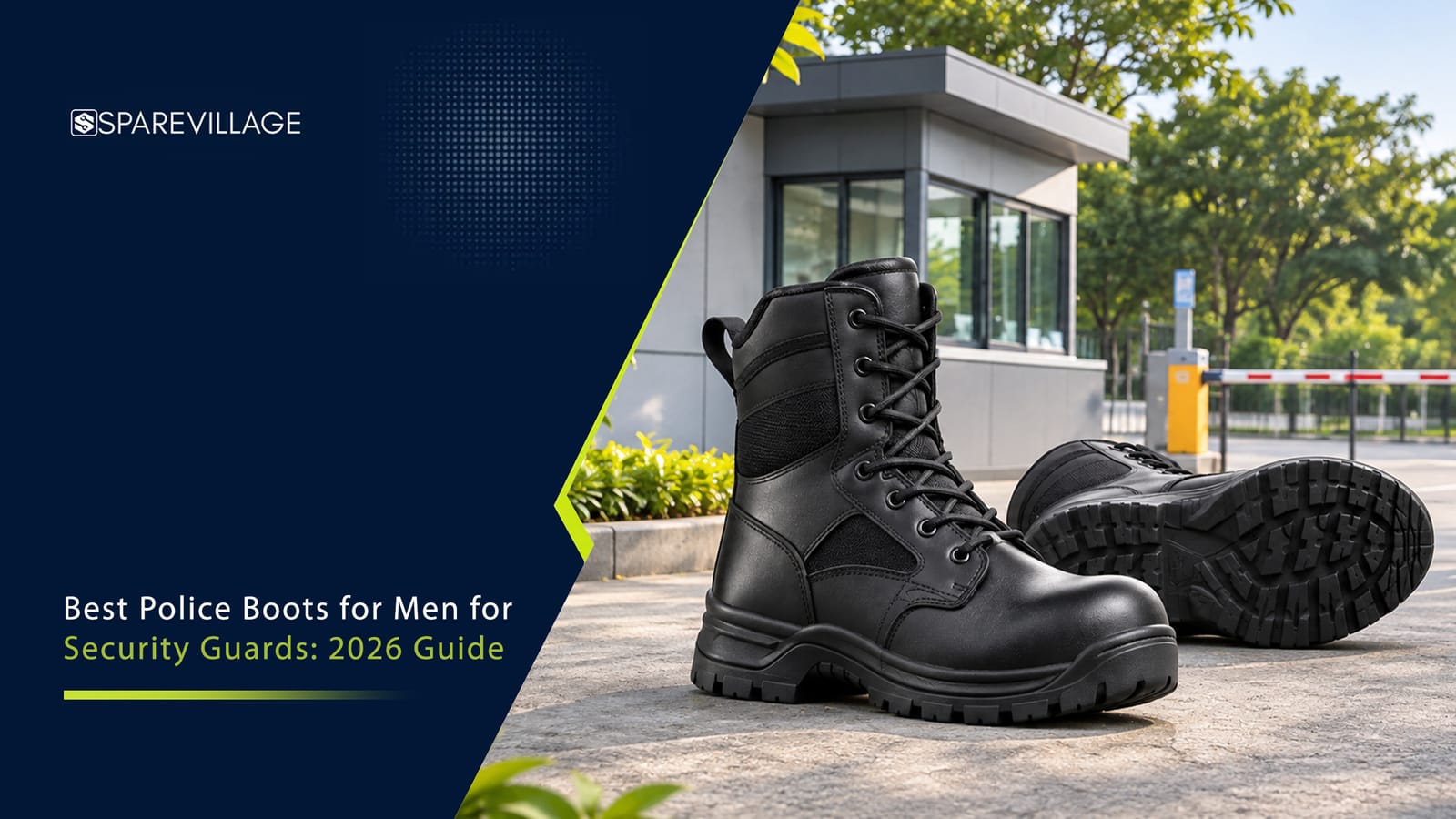
Intro: Security guards spend a large part of their working hours standing, walking and patrolling. Their footwear needs to support these activities while meeting the requirements of their workplace. A guard working at a corporate entrance may need a different type of footwear from someone monitoring a factory, warehouse or outdoor industrial facility. Choosing the right boots therefore requires more than checking their appearance or price. For security agencies, facility management companies and procurement teams, selecting suitable footwear also involves uniform requirements, employee comfort, workplace safety and purchasing costs. When multiple guards need footwear, differences in sizing, material quality and product specifications can affect the entire order. This is why choosing the best police boots for men for security guards requires a comparison of police-style boots, tactical boots and safety footwear. These categories serve different purposes. Police-style boots are often selected for their uniform appearance, tactical boots are considered for active movement, and safety boots are designed to provide protection against specified workplace hazards. Before purchasing, buyers should understand which features are necessary for their security staff. These may include leather or synthetic uppers, a suitable outsole, ankle coverage, cushioning and protective toe caps. However, not every boot offers all these features, and their actual performance depends on the product's construction and specifications. This guide explains how to compare police boots for men, tactical footwear and safety boots, what to check before buying and how security agencies can approach bulk procurement. The objective is to help buyers select footwear according to actual duty requirements rather than relying on product appearance or general marketing claims. Police boots, tactical boots and safety boots can have similar designs, particularly when they feature black uppers and high-ankle construction. However, their intended uses and protective features can differ. For procurement teams, understanding these differences is the first step towards selecting suitable footwear. A boot designed for uniform-based security duties may not provide the protection needed in an industrial environment. Similarly, safety footwear with a protective toe cap may not be the preferred option for every guard working at a reception desk or corporate entrance. The selection should begin with the nature of the job, the working surface, the duration of each shift and the hazards present at the deployment location. Police-style boots are commonly considered by security agencies that want a consistent and professional appearance across their workforce. They generally feature a black upper, a lace-up fastening system and a design that can be worn with different security uniforms. Some models also include zippers, padded collars or reinforced construction, depending on the manufacturer. These boots can be suitable for guards working at corporate offices, hotels, residential societies, educational institutions and commercial buildings, provided their construction and comfort meet the requirements of the job. For daily security duties, the fit of the footwear is particularly important. Guards may remain standing at entry points for extended periods or walk between different sections of a property. Boots that feel too tight, have insufficient cushioning or do not fit properly can become uncomfortable during these activities. When comparing police boots for men, buyers should look beyond the external finish. Check the upper material, stitching, sole attachment, lining, fastening system and available sizes. If the product is intended for regular use, its cleaning and maintenance requirements should also be considered. Important features to evaluate: Material: Check whether the upper is made from genuine leather, synthetic leather or another material. These materials differ in appearance, flexibility and maintenance requirements. Sole construction: Examine the outsole and its tread pattern. Ask the manufacturer for slip-resistance test information if grip performance is an important requirement. Ankle coverage: High-ankle construction provides additional coverage around the ankle. However, it should not automatically be treated as certified ankle protection. Fastening: Laces allow adjustment around the foot, while a zipper can make putting on and removing boots more convenient. Interior comfort: Check the lining, insole and cushioning, especially when the footwear will be used during long shifts. For agencies that follow a specific dress code, the colour, finish and overall design should also match the uniform policy. A suitable pair should balance professional appearance with everyday usability. Security personnel working across large premises may need footwear that supports regular movement. This includes guards responsible for perimeter checks, industrial site monitoring, event security and outdoor patrolling. In these situations, tactical boots for men may be worth considering. Tactical footwear is generally associated with practical designs intended for demanding movement and varied working conditions. Depending on the model, features may include a high-ankle upper, flexible construction, different outsole patterns and fastening options. However, tactical footwear is not a single standardised product category. Two boots sold as tactical footwear can have different materials, weights, sole constructions and protective capabilities. Buyers should therefore compare the actual product specifications rather than relying only on the word tactical. For example, guards working around outdoor pathways may need a different outsole from employees assigned to indoor security desks. Similarly, personnel moving between buildings may prefer a footwear design that does not feel unnecessarily heavy. Weight: Compare the actual weight of the footwear. A lighter design may be easier to wear during frequent movement, but weight should not be the only selection factor. Outsole grip: Check the tread pattern and available test documentation for the intended working surfaces. Upper flexibility: The material should allow normal foot movement while maintaining a secure fit. Ankle design: Compare the collar height, padding and fastening system. Weather suitability: For outdoor duties, check whether the manufacturer specifies water resistance or other relevant weather-related properties. When evaluating tactical shoes for men, agencies should also check whether the design is permitted under their uniform requirements. A practical boot may not be suitable if its colour or appearance does not meet the organisation's dress code. One important distinction is that tactical footwear does not automatically provide industrial safety protection. If guards work around machinery, heavy materials or sharp objects, the footwear must be selected according to the identified hazards and required protective features. Security guards assigned to factories, warehouses, manufacturing facilities and loading areas may encounter workplace hazards that are not normally present in office environments. These can include falling objects, compression risks, sharp materials and slippery floors. In such situations, ordinary police-style boots may not provide the required protection. Safety footwear should be considered when the workplace risk assessment identifies a need for protective features. Depending on their design and certification, safety boots may include protective toe caps, penetration-resistant inserts, slip-resistant outsoles and other protective features. Not every model includes all these features, so buyers must verify the product documentation. In India, the relevant reference for safety footwear includes IS 15298 (Part 2):2024, which covers personal protective equipment and safety footwear. Buyers can refer to the Bureau of Indian Standards documentation to understand applicable requirements. The standard includes requirements relating to footwear construction and specific protective properties. For example, a security guard working near warehouse loading operations may require footwear with protective toe caps if the risk assessment identifies impact or compression hazards. A guard working at an office entrance may have no such requirement. The important point is to select footwear according to the actual working environment. Purchasing steel-toe boots for every employee without considering the job can increase procurement costs without necessarily addressing the right requirement. After identifying the footwear category, procurement teams should compare individual features. Two pairs of boots may have a similar appearance but differ considerably in material, fit, outsole construction and protective performance. For agencies purchasing in bulk, these differences are important because the selected footwear needs to work for multiple employees and duty locations. A clear product specification also makes it easier to compare supplier quotations and avoid selecting products based on incomplete descriptions. The following factors can help buyers evaluate police boots for men for security guards before placing an order. 1. Upper Material: Leather or Synthetic Leather The upper material affects the appearance, flexibility, maintenance and overall construction of a boot. Leather is commonly considered for uniform footwear because it can provide a formal finish and can be maintained through suitable cleaning and polishing. However, buyers should distinguish between genuine leather and synthetic leather. They are not the same material and may differ in flexibility, surface finish, maintenance and expected service life. A product description mentioning leather should be checked to understand exactly which material has been used. For security agencies, consistency is also important. When purchasing multiple pairs, the same material specification should be maintained across the order. Buyers should check the stitching, lining, sole attachment and finishing before approving a sample. Synthetic materials may also be suitable for certain requirements, depending on the product's construction and intended use. The choice should be based on the required appearance, usage conditions and available specifications rather than assuming that one material is always better. 2. Steel Toe Protection: When Do Security Guards Need It? Steel-toe footwear is designed to protect the toe area against specified impact and compression hazards when it meets the applicable safety requirements. It may be necessary for security personnel working in factories, warehouses, loading zones and other locations where heavy objects could fall or create a compression risk. However, steel-toe protection is not automatically necessary for every security guard. The requirement depends on the workplace risk assessment and the organisation's safety policy. Buyers searching for police boots for men with steel toe should verify the following details: Whether the footwear actually contains a protective toe cap. Whether the manufacturer provides relevant test reports or certification. Which applicable safety footwear standard the complete product meets. Whether the toe protection is suitable for the hazards identified at the workplace. A boot containing a steel toe cap should not automatically be described as certified safety footwear. Certification and protective performance must be verified for the complete product. 3. Anti-Slip Sole: Consider the Working Surface Security personnel may work on concrete floors, polished tiles, ramps, outdoor pathways and areas exposed to moisture. The outsole should be suitable for the conditions in which the footwear will be used. A visible tread pattern or rubber outsole does not, by itself, confirm tested slip resistance. Buyers should check whether the manufacturer provides relevant test information and whether the test conditions match the expected workplace requirements. For example, footwear used at an indoor reception desk may have different requirements from footwear used around a factory's loading area. Floor material, water exposure, oil contamination and cleaning practices can all affect footwear selection. Where slip resistance is a workplace requirement, procurement teams should request the applicable test documentation rather than relying only on terms such as anti-slip or non-slip in a product description. 4. Ankle Coverage and Foot Support Many police-style and tactical boots feature a high-ankle design. This provides greater coverage around the ankle than conventional low-cut shoes. However, ankle coverage alone does not confirm a specific level of injury protection. Check the collar construction, padding, fastening and fit. The boot should hold the foot securely without creating excessive pressure. Laces should allow suitable adjustment, and the heel should not move excessively while walking. For employees who patrol large premises, these details can influence everyday comfort and ease of movement. 5. Cushioning and Comfort During Long Shifts A security guard may spend several hours standing at one location or walking between different sections of a facility. In both situations, footwear comfort is an important selection factor. Check the insole, lining, heel fit and available cushioning. Also consider the overall weight and flexibility of the boot. A product that feels comfortable for a short trial may feel different after several hours of regular use. For bulk orders, agencies should arrange sample pairs in commonly required sizes and collect feedback from employees who perform the actual duties. This can help identify fitting issues before purchasing footwear for the entire workforce. 6. Outsole Construction and Maintenance The outsole should be suitable for the expected working conditions. Buyers should examine the sole attachment, tread design, heel construction and overall finish. Maintenance is another factor to consider. Leather footwear may require different cleaning and polishing practices from synthetic footwear. Ask the supplier for recommended care instructions and check whether the product has any specific maintenance requirements. Agencies should also confirm the supplier's policy for defective products, size exchanges and replacement requests. These details become especially relevant when managing footwear purchases across multiple locations. 7. Bulk Pricing and Procurement Considerations for Security Agencies For organisations purchasing boots in bulk, the lowest price per pair should not be the only selection criterion. The total procurement cost depends on the product specification, order quantity, material, protective features, supplier terms and delivery requirements. There is no single fixed bulk price for police boots or tactical footwear. Prices can vary between products and suppliers. Therefore, buyers should request quotations based on the same specifications to make a fair comparison. Before finalising a bulk order, procurement teams should: Prepare a size-wise quantity list based on employee requirements. Confirm the required boot category, colour and material. Specify whether protective toe caps or other safety features are necessary. Request product samples before approving a large order. Ask for applicable certification and test documentation. Confirm the quotation, applicable taxes, transportation charges and delivery terms. Check the process for size exchanges, defective products and replacements. For agencies managing regular footwear purchases, maintaining an approved product specification can make future procurement easier. It helps ensure that different suppliers are evaluated against the same requirements and reduces the chances of selecting an unsuitable alternative simply because it has a lower quoted price. If your organisation is comparing protective footwear for security personnel working in warehouses, factories or industrial facilities, you can explore the Safety Shoes category on SpareVillage. For a wider range of workplace protection requirements, visit the Safety Supplies category. Check the individual product specifications, available sizes and protective features before selecting a product for your team. You can also refer to these related buying guides for more information about footwear selection: Best Leather Safety Shoes for Men with Steel Toe (ISI) 2026: Understand the factors to consider when evaluating leather safety footwear and protective toe caps. Woodland vs JCB Safety Shoes for Men: Price & Best Pick: Compare two safety footwear brands and the factors that matter when evaluating available options. Safety Shoes: Ultimate Guide to Types, Benefits & Buying Tips: Learn about different types of safety shoes, their applications and important buying considerations. Conclusion Choosing the best police boots for men for security guards depends on the type of duty, working environment and footwear requirements of the organisation. Police-style boots can be considered for guards who need a professional uniform appearance and comfortable everyday footwear. Tactical boots may be suitable for personnel involved in regular patrolling and outdoor duties, while safety boots should be evaluated when workplace hazards require specific protective features. Before purchasing, compare the upper material, outsole construction, fit, ankle coverage, cushioning and available product documentation. If steel-toe protection or tested slip resistance is required, verify these features instead of relying only on product descriptions. For security agencies and procurement teams, bulk purchasing should involve a clear specification, size-wise quantity planning, sample approval and supplier quotation comparison. This approach helps organisations select footwear that matches their operational requirements while keeping procurement decisions consistent. The right footwear is not necessarily the most expensive or the one with the most features. It is the one that meets the actual requirements of the job, fits the wearer properly and provides the documented level of protection needed for the working environment. FAQs: 1. Which boots are best for security guards? Police-style boots are suitable for uniform-based duties, tactical boots for active patrolling and safety boots for workplaces where protective footwear is required. 2. What features should police boots for men have? Look for suitable upper material, secure fastening, comfortable lining, a well-constructed outsole, proper sizing and a design that matches the duty requirements. 3. What is the difference between police boots and tactical boots? Police-style boots generally focus on uniform appearance, while tactical boots are designed around practical features for movement and demanding duty conditions. 4. Are steel-toe boots necessary for security guards? Only when workplace hazards create a risk of toe impact or compression. The requirement should be based on the workplace risk assessment. 5. What are the benefits of leather police boots? Leather can provide a formal appearance and can be cleaned and maintained with suitable products. Its suitability depends on material quality and boot construction. 6. How do I choose the right boot size for security personnel? Measure employees' feet, check the manufacturer's size chart and arrange sample fitting where possible. Allow sufficient toe room without excessive heel movement. 7. Are high-ankle boots suitable for long security shifts? They can be suitable when their fit, collar construction and weight are comfortable for the wearer. High-ankle coverage alone does not guarantee injury protection. 8. What type of sole is suitable for security guard boots? Choose an outsole designed for the actual working surface. Consider tread pattern, material and documented slip-resistance performance. 9. Are waterproof boots required for outdoor security duties? They may be useful for guards regularly exposed to rain or wet conditions. Verify the manufacturer's waterproofing specifications before purchasing. 10. Can tactical boots be used for factory security duties? Yes, for general patrolling if they suit the working conditions. Where industrial hazards exist, the boots must also meet the required safety specifications. 11. What is the difference between steel-toe and composite-toe boots? Steel-toe boots use a steel protective cap, while composite-toe boots use non-metallic materials. Both must be evaluated against the applicable impact and compression requirements. 12. Do all police boots provide slip resistance? No. A police-style design does not confirm tested slip resistance. Check the manufacturer's test results and product specifications. 13. Which footwear is suitable for warehouse security guards? The selection depends on warehouse hazards. Where falling objects or compression risks exist, choose appropriately certified safety footwear with protective toe caps. 14. What should security agencies check before ordering boots in bulk? Confirm material, design, size distribution, protective features, product documentation, sample approval, delivery terms and replacement policies. 15. How is the bulk price of security guard boots determined? Pricing depends on material, construction, brand, protective features, order quantity, taxes and delivery terms. Request quotations against a common specification. 16. What documents should buyers request when purchasing safety boots? Request applicable certification, test reports, product specifications, manufacturer details and warranty information, wherever applicable. 17. How often should security guards replace their boots? Replace footwear when the sole becomes worn, stitching fails, the upper is damaged or protective features are compromised. Follow the manufacturer's replacement guidance. 18. How should leather police boots be cleaned? Remove loose dirt with a suitable brush or cloth, use a compatible leather cleaner and apply an appropriate leather-care product. Follow the manufacturer's instructions. 19. Are lightweight tactical boots suitable for outdoor patrolling? They can be suitable if their outsole, construction and material match the terrain and weather conditions. Check grip and durability alongside weight. 20. What is the BIS standard for high-ankle tactical boots in India? IS 17012:2018 covers high-ankle tactical boots with PU-rubber soles. Buyers should verify the product's applicable compliance documentation before ordering. 21. What is the difference between tactical boots and tactical shoes for men? Tactical boots generally extend above the ankle, while tactical shoes have a lower-cut design. The choice depends on the required coverage and mobility. 22. Can regular leather boots replace certified safety footwear? No, not where certified protective footwear is required by workplace hazards. Ordinary leather construction does not establish compliance with safety standards. 23. What should agencies consider when buying boots for multiple security locations? Consider differences in floor surfaces, outdoor exposure, uniform policies and workplace hazards. One footwear specification may not suit every deployment location. 24. How can buyers compare two police boot models? Compare their material, weight, sole construction, sizing, fastening, protective features, documentation and warranty instead of judging only by appearance. 25. Where can security agencies explore safety footwear options? Security agencies can explore Safety Shoes on SpareVillage and compare available products based on their specifications and requirements.Police Boots vs Tactical Boots vs Safety Boots: Which Should You Buy?
Police Boots for Men: For Uniform-Based Security Duties
Tactical Boots for Men: For Active Patrolling and Outdoor Duties
Features to compare when buying tactical footwear:
Safety Boots: For Security Personnel Working in Industrial Environments
Features to Check Before Buying Police Boots for Men for Security Guards
Material, Steel Toe, Anti-Slip Sole and Comfort
Explore Safety Footwear and Other Protection Products