Industrial Safety & PPE Supplies: The Complete Buyer's Guide for 2026
Industrial safety & PPE supplies guide: types, hazard-based selection, standards, certification, procurement steps, costs, and where to buy in bulk.
Article Content
Intro :
Every factory floor, warehouse, and construction site runs on one silent rule: the job stops the moment safety fails. Industrial safety and PPE supplies are not an add-on cost. They are the line between a normal shift and a compensation claim, a lost workday, or worse.
This guide is built for procurement managers, factory owners, EHS officers, and safety supervisors who need to understand industrial PPE supplies, choose the right equipment for each hazard, and buy from a supplier they can trust. We will move from the basics of what PPE is, to how to select it by hazard, to how to procure it at scale without overspending or under-protecting your workforce.
By the end, you will know exactly what to look for in industrial safety equipment, which standards actually matter in India, and how to build a PPE procurement process that holds up during audits.
What Are Industrial Safety and PPE Supplies?
Industrial safety and PPE supplies are the equipment, clothing, and devices used to protect workers from hazards they face on the job. PPE stands for Personal Protective Equipment. It covers anything worn or carried by a worker to reduce exposure to a specific risk.
In an industrial setting, PPE works alongside other controls like machine guarding, ventilation, and safe work procedures. It is usually the last line of defense, used after engineering and administrative controls have already reduced the risk as much as possible.
Industrial safety supplies go beyond wearable PPE. The category also includes fire protection equipment, lockout tagout devices, safety signage, eye wash stations, and traffic safety products used inside a facility. A complete industrial safety program treats all of these as one connected system, not isolated purchases.
Why PPE Is Important in the Workplace
The importance of PPE in industrial workplaces comes down to three things: injury prevention, legal compliance, and business continuity.
Injury prevention. Manufacturing, construction, and warehousing involve repeated exposure to moving machinery, chemicals, noise, heat, and falling objects. Correctly selected PPE reduces the severity and frequency of injuries linked to these hazards.
Compliance. Factories and industrial units in India operate under labour and factory safety regulations that require specific protective equipment for specific tasks. Non-compliance can lead to penalties, work stoppages, and loss of client contracts, especially with export-oriented manufacturers who are audited by international buyers.
Business continuity. Every injury has a cost beyond the worker: lost production hours, insurance claims, replacement hiring, and reputational damage. Workplace injury prevention through proper PPE directly protects output and margins.
Types of Industrial PPE
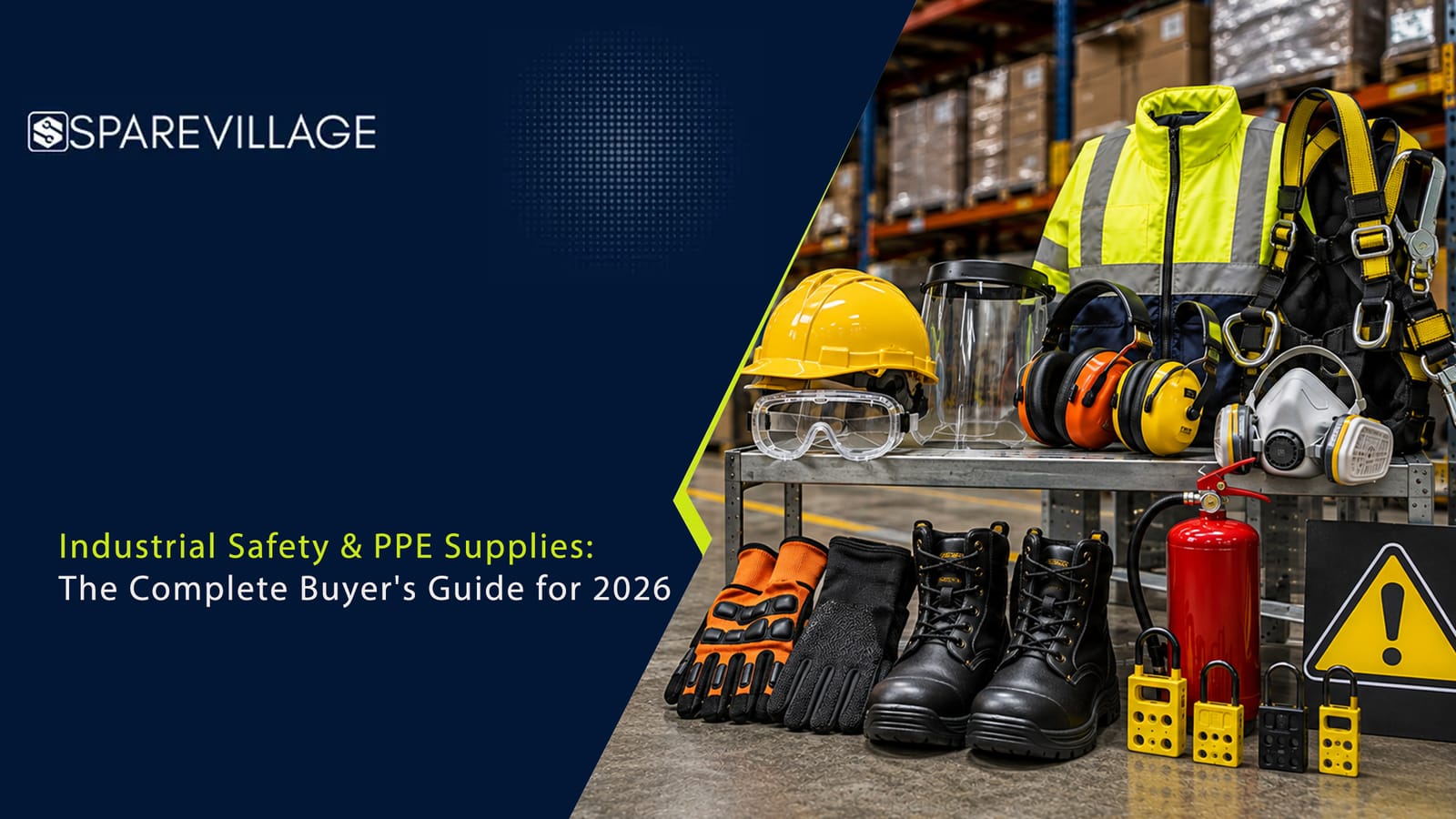
Industrial PPE is grouped by the part of the body it protects. Understanding types of industrial safety equipment by category makes it easier to build a complete kit instead of buying items in isolation.
Head Protection
Safety helmets protect against falling objects, impact, and in some cases electrical hazards. They are mandatory on construction sites, in warehouses with overhead racking, and in any area with crane or hoist operation.
Eye and Face Protection
Safety goggles and face shields guard against flying particles, chemical splashes, and radiation from welding. Safety glasses handle general dust and debris, while goggles seal around the eye for chemical or fine-particle environments. Face shields add a second layer for grinding, cutting, and welding tasks where splash or spark exposure is high.
Hearing Protection
Industrial hearing protection includes ear protectors in the form of plugs and muffs. These are essential in areas with compressors, generators, punching machines, or any process that pushes noise levels above safe exposure limits over a shift.
Respiratory Protection
Respiratory masks and respiratory cartridges and filters protect against dust, fumes, and airborne chemicals. The right respirator depends entirely on the contaminant. A dust mask does not protect against solvent vapours, and a basic cartridge does not protect against oxygen-deficient environments. This is one of the most misused PPE categories, so matching the filter to the hazard matters more than the brand.
Hand Protection
Safety gloves protect against cuts, abrasion, chemical contact, and heat, depending on the material. Cut-resistant gloves suit metal fabrication. Chemical-resistant gloves suit handling solvents and acids. Insulated gloves suit electrical work. Hand injuries are among the most common workplace injuries, which makes glove selection one of the highest-impact PPE decisions a procurement team makes.
Foot Protection
Safety shoes with steel or composite toe caps protect against crush injuries, punctures, and slips. Facilities with electrical hazards need insulated or anti-static footwear, while wet or oily floors need slip-resistant soles. SpareVillage also stocks bike riding shoes and formal shoes for staff who move between site and office roles.
Body Protection and Workwear
Safety jackets, general work wear, and disposable workwear products protect against chemical splash, dust, and general wear. High-visibility clothing keeps workers visible in low-light or vehicle-heavy zones. Raincoats are a practical addition for outdoor teams during monsoon months.
Fall Protection
Fall protection equipment includes safety harnesses, safety belts, hooks, fall arresters, and safety nets. Anyone working at height, on scaffolding, or near open edges needs a harness rated for the task, anchored correctly, and inspected before each use.
Fire and Emergency Equipment
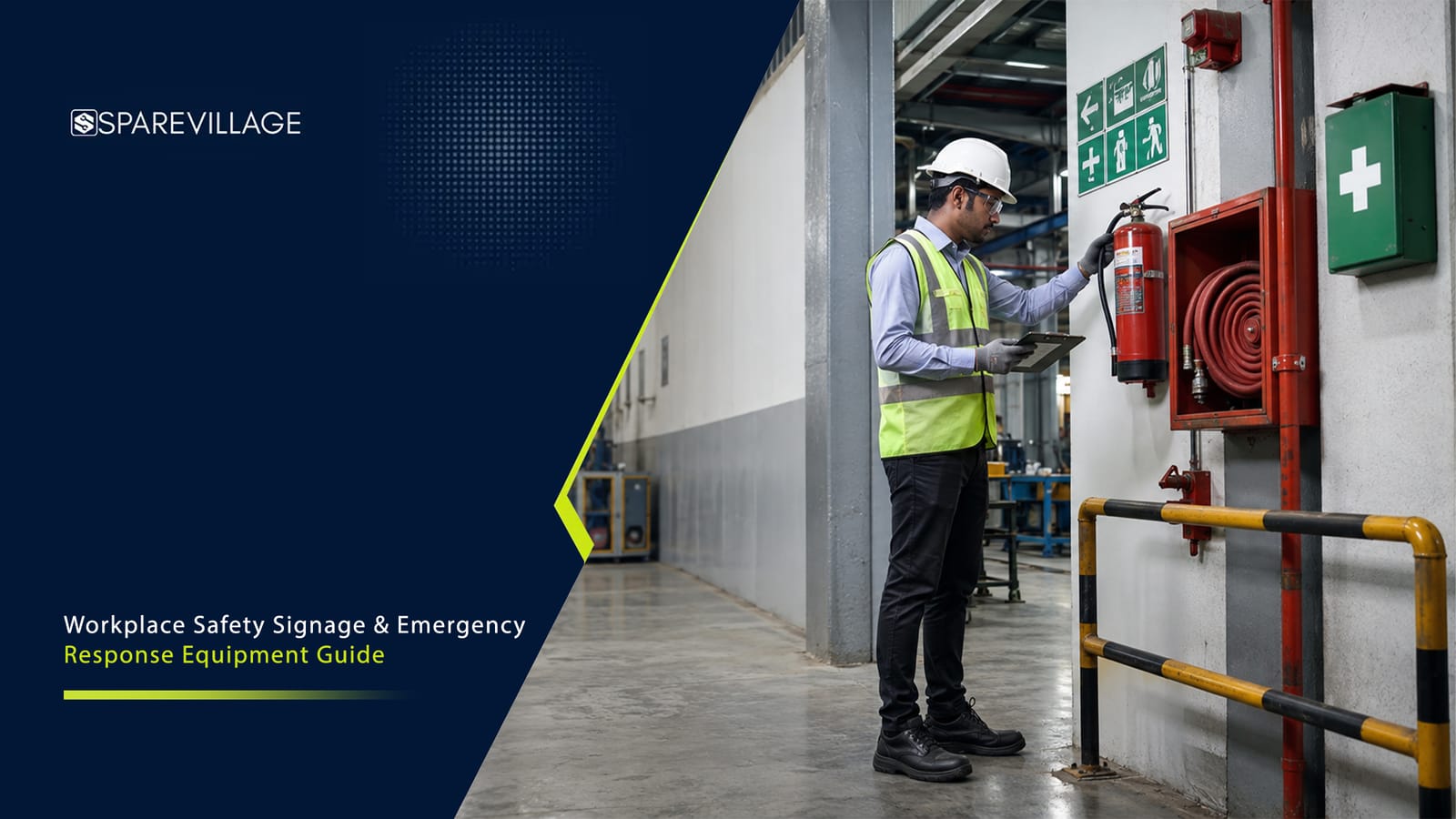
Fire extinguishers, fire blankets, and broader fire protection systems like sprinklers and hydrant valves round out a facility's emergency readiness. Eye wash showers are mandatory wherever chemical handling is part of the process, allowing immediate flushing after accidental exposure.
Lockout Tagout and Facility Safety
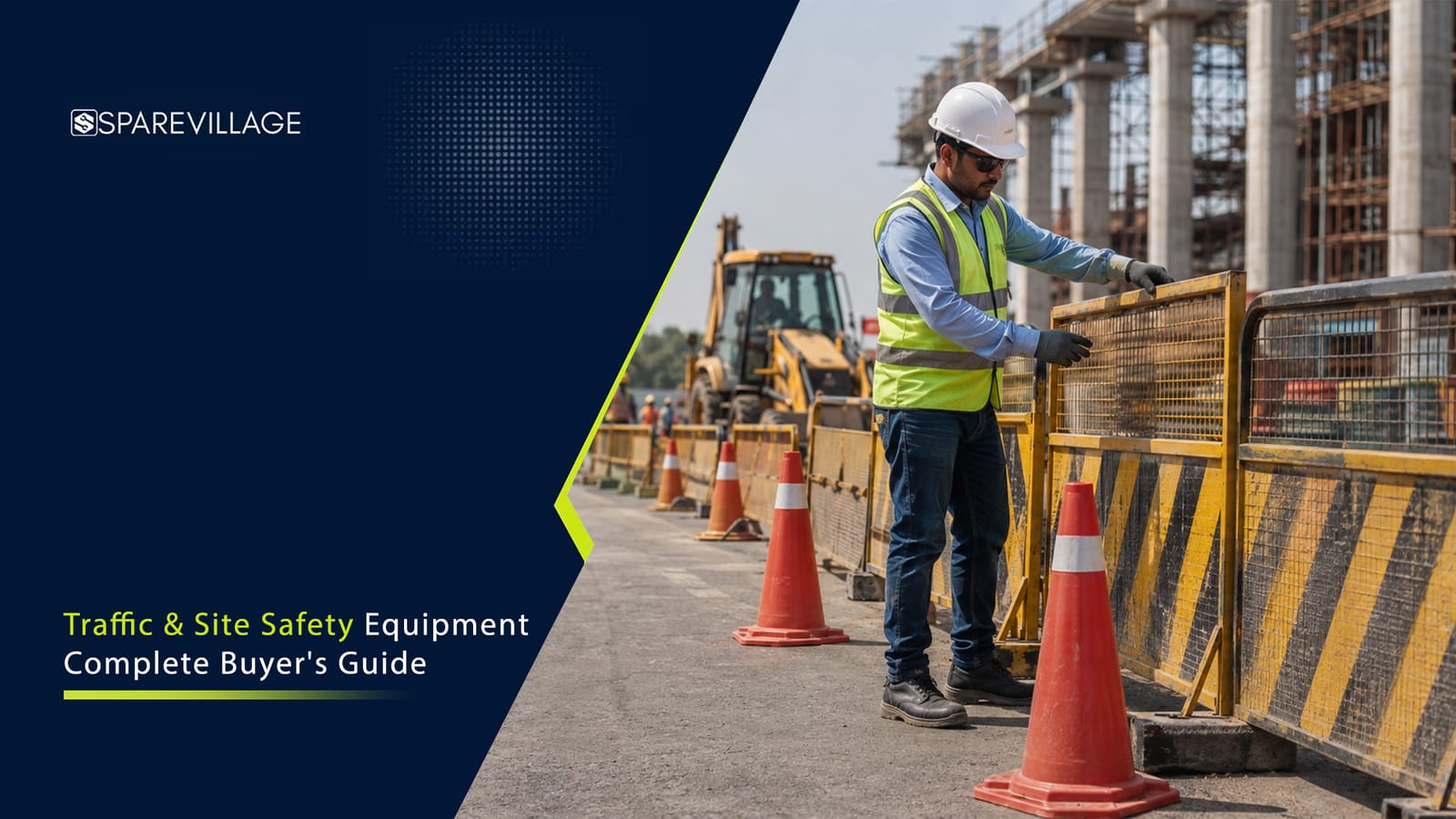
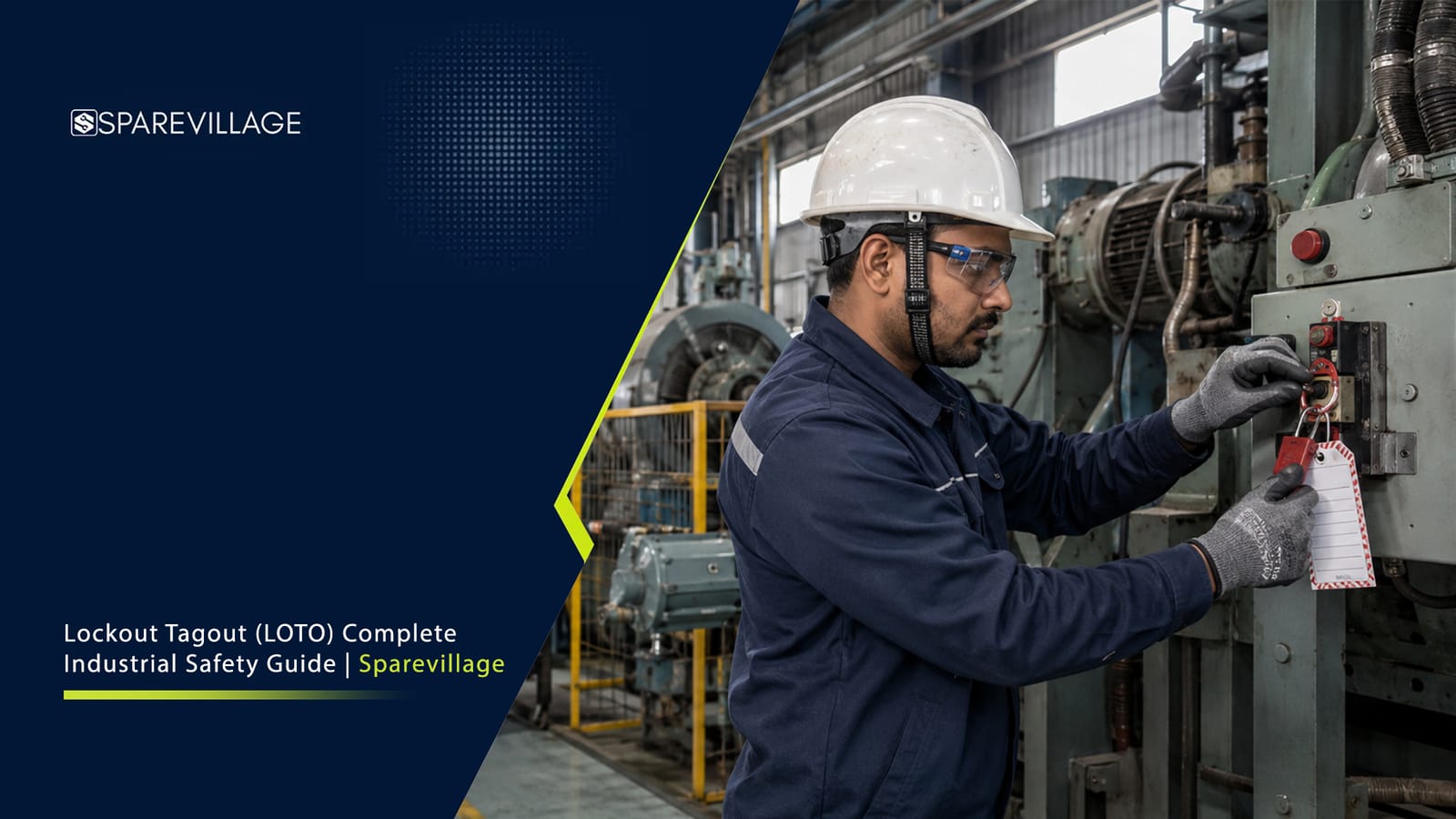
Lockout devices, including lockout padlocks, lockout tagout kits, hasps, and valve lockouts, prevent accidental machine start-up during maintenance. Safety signs and signals, traffic safety products like cones and barriers, and insulation mats for electrical work complete the facility-level safety layer.
How to Choose the Right PPE for a Job: The Hazard-Based Approach
The most common mistake in industrial PPE buying is starting with the product instead of the hazard. A helmet does not stop a chemical splash. A dust mask does not stop welding fumes. Correct PPE selection starts with identifying the hazard, then matching equipment to that specific exposure.
This is how a hazard-based PPE selection process should run:
Identify the task and environment. What is the worker doing, and where?
List the hazards present. Mechanical, chemical, electrical, thermal, noise, or fall risk.
Rank the hazards by severity and likelihood. Some risks need immediate control, others are secondary.
Match PPE to each hazard. One task may need two or three PPE categories together.
Check fit and comfort. PPE that is uncomfortable gets removed. Comfort drives compliance.
Train workers on correct use. Even the right PPE fails if worn or fitted incorrectly.
PPE by Hazard Type
PPE for mechanical hazards: cut-resistant gloves, safety helmets, safety shoes with toe protection, and face shields for grinding or cutting operations.
PPE for chemical hazards: chemical-resistant gloves, goggles or face shields, respiratory protection matched to the specific chemical, and protective clothing rated for splash or vapour exposure.
PPE for electrical hazards: insulated gloves, insulating mats, arc-rated clothing, and non-conductive safety footwear. Electrical PPE must be rated for the voltage involved, not treated as a generic category.
PPE for fire hazards: flame-resistant clothing, fire blankets, and access to fire extinguishers rated for the specific fire class present in the facility.
PPE for dust exposure: respiratory masks with the correct filter rating, and goggles where dust also threatens the eyes.
PPE for noise exposure: ear plugs for intermittent exposure, ear muffs for continuous high-noise environments, sometimes both together in extreme conditions.
PPE for working at height: full body harness, lanyards, fall arresters, and anchor points inspected before every use.
PPE for confined spaces: respiratory protection appropriate to the atmosphere, harnesses for retrieval, and gas detection alongside standard PPE.
PPE for welding: welding helmets or face shields with the correct shade, flame-resistant clothing, and gloves rated for heat and spark exposure.
Industry-specific needs follow the same logic. PPE for construction workers leans heavily on helmets, harnesses, and high-visibility clothing. PPE for manufacturing workers focuses on hand and eye protection near machinery. PPE for the oil and gas industry adds flame-resistant and gas-detection layers. PPE for the pharmaceutical industry emphasises contamination control and disposable workwear. In every case, the hazard defines the equipment, not the industry label alone.
PPE Safety Standards and Compliance
Certification is what separates protective equipment from equipment that merely looks protective. PPE that is not tested to a recognised standard offers no guaranteed level of protection, even if it appears similar to certified products.
For industrial buyers in India, PPE certification generally references a mix of domestic and international standards, depending on the product category:
BIS and ISI standards apply to several PPE categories manufactured or sold in India, including safety footwear under IS 15298 and helmets under relevant BIS specifications.
ANSI/ISEA standards (US-origin but widely referenced globally) cover categories like gloves (ANSI/ISEA 105) and eye protection (ANSI Z87.1).
EN standards (European) cover categories like gloves (EN 388 for mechanical hazards) and eye protection (EN 166).
OSHA requirements apply to US operations but are often used as a benchmark by Indian exporters serving American clients.
NIOSH approval is the reference standard for respirators, particularly relevant for respiratory protection equipment.
When evaluating industrial PPE standards, buyers should ask suppliers for test certificates, not just marketing claims. A certified product will carry a mark or reference number that can be checked against the issuing body's records. This single check prevents a large share of PPE quality issues before they reach the shop floor.
Industrial PPE Procurement: A Practical Buying Guide
Buying PPE for one worker is simple. Buying PPE for a factory of three hundred workers across multiple hazard zones is a procurement problem, not a shopping trip. A structured process avoids both overspending and under-protection.
Step 1: Conduct a Hazard Assessment
Walk the facility, department by department, and document the hazards present at each workstation. This assessment becomes the basis for every PPE decision that follows and should be revisited whenever a process changes.
Step 2: Build a PPE Requirement Checklist
Convert the hazard assessment into a checklist mapped to roles, not individuals. A welder's checklist looks different from a warehouse picker's checklist, even within the same facility.
Step 3: Standardise Where Possible
PPE standardisation across departments and locations simplifies stock management, reduces the number of SKUs a procurement team tracks, and improves bulk pricing. Standardise on brand and specification for high-volume items like gloves and safety shoes, while keeping flexibility for specialised, low-volume PPE.
Step 4: Evaluate and Qualify Suppliers
PPE supplier evaluation should look at four things: certification proof, consistency of stock, delivery reliability for bulk and repeat orders, and after-sales support for sizing or replacement issues. A supplier that can consistently fulfil bulk PPE procurement without stock-outs is often more valuable than one offering a marginally lower unit price.
Step 5: Plan for Total Cost, Not Just Unit Price
Industrial PPE cost should be evaluated across its full lifecycle. A cheaper glove that wears out in half the time is not actually cheaper once replacement frequency, downtime for reissue, and injury risk from degraded equipment are factored in. This is the same logic that applies to industrial tools. Our guide on the hidden cost of cheap power tools covers this trade-off in detail, and the same thinking applies directly to PPE sourcing decisions.
Step 6: Set Inspection and Replacement Cycles
PPE inspection and PPE maintenance are not one-time activities. Harnesses, helmets, and respirator cartridges all have usable life limits. Build a replacement calendar instead of waiting for visible failure, especially for fall protection and respiratory equipment where failure is not always visible until it is too late.
Step 7: Standardise Storage and Training
PPE storage affects PPE lifespan. Chemical-resistant gloves stored in direct sunlight degrade faster. Respirator filters exposed to humidity lose effectiveness early. Pair correct storage with PPE training so workers understand not just how to wear equipment, but how to store and inspect it between uses.
Common Procurement Mistakes to Avoid
Many of the same mistakes that affect power tool buying also show up in PPE procurement: choosing the lowest bidder without checking certification, buying in small reactive batches instead of planned bulk orders, and skipping supplier verification. If your team wants a deeper breakdown of these patterns, our articles on mistakes buyers make when choosing power tools and avoiding common buying mistakes outline a procurement discipline that applies equally well to safety supplies.
How to Choose a PPE Supplier
Not every supplier that lists PPE online is equipped to serve industrial buyers. Before placing a bulk order, check for the following:
Certification transparency. A reliable supplier shares test certificates without being asked twice.
Category depth. A supplier offering gloves, helmets, footwear, respiratory protection, fall protection, and facility safety products under one account reduces vendor sprawl.
Bulk order capability. Confirm the supplier can commit to quantities and delivery timelines for factory-wide rollouts, not just single-unit sales.
Consistent stock. Stock-outs on core PPE like gloves or masks can halt production. Ask about restocking cycles before committing.
Support for multiple sites. Businesses with more than one facility benefit from a supplier that can manage consolidated ordering and consistent specifications across locations.
SpareVillage operates as a B2B marketplace built around exactly this kind of procurement need. The Safety & PPE Supplies collection brings together head, eye, hand, foot, respiratory, and fall protection equipment alongside fire safety, lockout tagout, signage, and facility safety products, sourced with certification and bulk-order capability in mind.
Conclusion
Industrial safety and PPE supplies protect people first, and operations second. Every helmet, glove, harness, and respirator on your procurement list exists because a specific hazard demands it. Skipping the hazard assessment, buying uncertified products, or chasing the lowest unit price usually costs more later, in downtime, replacement, or worse.
A sound PPE program starts with identifying hazards, moves through standardised and certified procurement, and ends with inspection, training, and timely replacement. Treat it as a continuous process, not a one-time purchase.
When you are ready to source, explore the complete Safety & PPE Supplies range on SpareVillage, covering safety shoes, gloves, helmets, respiratory protection, fall protection, fire safety, and facility safety products for bulk and industrial procurement.
Frequently Asked Questions
What is PPE in industrial safety?
PPE, or Personal Protective Equipment, refers to gear worn or used by workers to reduce exposure to workplace hazards such as impact, chemicals, noise, and falls. It is the last line of defense after engineering and administrative controls.
How do I choose the right PPE for a job?
Start with a hazard assessment, list every risk present at the task, and match PPE to each hazard individually. A single job often requires more than one category of protection at the same time.
What standards should industrial PPE meet?
Depending on the category, look for BIS or ISI marks for India-manufactured products, ANSI/ISEA or EN standards for gloves and eye protection, and NIOSH approval for respirators. Always ask suppliers for certificate proof.
How often should PPE be replaced?
Replacement cycles vary by product. Harnesses, respirator cartridges, and safety footwear all have defined usable life limits set by the manufacturer or standard. Build a replacement calendar rather than waiting for visible damage.
Is it cheaper to buy PPE in bulk?
Bulk PPE procurement typically reduces per-unit cost and simplifies logistics, but the real savings come from standardisation and lower replacement frequency, not unit price alone.
Where can businesses buy industrial PPE supplies online in India?
Businesses can source industrial safety and PPE supplies through B2B marketplaces like SpareVillage, which lists certified products across all major PPE categories for bulk and repeat industrial orders.
Does SpareVillage supply PPE for bulk and wholesale orders?
Yes, bulk and wholesale ordering is supported for factories, contractors, and businesses that need standardised PPE across multiple workers or sites, with quantity-based pricing available on request.
What PPE categories does SpareVillage offer for industrial buyers?
The range covers head, eye, hand, foot, respiratory, and fall protection equipment, along with fire safety, lockout tagout devices, safety signage, workwear, and other facility safety products.
Can SpareVillage fulfil PPE orders for multiple factory locations?
Yes, consolidated ordering across multiple sites is supported, allowing procurement teams to maintain the same PPE specification and supplier relationship at every location.
Does SpareVillage sell certified industrial safety equipment?
Yes, product listings include certification details where applicable, so buyers can verify compliance with relevant standards before placing an order.
How does SpareVillage help reduce PPE procurement costs?
Costs are reduced through direct sourcing, bulk order pricing, and access to a wide product range that lets buyers standardise on fewer suppliers instead of purchasing PPE from scattered vendors.
Is SpareVillage suitable for small businesses buying PPE, not just large factories?
Yes, both small and large businesses can order from the same catalogue, with quantities scaled to the buyer's requirement rather than a fixed minimum order size.
Does SpareVillage offer PPE kits or combo packs?
Yes, safety combo packs are available for buyers who want a pre-selected set of essential PPE items instead of ordering each category separately.
How can a business place a bulk PPE order online?
Bulk orders can be placed directly through the product listing by selecting the required quantity, or by reaching out through the platform's business inquiry option for custom volume pricing.
Does SpareVillage provide PPE for specific industries like manufacturing or construction?
Yes, the catalogue is organised so buyers from manufacturing, construction, warehousing, and similar industrial sectors can find PPE suited to the hazards common in their specific work environment.
What makes SpareVillage a reliable supplier for industrial safety equipment?
Reliability comes from a wide product range under one account, consistent stock availability, and a catalogue structured around industrial and B2B buying needs rather than individual retail purchases.
What is PPE in industrial safety?
PPE, or Personal Protective Equipment, refers to gear worn or used by workers to reduce exposure to workplace hazards such as impact, chemicals, noise, and falls. It is the last line of defense after engineering and administrative controls.
How do I choose the right PPE for a job?
Start with a hazard assessment, list every risk present at the task, and match PPE to each hazard individually. A single job often requires more than one category of protection at the same time.
What standards should industrial PPE meet?
Depending on the category, look for BIS or ISI marks for India-manufactured products, ANSI/ISEA or EN standards for gloves and eye protection, and NIOSH approval for respirators. Always ask suppliers for certificate proof.
How often should PPE be replaced?
Replacement cycles vary by product. Harnesses, respirator cartridges, and safety footwear all have defined usable life limits set by the manufacturer or standard. Build a replacement calendar rather than waiting for visible damage.
Is it cheaper to buy PPE in bulk?
Bulk PPE procurement typically reduces per-unit cost and simplifies logistics, but the real savings come from standardisation and lower replacement frequency, not unit price alone.
Where can businesses buy industrial PPE supplies online in India?
Businesses can source industrial safety and PPE supplies through B2B marketplaces like SpareVillage, which lists certified products across all major PPE categories for bulk and repeat industrial orders.