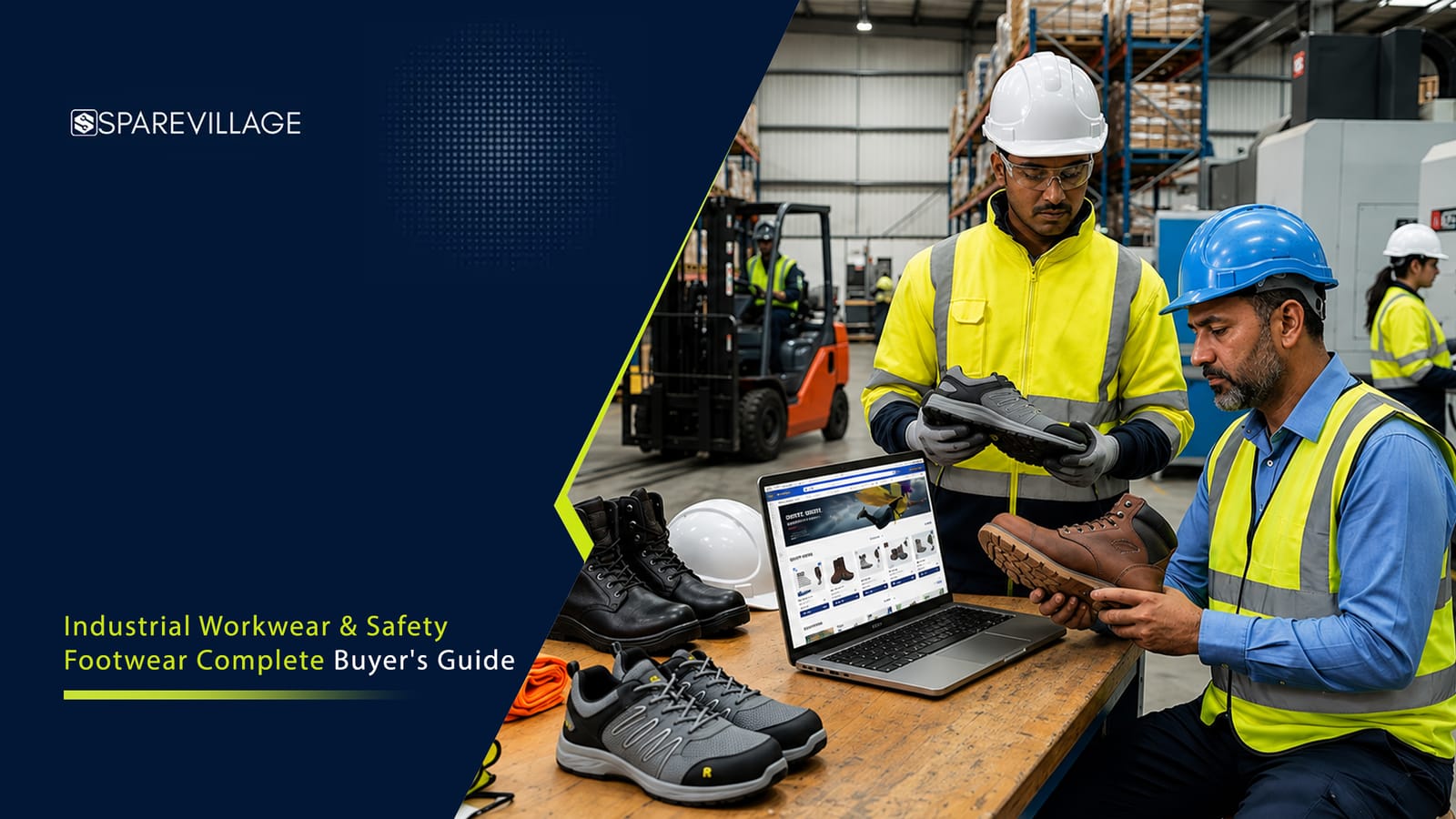
Industrial Safety Footwear and Workwear: Complete Buyer's Guide
Industrial safety footwear and workwear buying guide: types, hazards, sizing, certification, and where to source verified PPE for your industrial team.
Article Content
Intro :
Buying safety gear for a factory floor, construction site, or warehouse is not a one-time decision. It is a recurring responsibility. Get it wrong, and you deal with injuries, downtime, and compliance issues. Get it right, and your workforce stays protected, productive, and confident on the job.
This guide covers everything a procurement manager, factory owner, or safety officer needs to know before buying industrial safety footwear and workwear. You will learn the different types of safety shoes and protective clothing, how to match gear to specific workplace hazards, what to check before you buy, and where to source verified products in India.
Let's start with why this decision matters more than most buyers realize.
Why Industrial Safety Footwear and Workwear Matter
Foot injuries and body injuries are among the most common workplace incidents in industrial settings. Falling objects, sharp debris, wet floors, electrical exposure, and chemical spills are daily risks on most shop floors.
The core purpose of safety footwear and workwear is hazard-specific protection.
Generic clothing and regular shoes do not offer this. Industrial safety shoes and protective workwear are engineered for the exact conditions a worker faces.
Common Workplace Hazards That Demand Proper PPE
Falling or rolling objects on factory floors
Sharp metal, glass, or construction debris
Wet, oily, or slippery surfaces
Exposed electrical components
Chemical splashes and fumes
Extreme heat near furnaces or welding stations
Low-visibility zones with moving vehicles
Each of these hazards needs a different protective response. A warehouse worker needs slip resistance. An electrician needs insulated, non-conductive footwear. A welder needs flame-resistant clothing. This is why a single generic PPE kit rarely works across an entire facility.
The Real Cost of Ignoring Proper Workwear
Workplace injuries cause direct costs like medical expenses and compensation. They also cause indirect costs: lost work hours, damaged equipment, lower morale, and compliance penalties. Proper industrial workwear and footwear reduce this risk at the source, before an incident happens.
This is also where compliance comes in. Indian workplaces are expected to follow occupational safety standards that define minimum protection levels for footwear, headgear, hand protection, and clothing. Buying certified gear is not just about safety. It is about meeting your legal and operational responsibility as an employer.
Why "One PPE Kit for Everyone" Doesn't Work
Many facilities still issue the same footwear and workwear across every department. This approach looks simpler on paper, but it creates gaps in real protection. A worker on the shop floor near heavy machinery faces different risks than someone in the warehouse loading dock or the electrical maintenance room.
Treating PPE selection as a department-by-department exercise, rather than a single blanket purchase, is the difference between gear that sits in a locker and gear that actually gets worn every shift.
Types of Industrial Safety Footwear
Not all safety shoes serve the same purpose. Choosing the right type starts with understanding what each category protects against.
Steel Toe vs Composite Toe Safety Shoes
This is the most common comparison buyers ask about.
Steel toe safety shoes use a steel cap to protect against heavy impact and compression. They are the standard choice for construction sites and heavy manufacturing where equipment or materials could fall.
Composite toe safety shoes use non-metal materials like carbon fiber or fiberglass. They offer similar protection with two added benefits: they are lighter, and they do not conduct heat or cold. Composite toe shoes are the better pick for electrical work and for workers who need lightweight footwear for long shifts.
Slip-Resistant and Oil-Resistant Safety Shoes
Warehouses, kitchens, and processing units deal with constant floor moisture and oil spills. Slip-resistant soles use specific tread patterns and rubber compounds to grip these surfaces. Oil-resistant outsoles prevent the sole material from breaking down when exposed to industrial oils and lubricants. Buyers in logistics and food processing should treat this as a non-negotiable feature, not an add-on.
Electrical Hazard and Puncture-Resistant Footwear
Electrical hazard safety shoes are built with non-conductive materials to reduce the risk of shock. Puncture-resistant footwear adds a protective plate in the sole to guard against nails, sharp metal, and construction debris. Both features matter for site-based teams working around exposed wiring or unfinished flooring.
Choosing Between Safety Boots and Safety Shoes
Boots offer ankle support and better protection against water, mud, and uneven terrain. They suit outdoor construction and field maintenance work. Shoes are lighter and better suited for indoor factory or warehouse floors where mobility matters more than ankle coverage.
For teams sourcing footwear at scale, browsing a dedicated safety shoes range makes it easier to compare toe types, sole grades, and sizing in one place.
Matching Safety Footwear to Your Industry
Different industries face different combinations of hazards, so the "best" safety shoe changes depending on where your team works.
Manufacturing: Steel toe shoes with oil-resistant soles handle heavy machinery zones and workshop floors well.
Construction: Ankle-high safety boots with puncture-resistant soles protect against uneven ground and site debris.
Warehouse and logistics: Lightweight composite toe shoes with slip-resistant soles suit long walking shifts on smooth flooring.
Electrical work: Composite toe, non-conductive footwear reduces shock risk near live wiring.
Chemical and processing units: Chemical-resistant outsoles prevent degradation from spills and fumes.
Buying footwear based on department rather than a single company-wide standard leads to better compliance and fewer replacements.
Types of Industrial Workwear for Different Hazards
Workwear is not just uniform clothing. Each fabric type and design serves a specific protective function.
High-Visibility and Reflective Workwear
High-visibility workwear uses bright colors and reflective strips to make workers noticeable in low-light or high-traffic zones. This is essential on construction sites, near moving vehicles, and in warehouses with forklift traffic. Reflective strips should be placed at the chest, back, and limbs so workers remain visible from every angle.
Flame-Resistant and Heat-Resistant Clothing
Flame-resistant workwear is treated or woven to self-extinguish and resist ignition. It is required for welding stations, foundries, and any process involving sparks or open flame. Heat-resistant clothing protects against radiant heat near furnaces and industrial ovens, even without direct flame exposure. These two categories are often confused, but they solve different problems, so check the specification carefully before buying.
Chemical-Resistant Clothing
Chemical-resistant workwear uses coated or laminated fabric that blocks liquid chemical penetration. This is critical for workers handling acids, solvents, or industrial cleaning agents. Match the fabric type to the specific chemical class your team handles, since resistance levels vary by material.
Coveralls and Industrial Uniforms
Coveralls provide full-body coverage in a single piece, reducing gaps where dust, debris, or chemicals could enter. They are common in manufacturing, painting, and cleanroom-adjacent environments. Industrial uniforms, by contrast, are better suited for general factory and warehouse roles where full-body coverage is not required but consistent, durable clothing is.
Explore the work wear collection to compare coveralls, uniforms, and hi-vis options by fabric and use case, or check safety jackets for added protection in outdoor and cold-weather conditions. Teams working in monsoon-prone regions should also look at raincoats built for site use rather than regular rainwear.
Fabric Features That Actually Matter
Beyond the broad category, a few construction details separate durable workwear from gear that wears out fast:
Reinforced stitching at stress points like shoulders, knees, and pockets extends usable life significantly.
Breathability keeps workers comfortable during long shifts in hot facilities, reducing fatigue-driven PPE non-compliance.
Abrasion resistance matters most for roles involving crawling, kneeling, or contact with rough surfaces.
Ergonomic design with articulated joints allows better movement during physical tasks like lifting or climbing.
These details rarely show up in a basic product listing, so it helps to ask suppliers directly about fabric grade and stitching quality before placing a bulk order.
How to Choose the Right Safety Footwear and Workwear
This is the part most buyers skip, and it is the part that determines whether your purchase actually protects your team.
Step 1: Identify the Specific Hazard First
Before looking at any product, list the hazards your workers face daily. A single site often has multiple hazard types across departments. Match footwear and workwear to each hazard rather than buying one standard kit for everyone.
Step 2: Check Toe Protection and Sole Type
Decide between steel and composite toe based on weight and conductivity needs. Then confirm the sole type: slip-resistant for wet floors, oil-resistant for processing units, puncture-resistant for construction debris.
Step 3: Match Fabric to the Work Environment
Hi-vis and reflective fabric for low-light or vehicle-heavy zones
Flame-resistant fabric for welding and foundry work
Chemical-resistant fabric for acid or solvent handling
Breathable, moisture-wicking fabric for long shifts in heat
Step 4: Confirm Fit and Comfort
Ill-fitting safety shoes cause fatigue and reduce compliance. Workers often stop wearing uncomfortable PPE, which defeats the purpose entirely. Check sizing charts carefully, and where possible, order sample sizes before a bulk purchase.
Step 5: Verify Certification and Standards
Confirm that footwear and workwear meet applicable Indian safety standards for your industry. Certified products carry documentation that supports both compliance and warranty claims. Never assume compliance based on price or appearance alone.
Step 6: Review Durability Against Usage Conditions
Match material quality to how hard the gear will be used. A shoe rated for occasional warehouse use will not survive daily construction site conditions. Buying slightly higher-grade material upfront often costs less than frequent replacements.
A Quick Buying Checklist
Hazard identified and matched to product type
Toe protection type confirmed (steel or composite)
Sole type suited to floor and site conditions
Fabric matched to heat, chemical, or visibility needs
Correct sizing verified before bulk order
Certification and standards compliance checked
Supplier offers consistent stock for repeat orders
Pair footwear and workwear with complementary PPE like safety helmets and safety gloves to build complete head-to-toe protection for your team, rather than treating each category as a separate purchase.
Common Mistakes Buyers Make
Buying one size and type for the entire workforce. Different roles face different hazards, so a single SKU rarely fits all.
Prioritizing price over certification. Cheaper footwear without verified standards often fails exactly when it matters most.
Ignoring replacement cycles. Soles wear down and fabric weakens with regular use. Set a review schedule instead of waiting for visible damage.
Skipping trial fittings. Bulk orders without size verification lead to discomfort, non-compliance, and returns.
Overlooking supplier consistency. Switching suppliers between orders often means slight variations in sizing and material, which disrupts uniform standards across teams.
Avoiding these mistakes upfront saves both cost and compliance headaches down the line.
Where to Buy Verified Industrial Safety Footwear and Workwear
Sourcing decisions matter as much as product selection. Inconsistent quality, delayed delivery, and unverified suppliers create as much risk as buying the wrong product type.
Why Buyers Are Moving to B2B Marketplaces
Industrial buyers increasingly prefer B2B marketplaces over scattered local vendors. A verified marketplace gives you supplier accountability, consistent product specifications, and the ability to compare multiple brands before committing to a bulk order. This matters most for repeat, high-volume purchases like footwear and workwear, where stock consistency across orders is critical for uniform compliance.
What to Look for in a Supplier
Clear product specifications, not vague descriptions
Certification details available on request
Consistent stock availability for repeat orders
Transparent pricing without hidden costs
A track record with industrial and B2B buyers
SpareVillage operates as a verified B2B marketplace connecting industrial buyers with suppliers across safety footwear, workwear, and the full range of PPE categories. Buyers can compare specifications, place bulk orders, and source consistently from one platform instead of managing multiple vendor relationships.
Benefits of Consolidating Your PPE Sourcing
Managing safety procurement across multiple local vendors creates friction: inconsistent invoicing, varying lead times, and mismatched product batches. Consolidating footwear, workwear, and related PPE through a single verified marketplace solves this in a few practical ways:
Bulk ordering efficiency: One purchase order can cover multiple categories instead of separate vendor calls.
Consistent specifications: Repeat orders match the original product batch, which matters for uniform compliance.
Easier reordering: Past orders and preferred suppliers are saved, so repeat purchases take less time.
Category-wide visibility: Buyers can see footwear, workwear, headgear, and hand protection side by side while planning a facility-wide safety upgrade.
For growing facilities, this shift from scattered vendor relationships to one dependable marketplace often becomes the biggest efficiency gain in the entire procurement process.
Explore the complete Safety and PPE Supplies category to see the full range of protective equipment available for your facility, from footwear and workwear to fall protection, respiratory gear, and fire safety equipment.
Conclusion
Industrial safety footwear and workwear are not interchangeable products. Each type is built for a specific hazard, and the right choice depends on your work environment, not general preference. Steel toe versus composite toe, slip-resistant versus puncture-resistant, flame-resistant versus chemical-resistant: these decisions should follow a clear hazard assessment, correct fit, and verified certification.
Buying from a verified B2B marketplace makes this process easier. It gives you consistent specifications, dependable stock, and one place to source your entire safety and PPE requirement instead of chasing multiple vendors.
Ready to equip your team? Browse the safety shoes and work wear collections on SpareVillage Marketplace, and explore the wider B2B marketplace to source your full industrial safety and PPE requirement in one place.
Also Read:
Industrial Safety & PPE Supplies: The Complete Buyer's Guide for 2026
7 Mistakes Buyers Make When Choosing Power Tools
FAQs
1. What is the difference between steel toe and composite toe safety shoes?
Steel toe shoes use a steel cap for maximum impact protection, ideal for construction and heavy manufacturing. Composite toe shoes use non-metal materials, making them lighter and non-conductive. Choose composite toe for electrical work or long shifts, and steel toe for heavy impact zones.2. How do I choose the right industrial safety footwear for my workplace?
Start by identifying your workplace hazards. Match toe protection, sole type, and fabric to those hazards. Confirm correct sizing and check certification against safety standards. Never choose footwear based on price alone, since protection level matters more than cost.3. What should industrial workwear include for construction sites?
Construction workwear should include high-visibility fabric, reinforced stitching, and puncture-resistant footwear with ankle support. Add flame-resistant clothing if welding or cutting work is involved. Coveralls or durable uniforms with reflective strips improve both protection and visibility on active sites.4. Why is slip-resistant footwear important in warehouses?
Warehouse floors often have oil, moisture, or debris that increase slip risk. Slip-resistant soles use specific tread patterns to maintain grip on these surfaces. This reduces fall-related injuries significantly, especially during long shifts involving constant walking and material handling.5. How often should safety footwear and workwear be replaced?
Replace footwear when soles wear down, stitching loosens, or toe protection shows visible damage. Workwear should be replaced when fabric thins, tears, or loses fire or chemical resistance. Set a routine inspection schedule instead of waiting for visible failure.6. Is SpareVillage a verified marketplace for industrial safety products?
Yes, it connects industrial buyers with verified suppliers across safety footwear, workwear, and PPE categories. Buyers can compare specifications, place bulk orders, and source consistently from one platform instead of managing multiple separate vendors.7. Can I place bulk orders for safety shoes and workwear on SpareVillage?
Yes, bulk ordering is supported across footwear, workwear, and other PPE categories. This helps facilities equip entire teams with consistent specifications in a single purchase, reducing the sizing and batch mismatches common with multiple vendor orders.8. Does SpareVillage offer safety products beyond footwear and workwear?
Yes, the marketplace covers the full PPE range, including helmets, gloves, respiratory masks, fall protection, fire safety equipment, and traffic safety products. This allows facilities to source complete safety requirements from one verified platform.9. How do I compare suppliers before buying safety equipment on SpareVillage?
Product listings show specifications, certifications, and pricing side by side. This makes it easier to compare toe protection type, sole grade, fabric quality, and compliance details before committing to a bulk purchase for your facility.10. Is SpareVillage suitable for small manufacturing units, not just large factories?
Yes, the marketplace serves businesses of all sizes, from small manufacturing units to large industrial facilities. Buyers can order in quantities that match their team size, without minimum order barriers common with traditional bulk suppliers.11. What do buyers commonly regret after purchasing safety shoes online?
Wrong sizing is the most common regret, since fit varies by brand. Buyers also regret skipping certification checks and choosing price over quality. Ordering a sample pair before a bulk purchase helps avoid both issues.12. Why do workers stop wearing uncomfortable safety gear?
Poor fit, weight, and breathability are the main reasons. Workers avoid gear that causes fatigue or discomfort over long shifts. Choosing lightweight, well-fitted footwear and breathable fabric improves compliance far more than strict enforcement alone.13. How can buyers verify safety equipment quality before a large order?
Check for certification details, request material specifications, and read verified buyer feedback where available. Ordering a small trial batch before a full bulk purchase helps confirm quality, sizing, and durability under real working conditions.14. What is the biggest mistake people make when buying PPE in bulk?
Buying identical PPE for every department is the most common mistake. Different roles face different hazards, so one standard kit rarely protects everyone properly. Matching gear to specific job risks prevents both injuries and wasted spend.15. Do more expensive safety shoes always mean better protection?
Not always. Price should reflect certification, material quality, and durability, not brand alone. Some mid-range certified options perform as well as premium brands. Always verify safety standards and material specifications rather than judging protection by price.