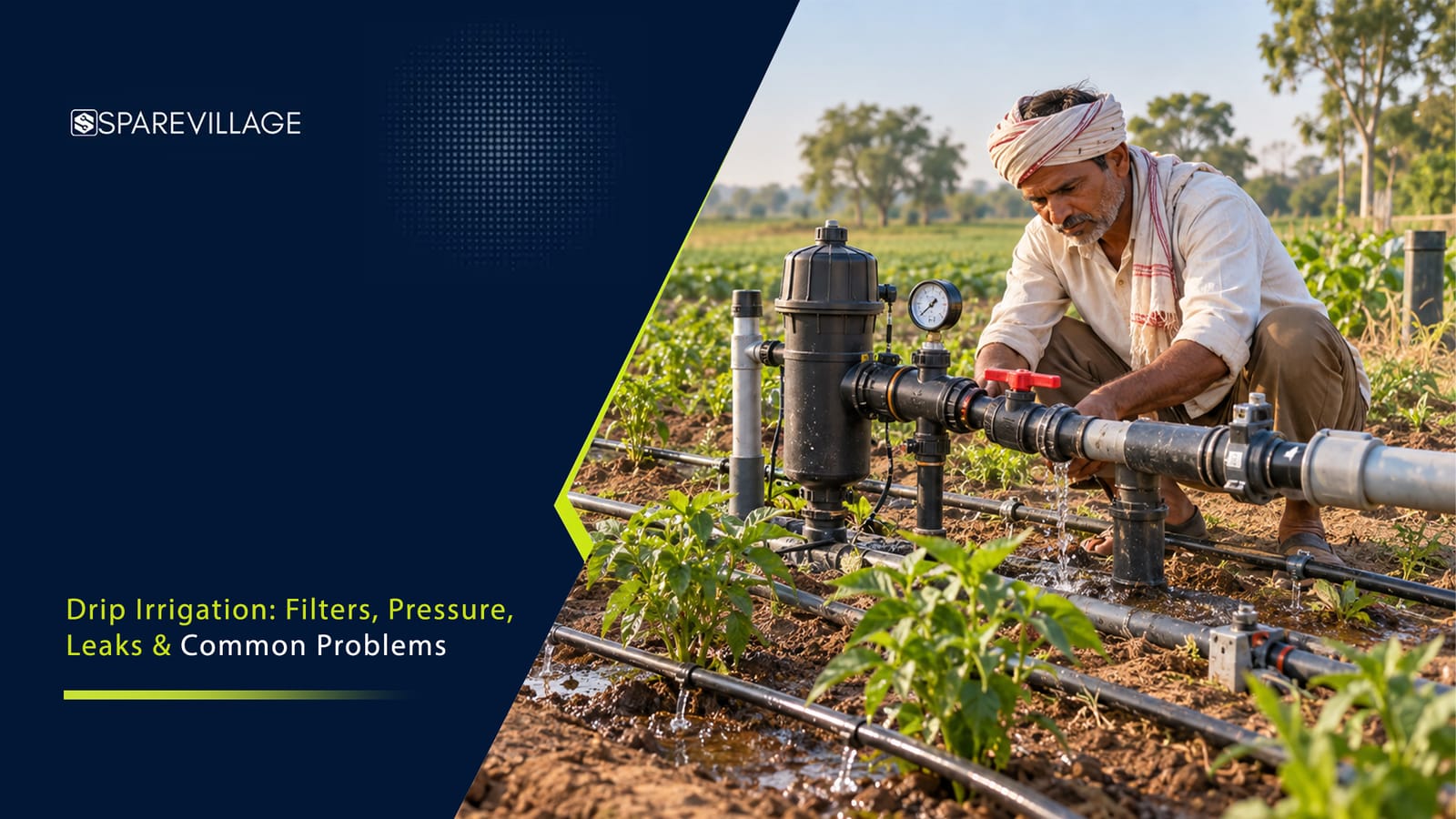
Drip Irrigation: Filters, Pressure, Leaks & Common Problems
Drip irrigation problems explained, from clogged emitters to leaks, pressure and filters. Learn how to choose accessories and maintain your system. Shop now!
Article Content
Intro: Drip irrigation delivers water directly or close to the root zone of plants. It is used in farms, orchards, nurseries, kitchen gardens, and landscaped areas. But installing drip pipes alone does not guarantee even watering. Water quality matters. Pressure matters. Filters matter. So do pipes, fittings, valves, and connectors. A small issue in one part of the system can affect water delivery across the line. A blocked filter can reduce flow. A damaged connector can cause leakage. Incorrect pressure can affect how emitters release water. This is why choosing the right drip irrigation accessories is as important as selecting the irrigation pipe or emitter. The right setup depends on the water source, required flow, operating pressure, field layout, and type of plants being watered. The most common drip irrigation problems include clogged emitters, low water pressure, excessive pressure, uneven water distribution, and leaking connections. Each problem can have more than one cause. For example, poor water flow does not always mean that the pump is weak. A dirty filter, blocked pipe, leaking connection, or unsuitable pipe size can also affect the flow. Finding the cause first can prevent unnecessary replacement of working components. Clogged Emitters Drip emitters have small water passages. Dirt, sand, algae, and mineral deposits can restrict these passages. A partially blocked emitter may release less water than expected. A completely blocked emitter may stop delivering water. The result can be uneven watering. Some plants may receive sufficient water while others remain dry. A suitable filter before the irrigation lines can reduce the amount of unwanted material entering the system. However, filtration should match the quality of the water and the requirements of the irrigation components. Uneven Water Distribution Uneven watering can occur when pressure changes along the irrigation line. It can also result from blocked emitters, unsuitable pipe sizing, leaks, or differences in elevation. Long irrigation lines need particular attention because water pressure and flow can change as water moves through the system. Do not solve uneven watering simply by increasing the water supply. First check the filter, pressure, pipes, connections, and emitters. Low Water Pressure Low pressure can affect emitter performance. A dirty filter can restrict water flow. Leaking pipes can also reduce pressure farther down the line. Other possible causes include unsuitable pipe sizing, elevation changes, or a water source that cannot provide the required flow and pressure. The correct solution depends on where the pressure is being lost. Excessive Water Pressure Too much pressure can also create problems. It can put unnecessary stress on pipes, fittings, emitters, and other components. Connections may start leaking if the system operates outside the suitable pressure range of its components. A pressure regulator can help control downstream pressure when the available supply pressure is higher than the operating requirement. Leaking Connections Leaks often develop around connection points. Loose fittings, damaged connectors, poor installation, ageing components, or incompatible connections can cause water to escape. One small leak may not seem serious. But several leaks across a large irrigation system can affect water distribution and increase water loss. This is why connections should be checked during regular system inspection. There is no single filter that is suitable for every drip irrigation system. The right filter depends on the water source and the type of material present in the water. Water from a borewell, pond, canal, tank, or other source can have different filtration requirements. Common filtration options include screen filters, disc filters, and media filters. Screen Filters Screen filters use a mesh screen to retain suspended particles from irrigation water. They can be suitable when the main concern is suspended material that can be captured by the screen. As particles collect, the screen can become restricted. Regular inspection and cleaning are therefore important. The filtration level should be selected according to the irrigation components and water quality. Choosing the finest possible screen is not automatically the right approach. Disc Filters Disc filters use a stack of grooved discs. Water passes through the spaces between the discs while particles are retained. They can be useful when the irrigation system needs effective filtration for suspended particles. Like other filters, they need cleaning when material accumulates. The actual maintenance requirement depends on the water quality and operating conditions. Media Filters Media filters use a bed of filtration material to remove suspended particles and organic material from water. They are often considered when the incoming water contains a higher amount of suspended or organic matter. The correct filtration arrangement depends on the water source and the irrigation system. So, instead of asking only “Which filter is best?”, ask: “What is present in my irrigation water, and what filtration does my drip system require?” That question leads to a more practical buying decision. If you are also comparing other agricultural equipment, the same principle applies. The application should come before the product name. For crop and farm preparation requirements, you can also read Power Weeder: How to Choose the Right Farm Machine. What Pressure Does a Drip Irrigation System Need? A drip irrigation system does not have one universal pressure requirement. The required pressure depends on the emitters, pipes, fittings, filters, regulators, elevation, flow rate, and overall system design. Always check the operating requirements of the specific irrigation components being used. If pressure is too low, emitters may not deliver their expected flow. If pressure is too high, components can experience unnecessary stress. A pressure gauge can help you understand what is actually happening in the system. For a larger irrigation setup, pressure can be checked at different points. For example, compare the pressure near the water source with the pressure farther along the line. A significant difference may indicate a restriction, leak, pipe-size issue, elevation change, or excessive flow demand. Why Is a Pressure Regulator Used? A pressure regulator controls downstream water pressure. It can be useful when the available supply pressure is higher than the pressure required by the irrigation components. The regulator should be selected according to the system's operating conditions. Do not select one only because the connection size matches your pipe. Check its pressure range, flow capacity, connection size, and compatibility with the irrigation system. Why Is a Pressure Gauge Important? A pressure gauge provides an actual pressure reading. This makes troubleshooting easier. Suppose plants near the beginning of a line receive enough water but plants farther away do not. Checking pressure at different points can help identify whether pressure loss is contributing to the problem. This is more useful than replacing components without first checking the system. How Do You Prevent Leaks in Drip Irrigation? Leak prevention starts with correct installation. Pipes, fittings, connectors, valves, and other accessories should be compatible with the irrigation system. Connections should be fitted correctly. A loose connection can leak. Overtightening can also damage certain components. After installation, run water through the system and inspect the complete line. Check joints, connectors, valves, filter connections, and exposed pipe sections. Finding a leak early is easier than dealing with poor water delivery after the system has been running for a long time. Check Connectors Regularly Drip irrigation systems can contain many connection points. Every connection should be checked during maintenance. Look for dripping joints, wet patches, loose fittings, cracked connectors, or damaged seals. If a connector is damaged, replacing the affected component may be enough to correct the problem. Do not rely on repeated tightening if the fitting itself is damaged. Protect Pipes From Physical Damage Drip pipes can be damaged by farm machinery, sharp objects, animals, construction work, or careless handling. A damaged pipe can create a leak. It can also reduce pressure in the section beyond the damaged point. Where pipes are exposed to regular movement or machinery, their placement should be planned carefully. Flush the Irrigation Lines Flushing helps remove accumulated material from irrigation lines. The required frequency depends on water quality and the amount of material entering the system. Do not wait until multiple emitters stop working. Regular inspection and flushing can help identify developing problems earlier. If you also use irrigation around gardens or landscaped areas, vegetation management becomes another part of regular maintenance. For thick grass and overgrown vegetation, see Brush Cutter vs Grass Trimmer: Which Is Better for Thick Grass? to understand the difference between these two tools and where each can be useful. How Do You Choose Drip Irrigation Accessories? Choosing drip irrigation accessories should start with the actual irrigation requirement. Do not select filters, regulators, valves, and connectors separately without considering how they will work together. A simple selection process can make the decision easier. Check the Water Source First, identify where the irrigation water comes from. Then check whether it contains sand, suspended particles, organic matter, or other material. This information helps determine the filtration requirement. Check the Required Flow The irrigation system needs enough flow for the connected lines and emitters. Adding more irrigation points increases the total flow requirement. Pipe size, filter capacity, valves, and other components should therefore be considered together. Check Operating Pressure Check the pressure available from the water source. Then compare it with the operating requirements of the irrigation components. If supply pressure is too high, pressure regulation may be required. If it is too low, increasing pressure without finding the actual cause may not solve the problem. Check Connection Sizes Filters, regulators, valves, pipes, and fittings must have compatible connections. Do not assume that two products will fit simply because both are designed for drip irrigation. Check the connection type and size before purchasing. This simple check can prevent installation problems and unnecessary replacements. Check Maintenance Requirements Drip irrigation needs regular maintenance. Filters need cleaning. Lines may need flushing. Emitters need inspection. Connections need to be checked for leakage. Before buying an accessory, understand how it needs to be cleaned and maintained. A component that is difficult to inspect can become difficult to maintain later. What Should You Check Before Buying Drip Irrigation Products? Before buying any drip irrigation product, first identify the problem you are trying to solve. If emitters are getting blocked, check the filtration system. If pressure is inconsistent, check pressure at different points. If connections are leaking, inspect fittings and pipe compatibility. If watering is uneven, check emitters, pressure, flow, pipe layout, and possible leaks. This prevents a common buying mistake. Do not replace a component before identifying the reason for the problem. Once the requirement is clear, compare the product specifications. Water source: Know what type of water will enter the system. Filtration: Check what level and type of filtration the system requires. Pressure: Check the operating pressure required by connected components. Flow: Make sure the component can handle the required flow. Pipe size: Match the connection with the irrigation pipe. Material: Check whether the material is suitable for the intended application. Maintenance: Understand how the product needs to be cleaned and inspected. Application: Select the product according to the size and layout of the irrigation system. Price is also worth considering, but it should not be the only factor. A lower-priced component may not be suitable for the required pressure, flow, water quality, or connection. At the same time, a more advanced product is not automatically necessary for every application. The better buying decision comes from matching the product specifications with the actual irrigation requirement. For farmers and growers, this approach can make it easier to compare irrigation products without choosing components based only on appearance or price. If your farm also requires crop protection equipment, you can read Agricultural Sprayer Buying Guide: Manual vs Battery vs Power Sprayers to compare the main sprayer types and understand what to check before purchase. For dairy operations, irrigation may be only one part of the farm's equipment requirement. If you are selecting dairy equipment as well, read How to Choose the Right Milking Machine for Dairy Farming? for a separate buying guide focused on milking machines. For fodder preparation, you can also explore Chaff Cutter Machine: Types, Capacity & Buying Guide | SpareVillage to understand the factors that matter when comparing chaff cutter machines. How Can You Maintain a Drip Irrigation System? Good maintenance starts with regular inspection. You do not need to wait for plants to show signs of poor watering. Check the filter and clean it when required. Inspect the pressure reading. Look for leaking connections. Flush irrigation lines when needed. Check emitters for blockage. Inspect exposed pipes for physical damage. Also pay attention to changes in water delivery. If one section suddenly receives less water, do not assume that the emitter is the only problem. Check the upstream filter, pipe, pressure, and connections as well. This approach helps identify the source of the problem instead of repeatedly replacing individual parts. Conclusion A drip irrigation system works as a complete setup. The filter protects the system from unwanted material. The pressure regulator helps control pressure when required. The pressure gauge helps monitor actual system conditions. Pipes and fittings carry the water. Emitters deliver it near the plant root zone. Each component has a role. Problems usually become easier to solve when these components are checked together. Before buying any drip irrigation accessory, start with the water source, required flow, operating pressure, connection size, application, and maintenance requirement. Do not choose a product only because it is cheaper or because it is labelled for drip irrigation. Choose according to what your system actually needs. Whether you are managing a farm, nursery, orchard, garden, or landscaped area, understanding these factors can help you make a more informed irrigation purchase. For more practical content on Agriculture & Farming, Gardening & Landscaping, agricultural equipment, tools, and other business requirements, follow @sparevillage on Instagram. FAQs: Common drip irrigation problems include clogged emitters, low or excessive pressure, leaking connections, blocked filters, uneven water distribution, and damaged pipes. These issues can reduce the amount of water reaching plants. The correct solution depends on the cause, so check the filter, pressure, pipes, fittings, and emitters before replacing any component. 2. Why Are My Drip Emitters Not Working? Drip emitters may stop working because of clogging, low pressure, blocked pipes, or a damaged emitter. First, check whether the problem affects one emitter or an entire section. If only one emitter is affected, inspect it for blockage or damage. If several emitters have low flow, check the filter, pressure, and irrigation line. 3. Why Do Drip Emitters Get Clogged? Drip emitters can become clogged when dirt, sand, algae, mineral deposits, or other material enters the irrigation system. Their small water passages make them sensitive to these particles. Suitable filtration can reduce the material reaching the emitters. Regular flushing and filter cleaning can also help maintain consistent water flow. 4. Which Filter Is Best for Drip Irrigation? The best filter depends on the irrigation water and the material it contains. Screen filters, disc filters, and media filters are used for different filtration requirements. Before choosing one, check the water source, type of contaminants, required flow, and irrigation components. A filter should match the system rather than being selected only by price or filter type. 5. Why Is a Filter Needed in Drip Irrigation? A filter helps prevent unwanted particles from entering the drip irrigation system and reaching small emitter passages. Sand, dirt, algae, and other suspended material can contribute to clogging. The required filtration depends on water quality and the irrigation components being used. The filter should also be cleaned when accumulated material starts restricting flow. 6. Why Is My Drip Irrigation Pressure Low? Low drip irrigation pressure can be caused by a dirty filter, leaking pipes, blocked lines, unsuitable pipe sizing, elevation changes, pump limitations, or excessive flow demand. Start by checking the pressure near the water source and farther along the irrigation line. Comparing these readings can help identify where pressure is being lost. 7. Can High Pressure Damage Drip Irrigation? Yes, excessive pressure can create problems for drip irrigation components and may contribute to leaks or damaged tubing and fittings. The correct operating pressure depends on the components used in the system. If supply pressure is higher than the required operating range, a suitable pressure regulator can help control downstream pressure. 8. Do I Need a Pressure Regulator for Drip Irrigation? A pressure regulator may be needed when the available water pressure is higher than the pressure required by the drip irrigation components. It helps control downstream pressure within the suitable operating range. Before buying one, check the system's pressure requirement, flow capacity, connection size, and compatibility instead of selecting a regulator by pipe size alone. 9. How Do I Check Drip Irrigation Pressure? Use a pressure gauge to measure the actual pressure in the irrigation system. Check relevant points near the water source and farther along the irrigation line when troubleshooting. Comparing these readings can help identify pressure loss caused by restrictions, leaks, elevation changes, or excessive flow demand. Always compare readings with the component specifications. 10. Why Are the Last Drip Emitters Getting Less Water? The last emitters may receive less water because of pressure loss, clogged lines, leaks, long irrigation runs, elevation changes, or excessive flow demand. Check the pressure and flow at different points instead of immediately replacing the emitters. If the pressure drops significantly along the line, investigate the restriction or system layout. 11. Why Is My Drip Irrigation System Leaking? Drip irrigation can leak because of loose or damaged fittings, cracked tubing, disconnected emitters, damaged seals, or incorrect connections. Run the system and inspect joints, connectors, valves, and exposed pipes for dripping water or wet areas. If a fitting or pipe is damaged, replace the affected component instead of repeatedly tightening it. 12. How Do I Find a Leak in a Drip Irrigation Line? Run the drip system and inspect the complete line while water is flowing. Look for dripping connections, spraying water, unusually wet areas, damaged tubing, and disconnected components. Start near the water source and move along the line. Buried leaks may require the surrounding soil to be checked or temporarily exposed to locate the damaged section. 13. How Can I Prevent Drip Irrigation Leaks? Use compatible pipes, fittings, connectors, valves, and emitters, and install each connection correctly. Avoid excessive force when connecting components. Inspect joints regularly and protect exposed tubing from machinery, sharp objects, animals, and other physical damage. Running the system during inspection also makes it easier to identify small leaks before they affect water distribution. 14. Should Drip Irrigation Lines Be Flushed? Yes, flushing can help remove accumulated material from drip irrigation lines. Open the appropriate line ends or flushing points according to the system design and allow water to carry out debris. The required frequency depends on water quality and system conditions. Flushing should be part of regular maintenance rather than only a response to blocked emitters. 15. How Do I Fix a Clogged Drip Emitter? First, determine whether the blockage affects one emitter or several emitters in the same section. Check the emitter, filter, and irrigation line for the source of the problem. Depending on the emitter design and manufacturer instructions, the component may be cleaned or replaced. If multiple emitters are affected, investigate filtration and flushing before replacing them. 16. Why Is My Drip Irrigation Watering Unevenly? Uneven watering can result from pressure differences, clogged emitters, blocked filters, leaks, damaged tubing, unsuitable pipe sizing, or changes in elevation. Start by checking whether the problem occurs throughout the system or only in one section. Then compare pressure and inspect emitters, filters, connections, and pipes to identify where water delivery changes. 17. How Do I Know if My Drip Irrigation Filter Is Clogged? Reduced water flow and increasing pressure difference across the filter can indicate that the filter is becoming clogged. Inspect the filter according to the manufacturer's instructions and clean it when required. Do not wait until the irrigation system stops working completely. Regular inspection is especially important when the water source contains significant suspended material. 18. What Drip Irrigation Accessories Do I Need? The required accessories depend on the irrigation system and water source. Common components can include filters, pressure regulators, pressure gauges, valves, connectors, end caps, and other fittings. Not every system needs the same combination. Select accessories according to water quality, pressure, flow, pipe size, connection type, application, and maintenance requirements. 19. How Do I Choose Drip Irrigation Accessories? Start by identifying the water source and the problem the accessory needs to solve. Then check water quality, required flow, operating pressure, pipe size, connection type, material, and maintenance requirements. For example, filtration is important when water contains clogging material, while pressure regulation may be required when supply pressure is too high. 20. Can Poor Water Quality Affect Drip Irrigation? Yes, poor water quality can affect drip irrigation performance. Suspended solids, sand, algae, mineral deposits, and organic material can contribute to clogging or restrict water flow. The level of filtration required depends on the water source and the irrigation components. Regular filter inspection, cleaning, and line flushing can help manage these problems. 21. How Often Should Drip Irrigation Be Checked? Drip irrigation should be inspected regularly while operating, but there is no single inspection schedule for every system. Water quality, system size, component condition, and operating conditions all affect maintenance needs. During inspection, check filters, pressure, emitters, connections, pipes, and water distribution. More frequent checks may be needed when clogging or leakage is common. 22. Why Does Drip Irrigation Lose Pressure? Drip irrigation can lose pressure because of clogged filters, blocked pipes, leaks, long irrigation lines, elevation changes, pump limitations, or excessive flow demand. Check pressure at different points to find where the drop occurs. If pressure is lower farther along the line, inspect the section between the two readings for restrictions, leaks, or design-related issues. 23. What Should I Check Before Buying Drip Irrigation Products? Before buying, check the water source, water quality, required flow, operating pressure, pipe size, connection type, material, and maintenance requirements. Also identify the actual problem you need to solve. A filter, regulator, connector, or valve should be selected according to the system requirement. Choosing only by price can result in an unsuitable component. 24. Is a More Expensive Drip Irrigation Accessory Better? Not necessarily. A higher price does not automatically mean that a component is better suited to your irrigation system. The product should match the required pressure, flow, water quality, connection size, application, and maintenance needs. A correctly specified component can be more useful than a more expensive product that does not match the system requirements. 25. How Do I Maintain a Drip Irrigation System? Regular maintenance includes checking filters, monitoring pressure, inspecting emitters, looking for leaks, flushing lines when required, and checking pipes and fittings for damage. Maintenance should be based on actual system conditions and water quality. If water flow changes or some plants receive less water, inspect the system instead of assuming that the emitter is the only problem.What Are the Most Common Drip Irrigation Problems?
Which Filter Is Best for Drip Irrigation?
1. What Are the Most Common Drip Irrigation Problems?