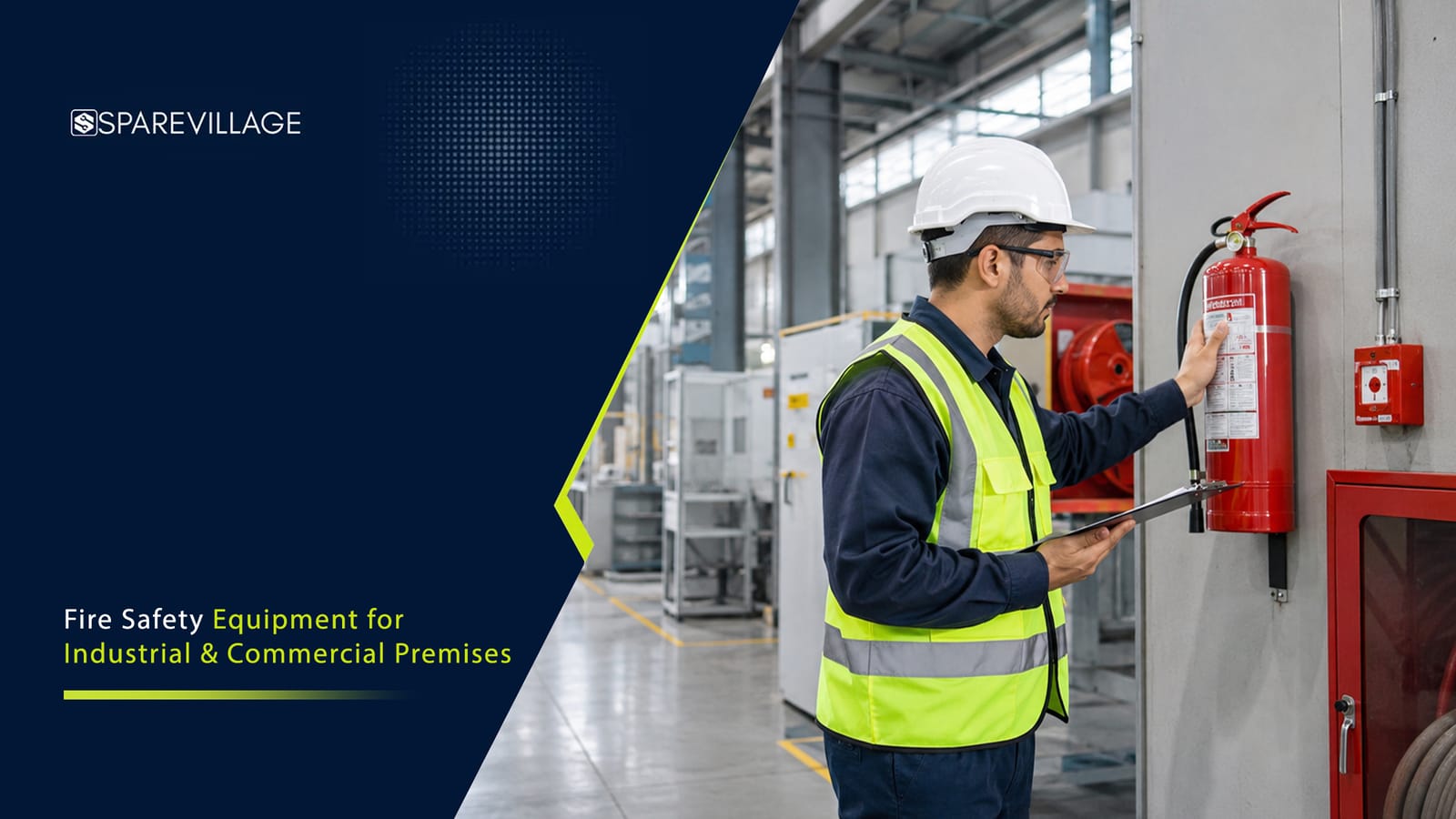
Fire Safety Equipment for Industrial & Commercial Premises
Explore essential fire safety equipment for industrial and commercial premises, including extinguishers, alarms, hydrants, sprinklers, and fire suppression systems.
Article Content
Introduction
Fire safety is not something a business can afford to consider only after an incident occurs. In a factory, warehouse, workshop, office, laboratory, or commercial building, a small fire can quickly become a serious threat to people, equipment, inventory, and business operations.
The challenge is that every facility has different fire risks. A manufacturing plant may deal with electrical panels, machinery, oils, chemicals, and welding activities. A warehouse may have large quantities of packaging and combustible materials. An office may have a higher concentration of electrical equipment, furniture, paper, and electronic devices.
That is why fire protection cannot depend on a single product.
A reliable fire safety setup combines early detection, warning, first-response equipment, fire suppression, safe evacuation, and regular inspection and maintenance. The right solution depends on the type of hazard, the size and layout of the facility, the materials present, and the level of risk.
This guide explains the key fire safety equipment for industrial and commercial premises, where different solutions are used, how to choose them, and what businesses should consider when building a complete fire protection strategy.
Understanding Fire Risks in Industrial & Commercial Facilities
Before selecting fire protection products, a facility needs to understand where a fire could start and what could make it spread.
Common sources of workplace fire include:
Electrical faults and overloaded circuits
Overheated machinery
Flammable liquids such as oils, fuels, solvents, and paints
Gas leaks
Combustible materials and packaging
Chemical storage
Welding, cutting, and other hot-work activities
Commercial kitchens and cooking equipment
Poor housekeeping and waste accumulation
Electrical equipment is a major concern in many workplaces. Damaged cables, faulty connections, overloaded circuits, or poorly maintained machinery can generate enough heat to ignite nearby materials.
Industrial facilities may also have a higher fire load because they store or use materials that can burn rapidly. Warehouses, for example, can contain cardboard, plastics, packaging, textiles, chemicals, and other combustible inventory in large quantities.
A proper fire risk assessment helps identify these hazards before selecting equipment. The objective is not simply to place fire extinguishers around a building. It is to understand the risk and create appropriate protection for each area.
Essential Fire Protection Equipment for Facilities
A complete fire protection setup can include several types of equipment. Each serves a different purpose, and they work together as part of the facility's overall emergency response system.
Fire Extinguishers
Fire extinguishers provide immediate first-response protection when a fire is still small and it is safe for a trained person to respond.
Different extinguishing agents are designed for different fire risks. Common options include water, foam, dry powder, CO₂, and clean-agent extinguishers.
For example, a CO₂ extinguisher may be appropriate for certain electrical equipment, while other extinguishing agents may be better suited to combustible solids or flammable liquids.
The important point is to match the extinguisher to the hazard rather than selecting one simply because it is readily available or inexpensive.
Extinguishers should also be visible, accessible, correctly positioned, and regularly inspected.
Fire Detection & Alarm Systems
A fire alarm system helps detect a developing fire and warn people before conditions become dangerous.
Depending on the facility, detection may involve:
Smoke detectors
Heat detectors
Flame detectors
Manual call points
Fire alarm control panels
Audible alarms
Visual warning devices
Early detection is particularly important in large facilities where a fire may begin in one room or production area while people are working elsewhere.
A detection system does not replace fire suppression equipment. Its primary role is to identify the danger and provide an early warning so that appropriate action can begin.
Fire Hydrant & Hose Systems
Larger industrial and commercial facilities may require fixed water-based fire protection systems.
A typical arrangement can include fire hydrants, fire hoses, hose reels, hydrant valves, fire pumps, and an appropriate water supply.
These systems provide a larger volume of water for firefighting compared with portable extinguishers and can support emergency response across larger areas.
The design and installation of a hydrant system should be based on the facility's layout, fire risk, water requirements, and applicable standards.
Automatic Sprinkler Systems
Automatic sprinklers are designed to respond to heat and release water in the affected area.
They are particularly important in large buildings and facilities where a fire could grow quickly before people can respond manually. Warehouses, manufacturing facilities, storage areas, and other large premises can benefit from properly designed sprinkler protection.
A sprinkler system can include sprinkler heads, piping, valves, water supplies, pumps, and control components.
The design should take into account the building, occupancy, storage arrangement, fire load, and other relevant requirements.
Specialized Fire Suppression Systems
Some environments require more specialized protection than portable extinguishers or water-based systems.
Depending on the hazard, businesses may use:
Clean-agent suppression
CO₂ suppression
Foam suppression
Dry chemical suppression
These solutions can be useful in areas where water may be unsuitable or where a specific fire hazard requires a specialized extinguishing method.
For example, sensitive electronic environments may require a solution that does not leave significant residue, while certain industrial processes may involve flammable liquids or other hazards requiring specialized suppression.
Emergency & Evacuation Equipment
Fire protection is also about helping people leave the facility safely.
Emergency equipment can include:
Emergency lighting
Exit signs
Fire doors
Fire blankets
Evacuation signage
These products help maintain visibility and identify safe escape routes when normal lighting or building conditions are affected by a fire.
A good fire safety plan therefore considers both fire control and human evacuation.
Types of Fire Extinguishers and Where They Are Used
Choosing the right extinguisher requires understanding the type of material that may catch fire.
Water-Based Extinguishers
Water-based extinguishers are generally intended for ordinary combustible materials such as paper, wood, cloth, and similar materials.
They are not automatically suitable for every fire. Water can be dangerous when used on certain electrical equipment or some types of flammable-liquid fires.
Foam Extinguishers
Foam extinguishers can be used for certain solid combustible materials and some flammable-liquid risks.
They may be considered in areas where fuels, oils, paints, or similar materials are present, depending on the specific hazard and equipment rating.
Dry Powder Extinguishers
Dry powder extinguishers are widely used across industrial environments because they can provide protection against several types of fire risks, depending on the product classification.
They can be suitable for certain flammable liquids and gases and are commonly considered for industrial applications.
CO₂ Extinguishers
CO₂ extinguishers are commonly associated with electrical equipment and applications where avoiding residue is important.
They can be useful around electrical panels, control equipment, and certain sensitive equipment.
However, the specific fire risk and extinguisher rating should always be considered before selection.
Clean-Agent Extinguishers
Clean-agent extinguishers are designed for situations where protecting sensitive equipment and minimizing residue is important.
They may be considered for electronics, control rooms, and other environments where conventional extinguishing agents could create additional cleanup or equipment concerns.
The key principle is simple: choose the extinguishing agent according to the fire hazard and the equipment's approved application.
For a deeper understanding of extinguisher classifications, types, and selection, businesses can also read our dedicated Fire Extinguisher Types, Classes & Selection Guide.
Fire Safety Solutions for Different Industries
Fire protection requirements change depending on the type of business and the materials present.
Manufacturing Plants
Manufacturing environments can involve machinery, electrical systems, oils, chemicals, production materials, and hot-work activities.
Protection may therefore involve portable extinguishers, detection systems, hydrants, sprinklers, and specialized suppression depending on the specific processes.
Warehouses & Storage Facilities
Warehouses can have a significant fire load because of stored inventory, packaging, plastics, paper, textiles, chemicals, or other combustible materials.
Large storage areas require careful consideration of detection, first-response equipment, sprinkler protection, access routes, and emergency evacuation.
Offices & Commercial Buildings
Offices typically contain electrical equipment, computers, furniture, paper, and other combustible materials.
Fire alarms, suitable extinguishers, emergency lighting, exit signage, and clear evacuation routes are important parts of workplace protection.
Laboratories & Chemical Facilities
Laboratories and chemical-handling facilities can present specialized risks because of chemicals, solvents, gases, and flammable liquids.
These environments may require specific extinguishing agents and specialized suppression systems rather than relying on general-purpose equipment alone.
Workshops & Industrial Workspaces
Workshops can involve welding, cutting, machinery, lubricants, fuels, and electrical tools.
Fire protection should account for both routine operations and temporary hazards created during maintenance or hot-work activities.
How to Choose the Right Fire Protection Equipment
The right fire protection equipment should be selected based on risk, not simply price or equipment size.
Start by identifying the materials and processes present in each area.
Consider:
Solid combustible materials
Flammable liquids
Gases
Electrical equipment
Chemicals
Machinery
Storage materials
Next, evaluate the facility itself. Building size, layout, occupancy, storage arrangement, fire load, access routes, and high-risk areas all influence the protection strategy.
The selection process should follow a simple chain:
Hazard → Detection → First Response → Suppression → Evacuation
For example, an electrical room may need appropriate detection and a suitable extinguisher, while a large warehouse may require broader detection and automatic sprinkler protection.
Accessibility is equally important. Equipment that is technically suitable but difficult to reach during an emergency is not an effective solution.
Businesses should also consider visibility, coverage, emergency access, maintenance requirements, and the environment in which the equipment will be installed.
Where Should Fire Safety Equipment Be Installed?
Equipment should be positioned where people can reach it quickly and where the risk justifies its presence.
Common locations include:
Electrical rooms
Production floors
Warehouses
Loading areas
Chemical storage areas
Corridors
Staircases
Kitchens
Machinery areas
Emergency exits
Portable extinguishers should be easy to identify and access without being blocked by stock, machinery, furniture, or other obstacles.
Emergency exits and evacuation routes should also remain clear.
The exact placement, number, type, and coverage of equipment should be determined according to the facility's risk assessment and applicable requirements. Simply installing equipment in convenient locations does not guarantee adequate protection.
Inspection, Testing & Maintenance
Fire protection equipment must remain operational when it is needed. Buying equipment and leaving it untouched for years defeats the purpose of having it.
Fire Extinguisher Inspection
Extinguishers should be checked for visible damage, pressure condition where applicable, accessibility, signs of leakage or corrosion, and service requirements.
They should remain easy to locate and should not be blocked or improperly stored.
Alarm & Detection Testing
Fire alarms and detection devices need regular testing to confirm that detectors, manual call points, control panels, alarms, and associated components are functioning correctly.
A system that fails to alert occupants quickly can significantly reduce the time available for evacuation and response.
Hydrant & Sprinkler Maintenance
Water-based systems require attention to components such as hoses, valves, pumps, water supplies, piping, and sprinkler heads.
Testing and servicing should follow the applicable requirements and the system manufacturer's recommendations.
Maintain Inspection Records
Businesses should maintain records of inspections, testing, servicing, repairs, and replacements.
Good documentation helps demonstrate that fire protection systems are being actively managed rather than installed and forgotten.
Fire Safety Standards & Compliance
Fire safety requirements vary according to the type of building, occupancy, industry, location, fire risks, and applicable regulations.
Businesses should therefore identify the requirements relevant to their facility before purchasing or installing protection systems.
Compliance considerations may include:
Building fire safety requirements
Industry-specific requirements
Installation standards
Inspection and testing requirements
Certification
Documentation
Employee emergency procedures
Compliance should not be treated as a paperwork exercise. The purpose of these requirements is to reduce risk and improve the ability of people and emergency responders to deal with a fire.
For detailed regulatory considerations, businesses should refer to our dedicated Fire Safety Standards & Compliance Guide.
Fire Safety Equipment Checklist for Industrial Premises
A practical facility-level checklist should cover five areas.
Detection
Smoke detectors
Heat detectors
Fire alarm systems
Manual call points
First Response
Suitable fire extinguishers
Fire blankets
Fire Suppression
Fire hydrant systems
Hose reels
Sprinkler systems
Specialized suppression systems
Evacuation
Emergency lighting
Exit signs
Fire doors
Evacuation signage
Maintenance
Regular inspection
Testing
Servicing
Replacement of damaged or expired equipment
The exact equipment required depends on the facility's hazards and risk assessment. A checklist should be used as a starting point, not as a substitute for professional assessment where required.
How to Build a Complete Fire Protection Strategy
A strong fire protection strategy follows the complete emergency cycle rather than focusing on one product.
1. Identify hazards : Understand what could start a fire and what materials could fuel it.
2. Assess the risk : Evaluate the likelihood, potential impact, building layout, occupancy, and fire load.
3. Detect fire early : Use appropriate detection systems for the environment.
4. Alert occupants : Ensure people receive a clear warning quickly.
5. Control or suppress the fire : Provide suitable extinguishers, hydrants, sprinklers, or specialized suppression systems.
6. Evacuate safely : Keep exits, emergency lighting, signage, and evacuation procedures ready.
7. Inspect and maintain equipment : Regularly test, service, document, and replace equipment when necessary.
This approach helps turn individual products into a coordinated fire protection system.
Conclusion
Fire safety is not about placing a single extinguisher on the wall and assuming the facility is protected. Industrial and commercial premises can have very different hazards, and each area needs protection appropriate to the risks present.
The right approach starts with identifying hazards, assessing the facility, selecting suitable equipment, installing it correctly, maintaining it regularly, and ensuring employees know how to respond during an emergency.
From portable extinguishers and detection systems to hydrants, sprinklers, suppression solutions, emergency lighting, and evacuation equipment, every component has a specific role in reducing fire risk.
If you are looking to source industrial safety and fire-protection products, visit the SpareVillage marketplace to explore products across multiple industrial categories and find solutions suited to your business requirements.
For a broader workplace safety strategy, also read our related guides:
Fall Protection Equipment for Industrial Use: The Complete Safety Guide
Industrial PPE Guide: Head, Hand, Respiratory and Eye Protection Explained
Industrial Safety Footwear and Workwear: Complete Buyer's Guide
Industrial Safety & PPE Supplies: The Complete Buyer's Guide for 2026
A safer workplace starts with preparation. The right equipment, the right planning, and regular maintenance can make a critical difference when an emergency occurs.
Frequently Asked Questions
What fire safety equipment is needed in an industrial facility?
It depends on the facility's fire hazards, size, layout, occupancy, and applicable requirements. Common solutions include suitable extinguishers, detection and alarm systems, hydrants, hose reels, sprinklers, emergency lighting, exit signage, and specialized suppression where required.
Which extinguisher is suitable for electrical fires?
CO₂ extinguishers are commonly used for certain electrical fire risks because they do not leave the same type of residue as some other agents. The extinguisher must be appropriately rated for the specific application.
What fire protection is required for warehouses?
Warehouse protection depends on the stored materials, storage height and arrangement, building characteristics, and fire load. Solutions can include detection systems, portable extinguishers, sprinklers, hydrants, and emergency evacuation equipment.
How do fire detection and suppression systems work together?
Detection systems identify a potential fire and provide an alarm, while suppression systems are designed to control or extinguish the fire. Using both can provide faster warning and a more comprehensive response.
How often should fire protection equipment be inspected?
Inspection and testing frequency depends on the equipment type, applicable standards, manufacturer requirements, and facility conditions. Businesses should establish a documented inspection and maintenance schedule rather than relying on occasional visual checks.
How do I determine which fire protection products my facility needs?
Start with a fire risk assessment. Identify the materials, processes, equipment, storage conditions, building layout, and potential fire scenarios. Then select protection based on the identified risks and applicable requirements.
How should fire extinguishers be placed in a workplace?
Fire extinguishers should be clearly visible, easily accessible, and positioned near identified fire hazards without blocking emergency exits or walkways.
Can one fire extinguisher handle every type of fire?
No. Different extinguishing agents are designed for different fire classes, so the extinguisher must match the specific fire hazard.
Why are smoke detectors important in industrial buildings?
Smoke detectors provide early warning by detecting smoke before a fire becomes severe, giving employees more time to respond and evacuate safely.
What is the purpose of emergency lighting during a fire?
Emergency lighting keeps evacuation routes visible when normal power fails, helping employees identify exits and leave the building safely during an emergency.
Why is regular fire equipment maintenance important?
Regular maintenance ensures fire safety equipment remains functional, accessible, and ready for use when needed, while helping identify damage, faults, or servicing requirements early.