Lockout Tagout (LOTO): Complete Industrial Safety Guide
Lockout Tagout (LOTO) guide covering safety, procedures, hazardous energy, LOTO devices, kits, OSHA requirements, best practices, training, and checklists.
Article Content
Introduction
Industrial machines make production faster and more efficient, but the energy that powers them can become extremely dangerous during maintenance, repair, cleaning, inspection, or servicing. A machine may appear to be switched off while electrical, mechanical, hydraulic, pneumatic, thermal, chemical, or stored energy remains present. If that energy is released unexpectedly, a worker can suffer serious injuries. This is where Lockout Tagout (LOTO) becomes an essential part of industrial safety.
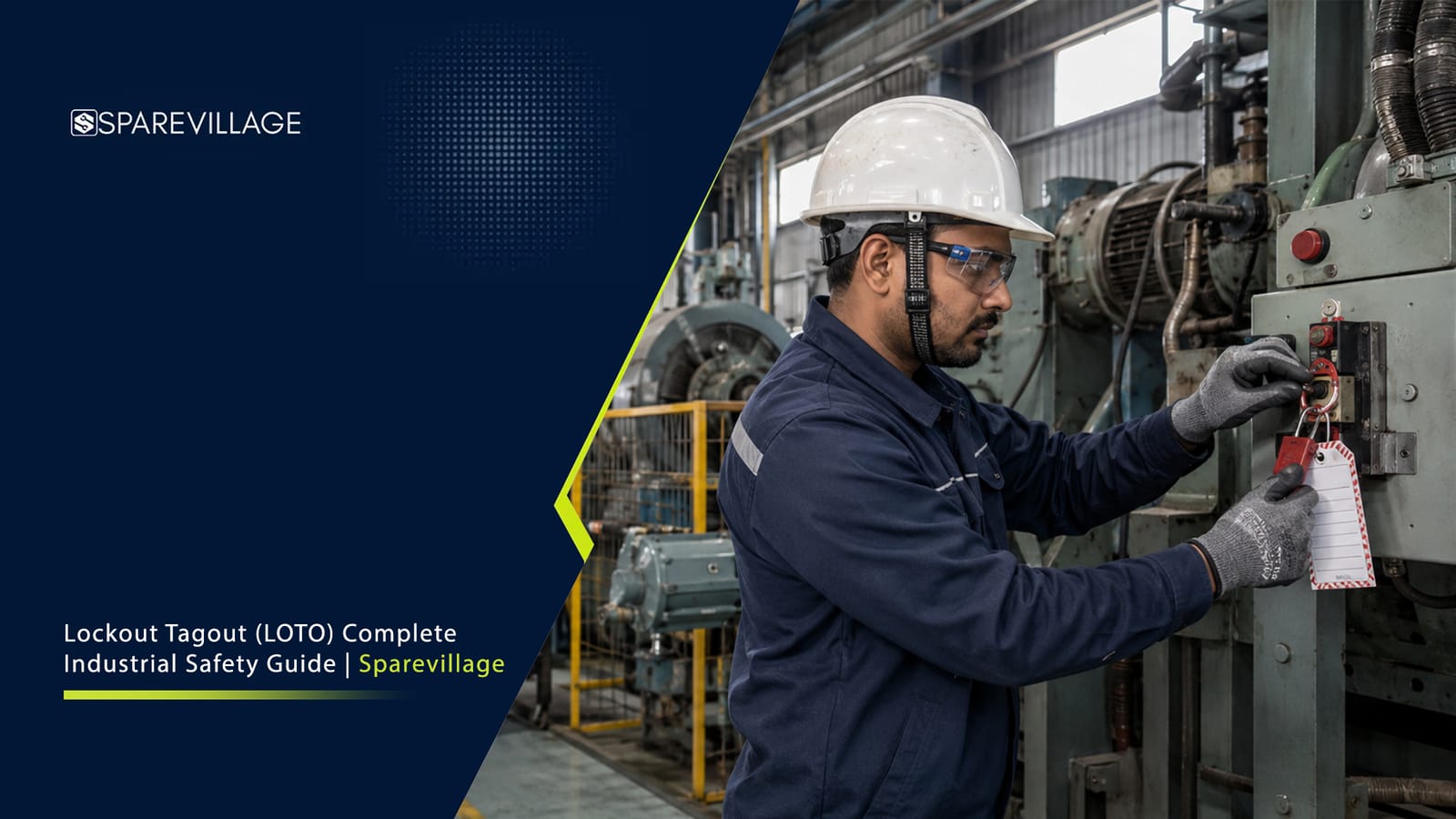
Lockout Tagout is a safety procedure used to isolate hazardous energy and prevent machinery or equipment from being unexpectedly energized or started while work is being performed. A proper LOTO procedure involves identifying energy sources, shutting down equipment, isolating the energy, applying lockout or tagout devices, releasing stored energy, and verifying that the equipment is safely isolated before servicing begins. OSHA's general-industry hazardous energy standard, 29 CFR 1910.147, establishes requirements for controlling hazardous energy during covered servicing and maintenance activities.
For manufacturing plants, workshops, warehouses, processing facilities, construction-related environments, and other industrial workplaces, LOTO is more than simply putting a padlock on a switch. It is a complete energy control process that requires suitable procedures, trained employees, appropriate lockout tagout devices, and verification. This guide explains what LOTO means, why it matters, how the procedure works, which hazardous energy sources must be controlled, what equipment is commonly used, and how businesses can build a practical LOTO safety program.
If you are planning a complete workplace safety setup, explore our guide to Industrial Safety & PPE Supplies: The Complete Buyer's Guide for 2026. For broader maintenance and workshop requirements, you can also review our Industrial Tool Collection.
What Is Lockout Tagout (LOTO)?
Lockout Tagout (LOTO) is a safety procedure used to control hazardous energy before employees perform servicing or maintenance on machinery and equipment. The purpose is simple: prevent unexpected startup, energization, or release of stored energy that could injure a worker.
In a lockout procedure, an authorized employee isolates the machine from its energy source and applies a physical lock to the energy-isolating device. A tag may also be attached to clearly identify the lockout condition and communicate that the equipment must not be operated. When equipment cannot be locked out under the applicable conditions, a tagout system may be used according to the requirements of the relevant safety standard.
LOTO is particularly important during activities such as:
Machine repair
Preventive maintenance
Equipment inspection
Cleaning and servicing
Tool or component replacement
Electrical maintenance
Mechanical repairs
Clearing certain machine-related hazards
Maintenance involving stored or residual energy
The key concept behind LOTO is energy isolation. Simply pressing a stop button does not necessarily make equipment safe. A machine can still contain electrical energy, compressed air, hydraulic pressure, gravity-related energy, rotating parts, heat, or other hazardous energy.
A proper LOTO program therefore focuses on identifying the energy source, isolating it, controlling stored energy, and verifying that the equipment cannot operate before work starts.
LOTO is one part of a wider PPE and workplace protection strategy. Employees involved in maintenance should also use suitable workwear, safety footwear, gloves, eye protection, and head protection. Our Industrial Workwear & Safety Footwear: Complete Buyer's Guide explains how to select protective clothing and footwear for demanding industrial environments.
Why Is Lockout Tagout Important for Industrial Safety?
The main purpose of lockout tagout safety is to protect workers from hazardous energy during servicing and maintenance. An unexpected machine startup can turn an ordinary maintenance task into a serious workplace accident within seconds.
Consider a conveyor that has stopped because of a jam. If a worker reaches into the danger zone without properly isolating the conveyor, another employee could restart it from a control panel. Similarly, a hydraulic press may appear inactive while hydraulic pressure remains stored in the system. A sudden release of that pressure can cause unexpected movement.
OSHA identifies unexpected energization, startup, and release of stored energy as hazards addressed by its hazardous-energy requirements. Proper lockout/tagout practices are intended to safeguard employees during covered servicing and maintenance activities.
A strong LOTO system can help organizations:
Prevent unexpected machine startup
Control hazardous energy
Reduce the risk of serious maintenance injuries
Improve machine maintenance safety
Establish consistent energy isolation procedures
Clarify employee responsibilities
Support workplace safety compliance
Improve maintenance planning
Reduce unsafe shortcuts during servicing
LOTO is especially important in environments where several employees work around the same equipment. Clear locks, tags, procedures, and communication help ensure that a machine is not restarted while someone is still working on it.
However, LOTO should not be treated as a paperwork exercise. Its effectiveness depends on the actual isolation of energy and the ability of employees to correctly follow the established procedure.
A complete industrial safety program should also address hazards beyond machine energy, including falling objects, chemical exposure, flying particles, noise, fire, and work at height. For a broader overview of workplace protection, see our guide to Head, Hand & Respiratory PPE: Gloves, Helmets, Masks & Eye Protection.
How Does the LOTO Procedure Work?
A lockout tagout procedure follows a controlled sequence. The exact procedure should be developed for the specific machine or equipment because different machines can have different energy sources and isolation points.
Before maintenance starts, the authorized employee should understand the machine, the type and magnitude of energy involved, the hazards created by that energy, and the methods used to control it. OSHA requires covered energy-control procedures to be developed, documented, and used, subject to specified exceptions.
A typical LOTO process works like this:
Identify → Shut down → Isolate → Lock/Tag → Release stored energy → Verify → Perform work
For example, suppose maintenance is required on an electrically powered machine connected to compressed air. Turning off the electrical switch alone may not be enough. The electrical supply must be isolated, the pneumatic supply must also be isolated, and any remaining pressure must be safely released or otherwise controlled.
Verification is one of the most important parts of the process. Employees should not assume that equipment is safe simply because a lock has been applied. The energy-isolation procedure should include a method for testing and verifying that the equipment is actually isolated before servicing begins.
Once maintenance is complete, the area must be inspected, employees must be safely positioned or removed, and the appropriate procedure must be followed before energy is restored. OSHA generally requires the employee who applied a lockout or tagout device to remove it, subject to a specific employer-controlled exception when that employee is unavailable.
When maintenance involves elevated platforms, roofs, ladders, or machinery at height, LOTO should be coordinated with fall protection controls. Review our Fall Protection Equipment: A Complete Guide for Working at Height before selecting harnesses, lanyards, lifelines, or other height-safety equipment.
Steps of Lockout Tagout Procedure
A practical LOTO procedure can be understood through seven major steps. The exact details should always follow the machine-specific energy control procedure and applicable regulations.
1. Notify Affected Employees
Inform employees who operate the machine or work in the surrounding area that servicing or maintenance will take place and that the equipment will be locked or tagged out.
Communication is important because affected employees must understand that the equipment cannot be operated during the maintenance activity.
2. Shut Down the Equipment
Stop the machine using its normal shutdown procedure. Depending on the equipment, this could involve a stop button, switch, valve, or other normal operating control.
A normal shutdown does not replace energy isolation. It is the first stage of making the machine ready for isolation.
3. Isolate All Energy Sources
Identify and isolate every applicable energy source. This may include electrical disconnects, pneumatic valves, hydraulic isolation points, fuel supplies, steam systems, or mechanical energy sources.
Missing one energy source can leave workers exposed.
4. Apply Lockout or Tagout Devices
Apply the appropriate lockout tagout devices to the energy-isolating devices. Locks physically prevent operation where lockout is applicable, while tags communicate the danger and restriction associated with the isolated equipment.
5. Release or Control Stored Energy
Stored or residual energy must be released, restrained, blocked, or otherwise controlled. Examples include hydraulic pressure, compressed air, elevated machine components, flywheels, capacitors, springs, or thermal energy.
6. Verify Isolation
Before work begins, verify that the machine is actually isolated. This may include testing controls and using appropriate testing methods, while following the established procedure.
The verification step is critical because a lockout is only effective if the hazardous energy has actually been controlled.
7. Perform the Work and Restore Energy Safely
Complete the maintenance only after the equipment has been verified safe. When work is finished, inspect the area, ensure employees are safely positioned, remove tools and unnecessary items, follow the established device-removal procedure, and notify affected employees before the equipment is returned to service. OSHA's standard specifies requirements for release from lockout/tagout and restoration of energy.
Before beginning any repair, ensure that the maintenance team has the correct tools and accessories. Our Industrial Tool Collection can help businesses source essential hand tools, workshop equipment, and maintenance supplies for industrial applications.
Types of Hazardous Energy Covered by LOTO
Hazardous energy is not limited to electricity. Industrial machinery can contain several forms of energy, and each one must be considered when creating an energy isolation procedure.
Electrical Energy
Electrical energy is one of the most familiar hazards. It can come from power supplies, electrical panels, motors, capacitors, batteries, or other electrical components.
Mechanical Energy
Moving components, rotating shafts, flywheels, belts, gears, and springs can store or transmit mechanical energy. Even after a motor is switched off, components may continue moving or remain under tension.
Hydraulic Energy
Hydraulic systems use pressurized fluid to operate cylinders, presses, lifts, and other equipment. Pressure must be properly isolated and controlled before maintenance.
Pneumatic Energy
Compressed air can create sudden movement when trapped inside cylinders, lines, or components. Pneumatic systems therefore require appropriate isolation and pressure control.
Thermal Energy
Hot surfaces, steam, heated liquids, furnaces, and other equipment can retain dangerous heat. Cooling and isolation may be required before work begins.
Chemical Energy
Certain processes involve chemicals that can create hazardous pressure, reactions, or exposure risks. The energy-control procedure should address the specific hazards associated with the process.
Gravitational Energy
Raised platforms, suspended loads, machine components, and elevated equipment can fall when support is removed. Blocking or other appropriate measures may be required.
Stored or Residual Energy
A machine can remain hazardous even after its main energy source has been disconnected. Capacitors, springs, pressure, rotating parts, and other components can retain energy.
The important principle is to identify all energy sources before starting maintenance, rather than assuming that turning off the main electrical supply makes the entire machine safe.
Because hazardous energy can exist alongside dust, fumes, chemicals, and airborne particles, workers may also need respiratory protection, gloves, eye protection, and protective clothing. Use our Head, Hand & Respiratory PPE Guide to understand the role of different PPE categories.
Common Lockout Tagout Devices and Equipment
The right LOTO equipment depends on the machinery, energy sources, and isolation points involved. A lockout program should provide devices that are suitable for the specific workplace and equipment.
Common lockout tagout devices include:
Safety lockout padlocks
Lockout hasps
Circuit breaker lockouts
Valve lockouts
Electrical plug lockouts
Cable lockout devices
Ball valve lockouts
Gate valve lockouts
Pneumatic lockout devices
Lockout tags
Group lockout devices
Lockout stations
Warning labels and identification tags
A lockout padlock is designed to identify and secure an energy-isolating device. A hasp can allow multiple authorized employees to apply their individual locks to a common isolation point.
Circuit breaker lockouts are used for suitable electrical applications, while valve lockouts can help secure different types of valves against operation.
The device must be appropriate for the energy-isolating device and the workplace conditions. A poorly fitted or unsuitable device can undermine the purpose of the LOTO procedure.
It is also important to distinguish LOTO equipment from general tools. A maintenance toolbox may contain wrenches, screwdrivers, meters, and other equipment, but these do not replace dedicated energy-control devices.
A well-planned LOTO program should make the required devices easily accessible so employees do not feel pressured to improvise during maintenance.
For maintenance teams that need to combine LOTO devices with general repair equipment, browse our Industrial Tool Collection to find tools suitable for workshops, factories, and plant maintenance.
What Is Included in a LOTO Kit?
A lockout tagout kit is a collection of LOTO devices used to isolate different energy sources during maintenance and servicing. The exact contents vary depending on the workplace and equipment.
A typical industrial LOTO kit may contain:
Safety lockout padlocks
Lockout tags
Lockout hasps
Circuit breaker lockouts
Valve lockout devices
Plug lockout devices
Cable lockout devices
Electrical lockout accessories
Warning labels
Carrying pouch or storage case
Some larger industrial operations use customized LOTO kits for specific machines, maintenance teams, or departments.
For example, an electrical maintenance team may need more circuit breaker lockout devices, while a manufacturing facility with pneumatic and hydraulic machinery may require a broader combination of valve, pneumatic, and mechanical isolation devices.
When selecting a LOTO kit, consider:
Types of machinery in the facility
Number of energy sources
Types of isolation points
Number of authorized employees
Group lockout requirements
Workplace conditions
Storage and accessibility
Identification requirements
The goal is not simply to purchase the largest kit available. The kit should contain the devices employees actually need to safely isolate the equipment they service.
A proper LOTO kit supports the energy control program, but the kit itself is not the safety program. Written procedures, employee training, machine-specific instructions, and verification remain essential.
LOTO kits should be stored alongside other essential safety supplies, including PPE, warning signs, first-aid products, and fire protection equipment. For guidance on fire prevention and emergency readiness, read our Fire Safety Equipment for Industrial & Commercial Premises.
LOTO for Electrical and Mechanical Equipment
Electrical lockout tagout is commonly associated with industrial maintenance because many machines depend on electrical power. However, electrical isolation is only one part of machine safety.
For electrical equipment, workers may need to identify the correct disconnecting means, isolate the electrical supply, apply the appropriate lockout device, and verify the absence of hazardous energy using the procedure and equipment appropriate to the task.
Mechanical equipment presents a different challenge. Rotating shafts, gears, belts, flywheels, springs, elevated parts, and other components may continue to move or retain energy after a machine is shut down.
Consider a large industrial conveyor. Disconnecting the motor may stop powered movement, but the conveyor could still have stored mechanical energy or another connected energy source. A proper machine lockout tagout procedure therefore considers the entire system rather than a single switch.
For equipment involving multiple energy sources, the energy control procedure should identify each source and explain how it is isolated.
Electrical and mechanical hazards can also exist together. A machine may use electricity to power a motor and compressed air or hydraulic pressure to operate its moving components.
The safest approach is to identify every relevant energy source, isolate each one according to the machine-specific procedure, control stored energy, and verify the isolation before maintenance begins.
Maintenance workers handling electrical or mechanical equipment should also wear task-appropriate PPE. Safety footwear can help protect against impact and electrical hazards, while gloves and eye protection may reduce exposure to sharp edges, sparks, and flying particles. See our Industrial Workwear & Safety Footwear Guide for more information.
Lockout Tagout Safety Rules and Best Practices
Effective LOTO safety depends on consistent practices. Even a well-designed program can fail if workers bypass procedures, use incorrect devices, or assume that equipment is safe without verification.
Important lockout tagout safety rules include:
Identify Every Energy Source
Do not focus only on the main power source. Review electrical, mechanical, hydraulic, pneumatic, thermal, chemical, gravitational, and stored energy.
Use Machine-Specific Procedures
Different machines can have different isolation points. Written procedures should clearly explain how hazardous energy is controlled.
Use Suitable LOTO Devices
Choose locks, tags, hasps, valve lockouts, breaker lockouts, and other devices that fit the equipment and are appropriate for the application.
Never Rely Only on a Stop Button
A normal control switch may stop operation without physically isolating the energy source.
Verify Before Starting Work
Verification should confirm that the equipment is actually isolated and cannot unexpectedly operate.
Communicate With Affected Employees
Employees who operate or work around the equipment should know when it has been locked or tagged out and when it is returned to service. OSHA specifically requires notification before application and after removal of lockout/tagout devices.
Control Stored Energy
Residual pressure, electrical charge, gravity, heat, tension, and other stored energy must be addressed.
Do Not Share Personal Locks
Each employee should follow the site's established lockout system and use devices assigned or controlled according to the employer's procedure.
Inspect the Program
LOTO procedures should be reviewed periodically and when equipment, processes, jobs, or hazards change.
Good LOTO practices create consistency. Employees should know exactly what to do before maintenance begins rather than making decisions under pressure after a machine has already been shut down.
LOTO should also be integrated into the site's wider safety plan. Fire extinguishers, emergency lighting, spill-control products, first-aid supplies, and evacuation equipment should be inspected and maintained regularly. Our guide to Fire Safety Equipment for Industrial & Commercial Premises covers the essential equipment businesses should consider.
OSHA Lockout Tagout Requirements
For U.S. general industry, the primary OSHA regulation covering hazardous energy control is 29 CFR 1910.147, The Control of Hazardous Energy (Lockout/Tagout). It establishes requirements for controlling hazardous energy during covered servicing and maintenance activities.
The standard requires employers to establish an energy control program with procedures, employee training, and periodic inspections as applicable. Energy-control procedures must address the purpose and scope of the procedure, shutdown and isolation steps, application and removal of devices, and verification of effective energy control.
Key OSHA LOTO requirements include:
Develop and implement an energy control program.
Establish appropriate energy control procedures.
Identify and control hazardous energy.
Train employees according to their roles.
Notify affected employees about lockout/tagout.
Use appropriate lockout or tagout devices.
Verify isolation before servicing.
Follow procedures for restoring equipment to service.
Conduct required inspections and maintain applicable records.
Provide retraining when circumstances require it.
OSHA distinguishes between authorized employees and affected employees. An authorized employee performs servicing or maintenance and applies lockout/tagout under the applicable procedure. An affected employee operates or uses the equipment or works in the area where servicing is being performed.
There are also specific exceptions and limitations within the standard. For example, certain minor servicing activities during normal production may qualify for an exception when all applicable conditions are met, and certain cord-and-plug equipment may fall outside the standard when the specified conditions are satisfied.
Businesses should review the actual OSHA requirements and other applicable regulations rather than relying on a general internet checklist.
OSHA compliance is only one part of a complete industrial safety strategy. Employers should also assess PPE requirements, fire risks, fall hazards, respiratory exposure, and tool safety. Our Industrial Safety & PPE Supplies Buyer's Guide can help businesses plan a more complete workplace protection program.
Common LOTO Mistakes to Avoid
Many lockout tagout failures are caused not by a lack of equipment, but by incomplete procedures or unsafe assumptions.
Mistake 1: Locking Only the Main Electrical Supply
A machine may have hydraulic, pneumatic, mechanical, thermal, or other energy sources. Isolating electricity alone may not make the machine safe.
Mistake 2: Skipping Verification
Applying a lock does not automatically prove that all hazardous energy has been controlled. Verification is a critical part of the procedure.
Mistake 3: Ignoring Stored Energy
Residual pressure, charged capacitors, springs, elevated components, and rotating parts can remain hazardous after shutdown.
Mistake 4: Using the Wrong Lockout Device
A device that does not properly fit or secure an energy-isolating point may not provide effective control.
Mistake 5: Treating Tags as a Replacement for Lockout
Tagout has specific requirements and limitations. Where equipment is capable of being locked out, the applicable OSHA requirements generally prioritize lockout unless the standard's conditions for tagout are met.
Mistake 6: Poor Communication
Affected employees should know when equipment is being isolated and when it is being returned to service.
Mistake 7: No Machine-Specific Procedure
A generic LOTO instruction may not identify all energy sources or isolation points on a complex machine.
Mistake 8: Removing Someone Else's Lock Without Following the Established Procedure
Lock removal must follow the employer's documented process and applicable requirements.
Avoiding these mistakes requires more than reminders. The organization needs clear procedures, appropriate LOTO equipment, employee training, supervision, and periodic review.
Businesses should also avoid treating PPE as an afterthought. Incorrect gloves, unsuitable footwear, poor eye protection, or missing respiratory protection can create additional risks during maintenance. Use our Head, Hand & Respiratory PPE Guide to match PPE with common industrial hazards.
Lockout Tagout Training and Employee Responsibilities
LOTO training is a critical part of any hazardous energy control program. Employees need to understand not only what a lock and tag look like, but also why the procedure exists and how their responsibilities change depending on their role.
OSHA requires employers to train employees so they understand the purpose and function of the energy control program and have the knowledge and skills needed to safely apply, use, and remove energy-control devices. Authorized employees require training related to recognizing hazardous energy, understanding its type and magnitude, and knowing the methods used to isolate and control it.
Authorized Employees
Authorized employees perform servicing or maintenance covered by the LOTO procedure. They need detailed knowledge of:
Hazardous energy sources
Energy-isolating devices
Machine-specific procedures
Lockout tagout devices
Stored energy
Verification methods
Safe restoration of energy
Affected Employees
Affected employees operate equipment or work in an area where LOTO is being used. They need to understand the purpose of the procedure and the prohibition against attempting to restart or operate locked or tagged equipment.
Other Employees
Other employees who work in areas where energy-control procedures are used should understand the basic restrictions and must not interfere with lockout/tagout devices.
Training should also be updated when job responsibilities, equipment, processes, or hazards change. OSHA's guidance identifies retraining as necessary in specified circumstances, including changes that affect employee duties or introduce new hazards.
Training should cover more than LOTO devices. Employees should understand how to select and use safety footwear, gloves, helmets, eye protection, respiratory protection, and protective workwear. Our Industrial Workwear & Safety Footwear Guide provides additional guidance for selecting PPE for different work environments.
LOTO Safety Checklist
A practical LOTO safety checklist can help maintenance teams review the major steps before work begins.
Before Shutdown
Identify the machine or equipment.
Review the machine-specific LOTO procedure.
Identify all hazardous energy sources.
Determine the type and magnitude of energy.
Identify all energy-isolating devices.
Notify affected employees.
Collect the required LOTO equipment.
During Shutdown
Stop the equipment using the normal shutdown procedure.
Isolate all applicable energy sources.
Apply the required lockout devices.
Apply tags where required.
Block or restrain hazardous movement.
Release or control stored energy.
Check for residual pressure, heat, electrical charge, or movement.
Verification
Confirm that controls cannot start the equipment.
Perform the required energy verification.
Confirm that hazardous energy has been isolated.
Begin maintenance only after verification is complete.
Before Restart
Complete the maintenance work.
Inspect the equipment.
Remove tools and unnecessary materials.
Confirm guards and components are properly restored.
Ensure employees are safely positioned or removed.
Remove locks and tags according to the established procedure.
Notify affected employees.
Restore energy using the approved procedure.
This checklist should support, not replace, the employer's written and machine-specific energy control procedure. OSHA provides a typical minimal lockout procedure as a resource for developing appropriate procedures.
Before restarting equipment, also confirm that emergency systems, fire protection equipment, guards, warning signs, and access routes are in place. For a complete emergency-preparedness review, see our guide to Fire Safety Equipment for Industrial & Commercial Premises.
Conclusion
Lockout Tagout (LOTO) is one of the most important safety practices for controlling hazardous energy during industrial maintenance and servicing. Its purpose is straightforward: prevent unexpected startup, energization, or release of hazardous energy while employees are exposed to the equipment.
An effective LOTO program combines machine-specific procedures, proper energy isolation, suitable lockout tagout devices, stored-energy control, verification, employee communication, training, and periodic review. Simply keeping a LOTO kit in a maintenance room is not enough. Employees must know when LOTO is required, how to identify energy sources, how to isolate them, and how to safely restore equipment after the work is complete.
For industrial workplaces, the best LOTO approach is practical and consistent. Identify the hazards before starting, control every applicable energy source, verify isolation, follow the established procedure, and never bypass a safety step because a machine appears to be switched off.
Organizations operating under OSHA requirements should consult the applicable standard, including 29 CFR 1910.147, along with any other standards relevant to their industry and equipment. OSHA's official resources should be treated as the authoritative reference for regulatory requirements.
LOTO should also be part of a wider industrial safety system that includes PPE, workwear, safety footwear, fall protection, fire safety equipment, and reliable maintenance tools. Businesses can continue building their safety program with our guides to Industrial Safety & PPE Supplies, Industrial Workwear & Safety Footwear, Head, Hand & Respiratory PPE, Fall Protection Equipment, and Fire Safety Equipment.
For businesses sourcing industrial safety equipment, selecting the right lockout tagout kit, safety locks, tags, hasps, circuit breaker lockouts, valve lockouts, and other LOTO devices should be based on the actual energy-control needs of the workplace. The right equipment, combined with a properly implemented LOTO program, can help create a safer and more controlled maintenance environment.
Frequently Asked Questions About Lockout Tagout
What does LOTO stand for?
LOTO stands for Lockout Tagout. It is a safety process used to control hazardous energy and prevent unexpected startup or energization during covered servicing and maintenance activities.
What is the purpose of lockout tagout?
The purpose of LOTO is to isolate hazardous energy and prevent machinery or equipment from unexpectedly starting or releasing energy while employees are performing covered servicing or maintenance.
What are the 7 steps of LOTO?
The seven commonly used steps are: notify affected employees, shut down the equipment, isolate energy sources, apply lockout/tagout devices, release or control stored energy, verify isolation, and perform the work followed by safe restoration of energy.
What types of energy are controlled by LOTO?
LOTO can involve electrical, mechanical, hydraulic, pneumatic, thermal, chemical, gravitational, and other stored or residual energy sources, depending on the equipment.
What are common LOTO devices?
Common devices include safety padlocks, tags, hasps, circuit breaker lockouts, valve lockouts, plug lockouts, cable lockouts, and group lockout devices.
What is a LOTO kit?
A LOTO kit contains a selection of lockout tagout devices used to isolate hazardous energy. The contents should match the equipment, energy sources, and maintenance requirements of the workplace.
Is LOTO only for electrical equipment?
No. LOTO applies to the control of hazardous energy, not just electricity. Mechanical, hydraulic, pneumatic, thermal, chemical, gravitational, and stored energy may also need to be controlled.
Who is an authorized employee?
Under OSHA's general-industry standard, an authorized employee is a person who locks out or tags out machines or equipment to perform servicing or maintenance.
Who is an affected employee?
An affected employee operates or uses equipment undergoing servicing or works in an area where covered servicing or maintenance is being performed under lockout or tagout.
Is lockout always required instead of tagout?
The answer depends on the applicable standard and circumstances. Under OSHA's general-industry LOTO standard, lockout is generally the primary method when equipment is capable of being locked out, while tagout is subject to specific conditions and additional requirements.
Why is verification important in LOTO?
Verification confirms that the equipment has actually been isolated and that hazardous energy is controlled before work begins. It prevents employees from relying only on the appearance of a lock or shutdown condition.
How often should LOTO training be conducted?
Training requirements depend on employee roles and applicable regulations. OSHA requires initial training and retraining in specified circumstances, such as changes in job assignments, equipment, processes, or hazards, and when deficiencies in employee knowledge or procedure compliance are identified.
What other safety equipment should be used with LOTO?
Depending on the work environment, employees may need safety helmets, protective gloves, safety footwear, eye protection, respiratory protection, flame-resistant workwear, fall protection, and hearing protection. Review our Industrial Safety & PPE Supplies Buyer's Guide for a broader overview.
Why are industrial tools important during LOTO maintenance?
LOTO devices isolate hazardous energy, but maintenance teams still need suitable tools to complete repairs safely and efficiently. Explore our Industrial Tool Collection for workshop and maintenance equipment.